Computer model assesses right heart chamber size and function
An observational study trained the model in 17,141 cardiology outpatients and validated its ultrasound heart scan assessments in two other patient groups.
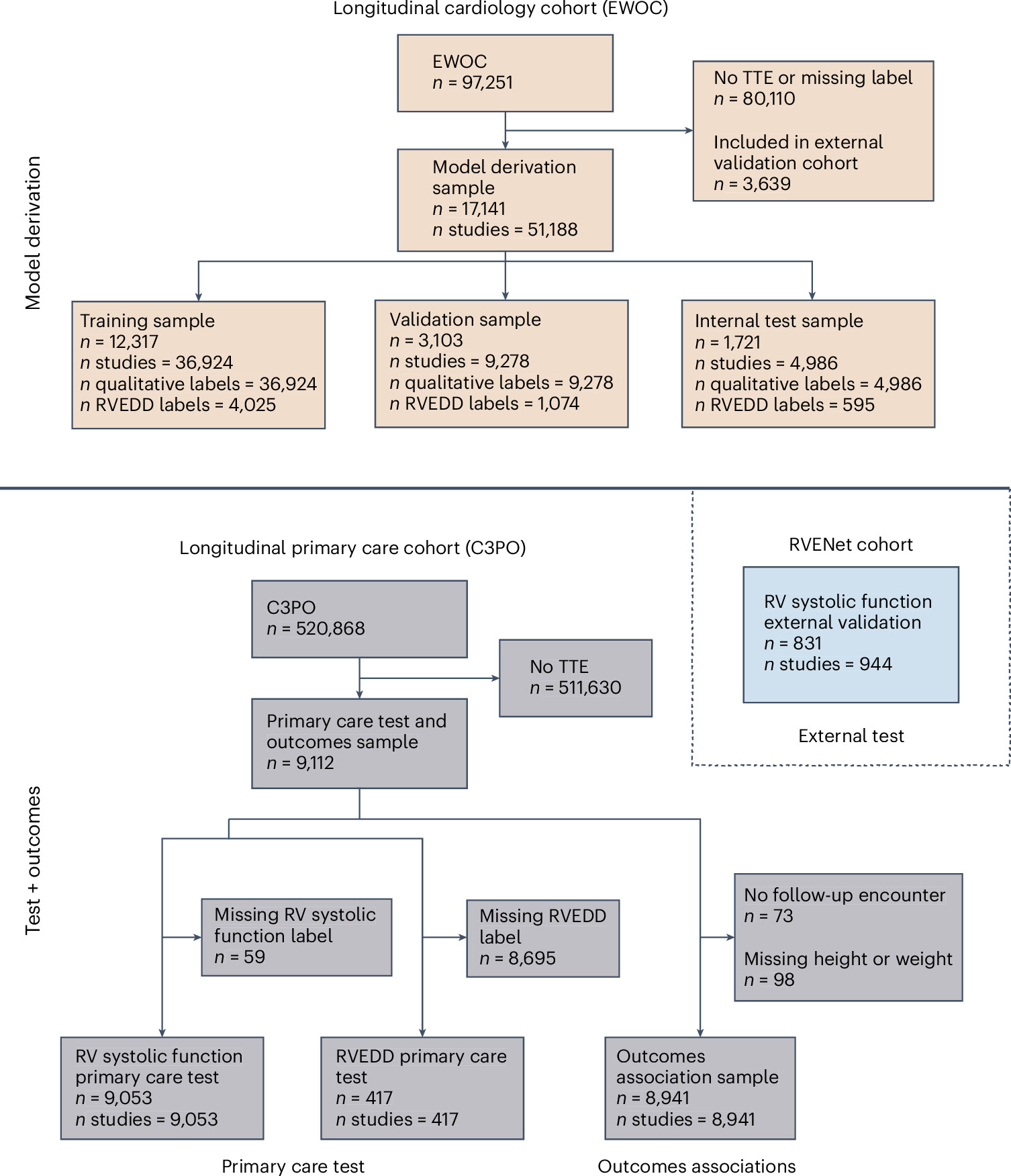
Researchers used ultrasound heart scans from 17,141 cardiology outpatients to train a computer model in an observational study. The model assessed the right ventricle, the heart chamber that pumps blood to the lungs. Training used 51,188 examinations containing 383,881 video clips.
The researchers tested the model in 9,112 primary care patients and 831 patients whose right ventricular pumping function had been measured using three-dimensional ultrasound. Across test samples, the model accurately estimated the chamber’s diameter at the end of filling and identified reduced pumping function. Its predictions of size and function were also associated with subsequent deaths, atrial fibrillation—an irregular heartbeat—and heart failure.
Why it matters
Cardiovascular health matters for health in later life. The work suggests a way to automate assessment of future cardiovascular risk using two-dimensional heart scans.
Caveats
The observational findings do not show that using the model improves outcomes. Prediction errors increased at the extremes of right ventricular size and function.
- Deep learning
- Atrial fibrillation
- Heart failure
- Right ventricular systolic dysfunction
- Right ventricular ejection fraction
- Humans
The paper
Mass General Brigham Heart and Vascular Institute
Nature Cardiovascular Research, 15 Oct 2026