Sex-Divergent Vulnerability to Chronic Peripheral LPS Challenge in Aged ApoE4 Mice: Male Systemic Fragility versus Female Central Neuroinflammation
Abstract
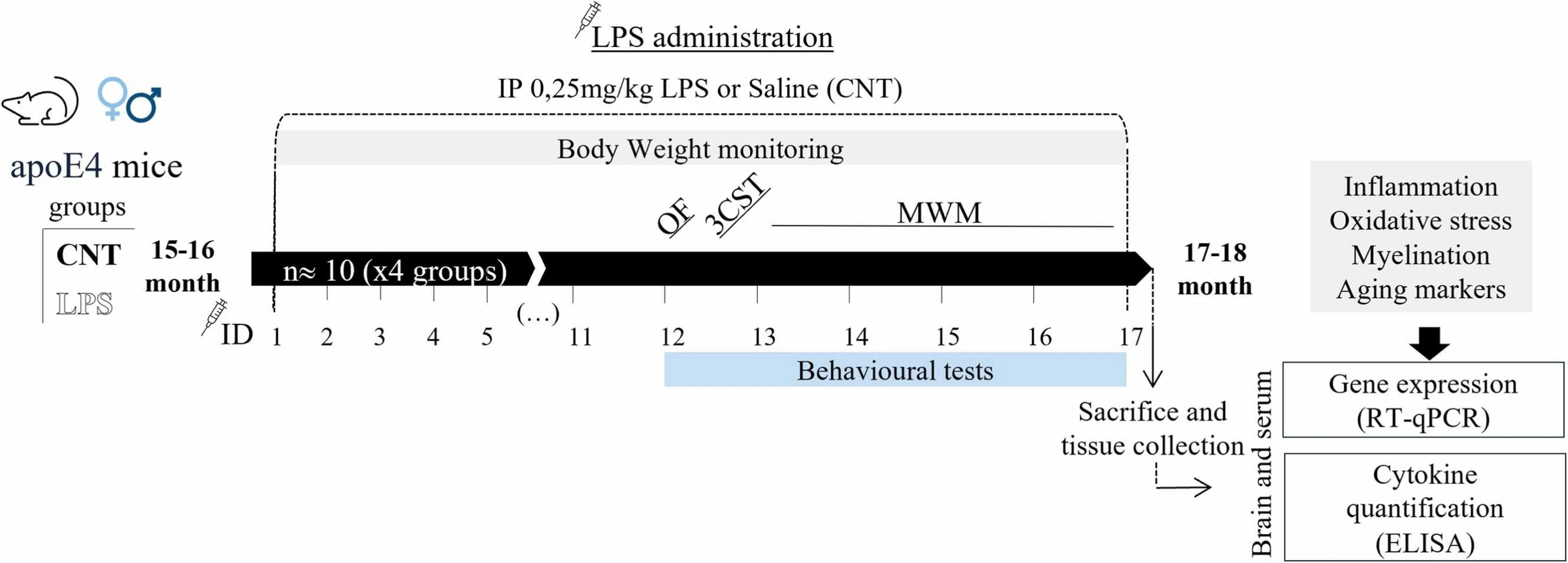
Inflammageing links chronic inflammation to biological aging, contributing to senescence and multimorbidity common in the elderly. In neurodegenerative diseases, such as Alzheimer's disease, inflammatory processes play a causal role in accelerating neurodegeneration. Interestingly, apolipoprotein E (APOE), particularly the APOEε4 allele, is a major genetic risk factor for neurodegeneration, acting as a key immunomodulator with sex differences. This is especially relevant given the lack of clear prevention strategies for APOEε4 carriers. Therefore, this study characterized the sex-specific neuroinflammatory and cognitive vulnerability of APOE4 genotype under a chronic lipopolysaccharide (LPS) challenge in senescence-transition stage. Male and female homozygous apoE4 mice (15-16 months old) were administered intraperitoneal doses of 0 or 0.25mg/kg LPS three times per week for a total of 17 doses. Body weight was monitored, and behavioural assessments were conducted from the 12th injection until the 17th. Serum and tissues were collected to assess hippocampal, cortical and systemic markers of inflammation, antioxidant-related genes, genes implied in myelin dynamics, and neurotrophin-related transcripts. Findings revealed basal sex-dependent divergent phenotypes with specific responses under LPS challenge. Under LPS treatment, males exhibited higher systemic fragility, with significantly increased mortality, which may have conditioned cognitive outcomes. Females showed greater central alterations related to neuroinflammation along with altered expression of myelin-related transcripts. However, the results suggest a stablished tolerance to LPS. These results highlight how chronic systemic inflammation during ageing in an APOE4 genotype background shapes sex-divergent pathological trajectories, underscoring the need to address sex-specific therapeutic strategies.
The paper
Universitat Rovira i Virgili
Behavioural Brain Research, 15 Oct 2026