Aged mice changed behaviour after sepsis without broad inflammation
Researchers followed three-month-old and 18-month-old mice through seven days after sepsis; aged mice showed altered nesting and social behaviour despite comparable illness severity.
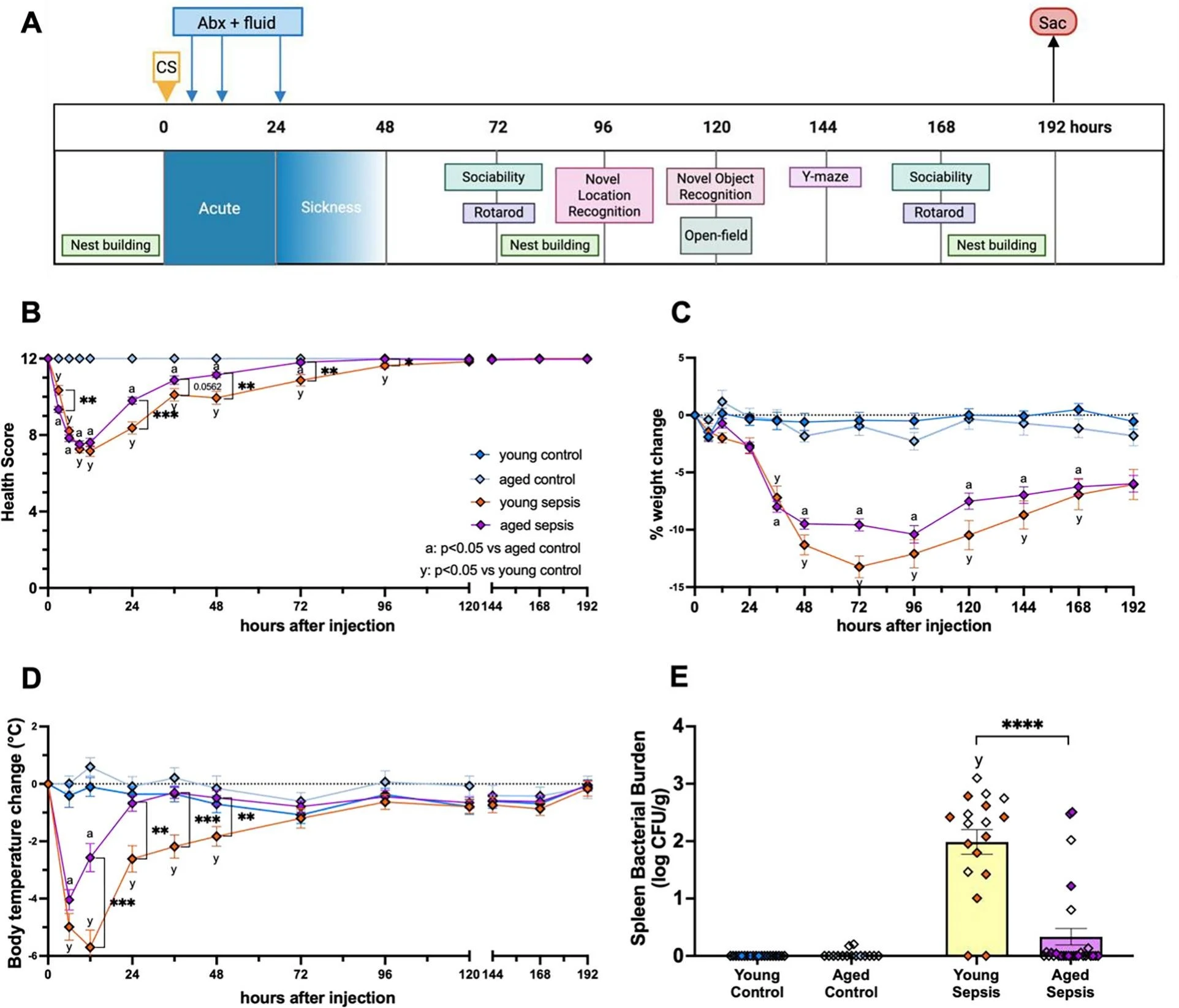
Young mice aged three months and aged mice aged 18 months underwent an animal experiment in which researchers induced sepsis, a life-threatening response to infection. They adjusted doses to produce comparable acute illness severity and assessed behaviour through day seven. They examined the brains on day eight.
Aged mice showed changes in nest building and social behaviour after acute illness had apparently resolved. These changes occurred without broad inflammation in the body or brain. Young mice maintained normal behaviour despite elevated inflammation in both. The findings suggested that sepsis-induced inflammation alone did not account for the behavioural changes in aged mice.
Why it matters
Sepsis can leave older survivors with lasting difficulties in everyday activities. The researchers suggested that accumulated age-related vulnerabilities may limit the brain’s ability to cope with severe illness.
Caveats
Brain measurements on day eight could not rule out an earlier contribution from inflammation. The findings concerned mice during early recovery, not long-term outcomes in people.
The paper
Vanderbilt University
Brain, Behavior, and Immunity, 14 Oct 2026