A compound is linked to better cognition mainly in male mice
In six-month-old mice with accelerated aging, ER272 was linked to better cognition and preserved markers of new brain cells in males, but showed limited effects in females.
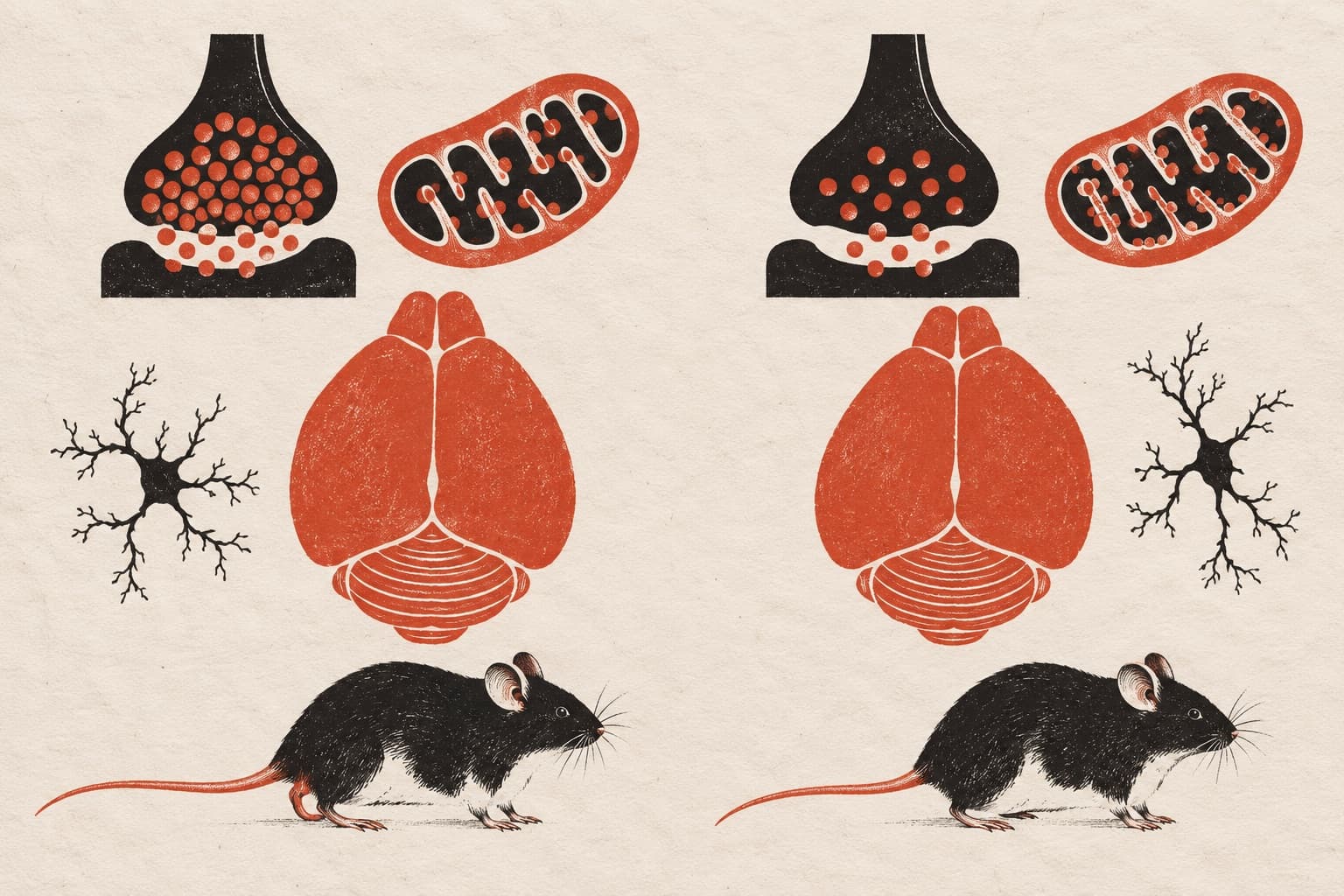
In an experiment in six-month-old mice, researchers tested how biological sex influences brain aging and responses to a diterpenoid compound called ER272. They compared male and female SAMP8 mice, an accelerated aging strain that develops Alzheimer-like damage, alongside normal SAMR1 control mice. Male control mice had higher baseline neurogenesis, the creation of new brain cells, than females. In the accelerated aging strain, males and females followed distinct trajectories of new cell growth. Treatment with ER272 was associated with improved cognitive performance and the preservation of several neurogenic measures in males. In females, however, the treatment showed limited effects.
Why it matters
The findings suggest that the mechanisms of brain aging differ between sexes. Because mixed-sex studies can hide these differences, considering sex may be vital when developing therapies for age-related cognitive decline.
Caveats
The experiment evaluated mice at a single age of six months in a model of accelerated aging. These findings in rodents may not reflect natural aging or translate to humans.
The paper
Sex-Specific Neurogenic and Cognitive Responses in a Murine Model of Accelerated Aging
Show 5 more authors
Livia Carrascal, María D Freire-Aragón, Rosario Hernández-Galán, Pedro Nunez-Abades, Mónica García-Alloza,Área de Fisiología
Aging Cell, 1 Oct 2026