Emerging stem cell strategies for neurodegenerative diseases
Abstract
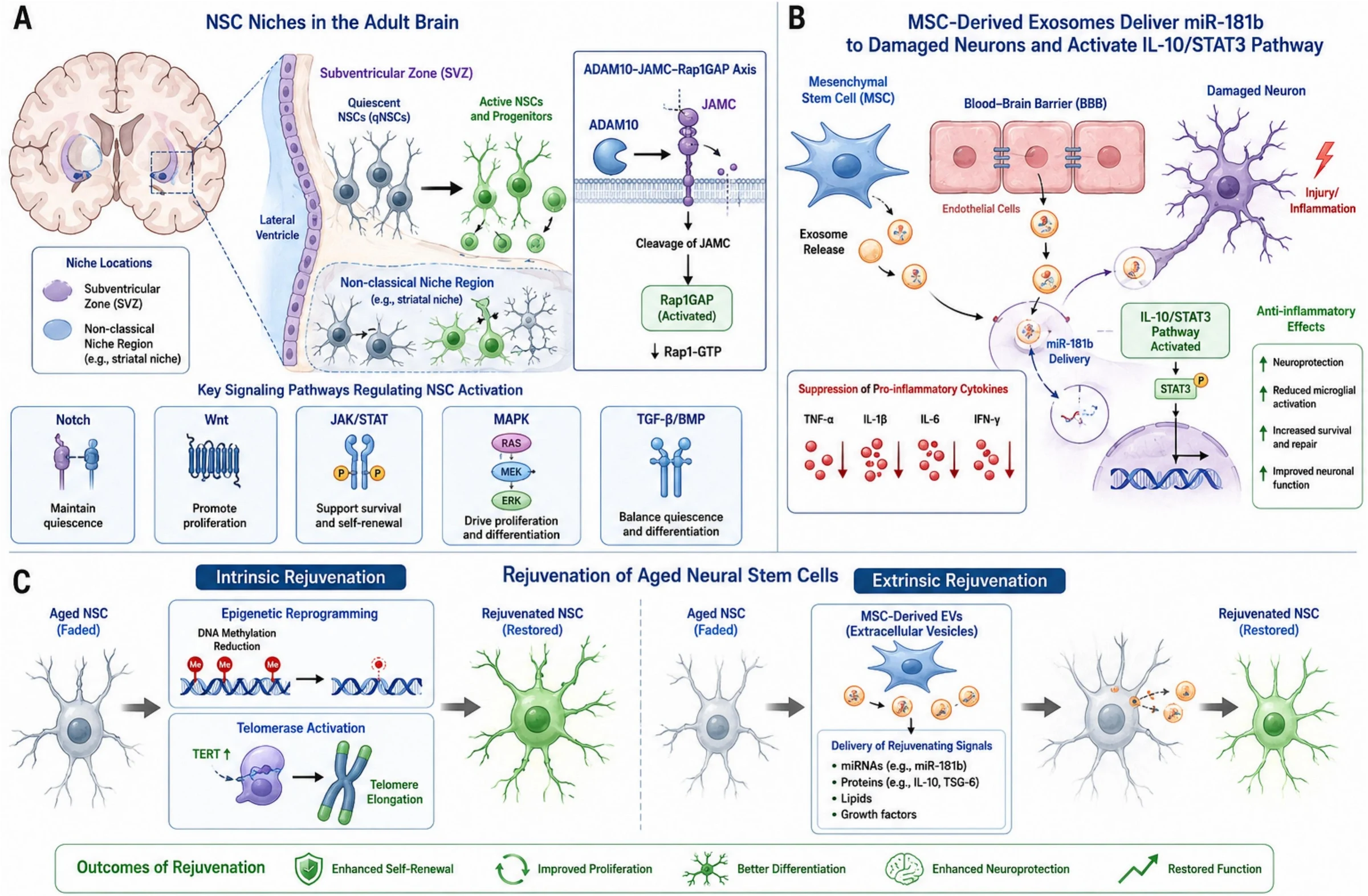
Degenerative diseases continue to impose a substantial global health burden with limited curative options. Neurodegenerative diseases, the principal focus of this review, are among the largest contributors to this burden. Stem cell therapies have emerged as a promising approach, offering the potential to replace lost cells, modulate pathological microenvironments, and restore tissue function through both direct cell replacement and paracrine mechanisms. However, conventional stem cell strategies encounter persistent obstacles including immune rejection, tumorigenicity, poor engraftment, and limited long-term efficacy in chronic disease settings. This narrative review synthesizes recent and emerging innovations in stem cell therapy for neurodegenerative diseases across four major domains: (i) emerging mechanisms of stem cell action, including activation of dormant neural stem cells (NSCs), exosome-based cell-free therapies, and rejuvenation of aged stem cells; (ii) emerging cell types such as pre-morula stem cells (PMSCs), perinatal stem cells, SSEA-4+ human umbilical cord mesenchymal stem cells (hUC-MSCs), and iPSC-derived mesenchymal progenitor cells (MiMPCs); (iii) advanced delivery platforms including three-dimensional (3D) biomaterial scaffolds, injectable hydrogels, and stem cell membrane-coated nanoparticles (CMNPs); and (iv) gene-editing strategies, particularly CRISPR/Cas9-mediated generation of hypoimmunogenic induced pluripotent stem cell (iPSC) lines for allogeneic, off-the-shelf cell therapies. Key translational gaps, including standardization of exosome isolation and scaffold fabrication protocols, long-term safety and immunogenicity assessment, and ethical and regulatory frameworks, are critically evaluated, and future research directions are proposed. In addition, the review states the level of evidence (in vitro, animal, or human) supporting each approach and summarizes their clinical status in a single table. Addressing these challenges through interdisciplinary collaboration will be essential to realizing the full potential of stem cell-based regenerative medicine for degenerative diseases.
- Biomaterial scaffolds
- CRISPR-cas9 gene editing
- Exosome therapy
- Immune response
- Stem cell maintenance
- Neurodegenerative disease
The paper
Hasanuddin University; Food and Drug Investigation Laboratory
Transplant Immunology, 15 Oct 2026