Interferon-responsive glia emerge in aging killifish white matter
A preprint using transcriptomic, histological and ultrastructural analyses of killifish optic nerves shows aging brings reduced myelin thickness and immune-responsive glia.
bioRxiv
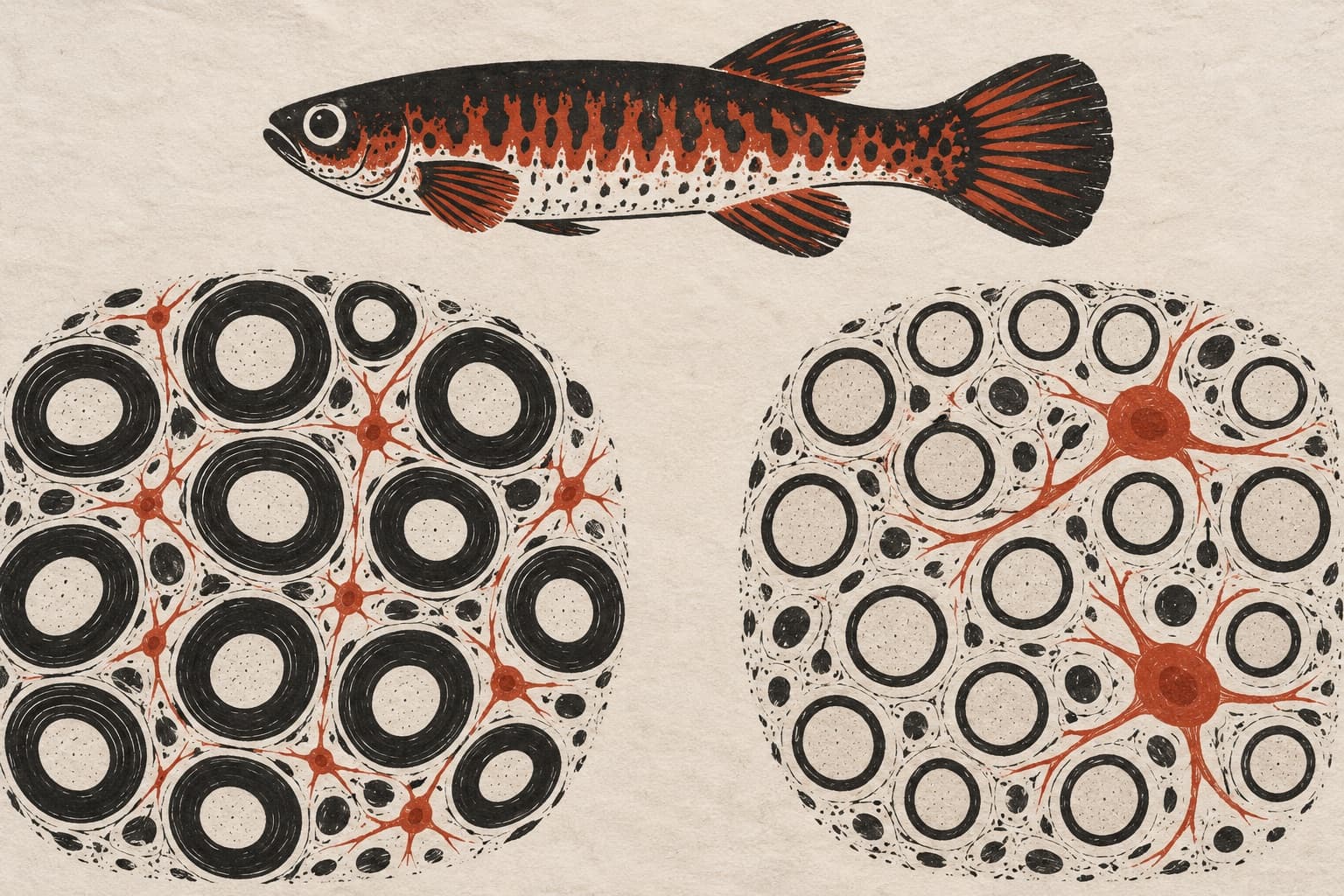
In killifish, the optic nerve displays hallmarks of mammalian white matter aging, according to a preprint analyzing tissue across age groups. Researchers integrated transcriptomic, histological, and ultrastructural analyses to characterize the cellular alterations occurring during aging. They found that aging killifish optic nerves recapitulate key features of mammalian white matter aging, including reduced myelin thickness, metabolic dysfunction, and the depletion of oligodendroglial progenitor cells. In addition, aging was associated with the emergence of an interferon-responsive oligodendroglial state. This state exhibited interferon response and antigen presentation programs resembling those described in murine models of central nervous system disease. The authors suggest this age-associated oligodendroglial state emerges before overt neurodegeneration.
Why it matters
The findings suggest oligodendroglial dysfunction is a central component of brain aging. Identifying this early glial shift highlights a potential cellular link connecting normal brain aging to neurodegenerative diseases.
Caveats
The study examined killifish optic nerves, so whether identical cell states emerge along the same timeline in human white matter remains to be tested. The work is a preprint and has not yet been peer-reviewed.
The paper
Allen Institute for Brain Science
bioRxiv · 25 Sep 2026 · Preprint, not peer-reviewed