Large-scale plasma metabolic profiling identifies signatures and biomarkers associated with air pollution and arrhythmias: A prospective cohort study from UK Biobank
Abstract
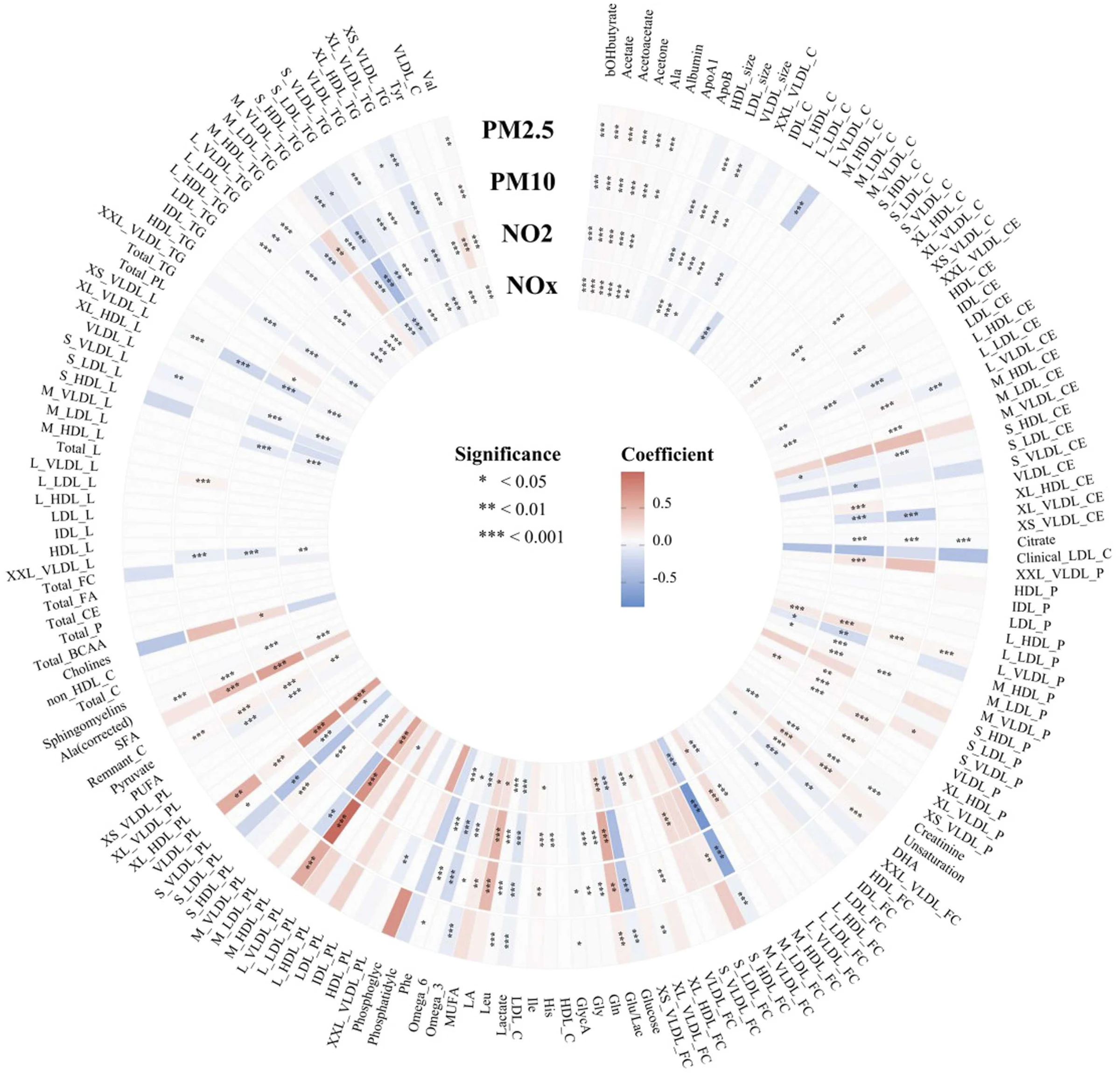
BACKGROUND: Air pollution is an established modifiable risk factor for cardiac arrhythmia, yet the metabolic mechanisms underlying this association remain poorly understood. This study aimed to elucidate how air pollutants promote arrhythmias through metabolic pathway perturbations. METHODS: We conducted a prospective analysis of 449,068 UK Biobank participants without baseline arrhythmia. Exposures to PM2.5, PM₁₀, NO₂, and NOx were assessed using land use regression models. Plasma metabolomic profiling including 170 metabolites via 1H-NMR was performed at baseline. Elastic net regression, Cox proportional hazards models, and mediation analysis were employed to identify pollutant-associated metabolic signatures, quantify their mediating effects, and characterize pathway enrichment across different kinds of arrhythmias. RESULTS: During a median follow-up of 16.31 years, a total of 47,381 arrhythmia cases were identified. All four pollutants were prospectively associated with increased arrhythmia risk (hazard ratios ranged from 1.015 to 1.257 per 10 μg/m³). The derived metabolomic signatures significantly mediated these associations between different air pollutants and arrhythmia (mediation proportions: PM2.5-related, 11.19%; PM₁₀-related, 5.19%; NO₂-related, 7.44%; NOx-related, 9.82%). Pathway enrichment analysis consistently identified lipid metabolism, ketone body metabolism, and amino acid metabolism as core affected pathways. Notably, compared to atrial fibrillation and supraventricular tachycardia, the ketone body metabolic pathway appeared to account for a larger proportion of the association with intraventricular block. CONCLUSIONS: This study suggests that air pollution increases arrhythmia risk through distinct, subtype-specific metabolic perturbations, providing novel insights into the metabolic pathways linking environmental pollutants to different arrhythmia subtypes.
- Air pollution
- Fine particulate matter
- Amino acid metabolism
- Lipid and ceramide metabolism
- Arrhythmia
- Humans
The paper
Guangdong Provincial People's Hospital (Guangdong Academy of Medical Sciences)
Ecotoxicology and Environmental Safety, 15 Oct 2026