Association of mitochondrial copy number and heteroplasmy with cognitive function in the ACCORD trial
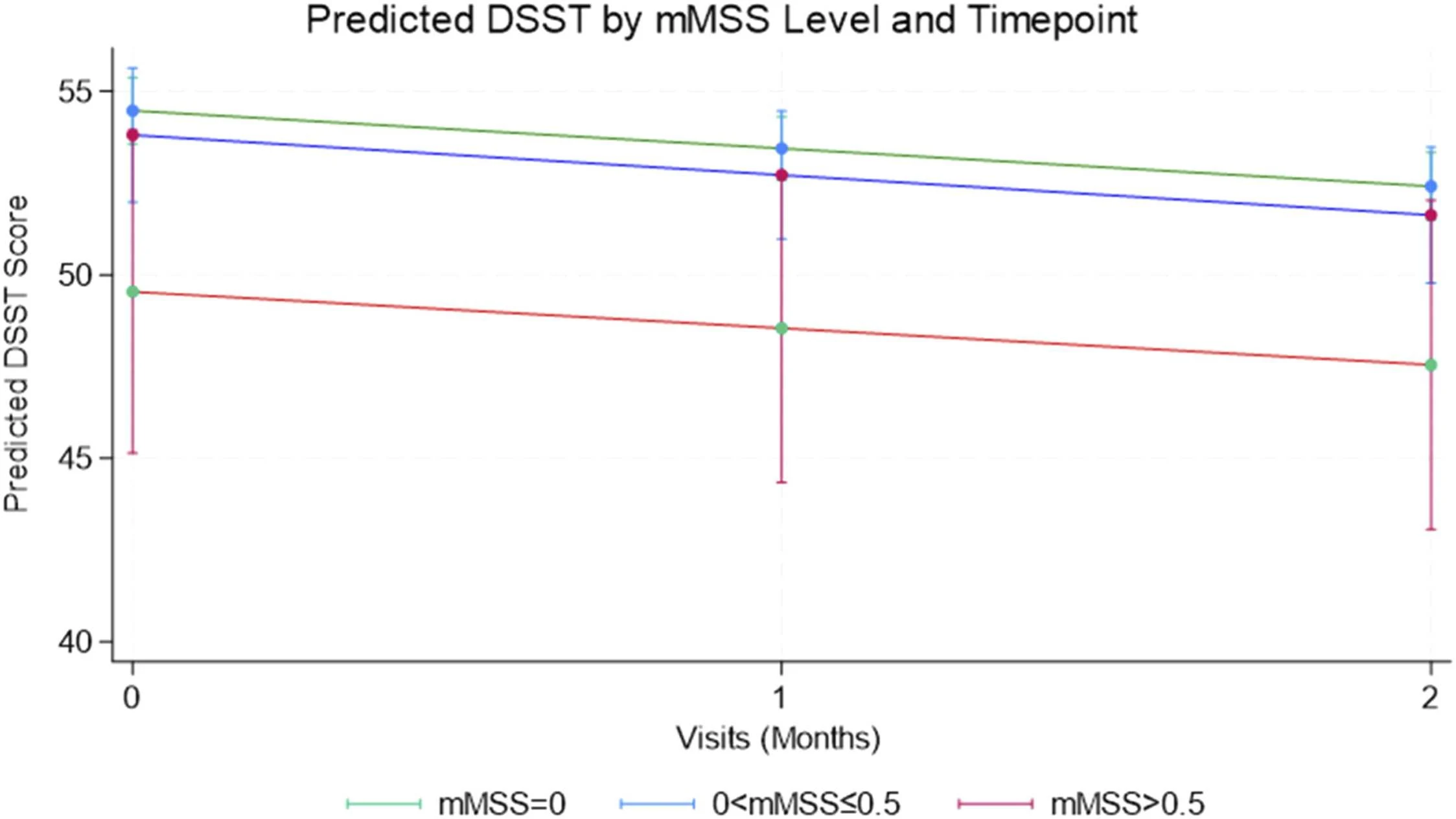
40 months
Abstract
Mitochondrial dysfunction has been implicated in cognitive decline and dementia, but the relationship between mitochondrial DNA (mtDNA) heteroplasmy and copy number with cognitive function remains poorly understood. We aimed to study these associations among individuals with diabetes who face elevated risk for mitochondrial dysfunction and cognitive impairment. We analyzed data from 954 participants (mean age 62.8 years, 52.1% female) in the Action to Control Cardiovascular Risk in Diabetes Blood Pressure trial. Mitochondrial heteroplasmy burden was quantified using the modified mitochondrial local constraint score sum (mMSS) from whole mitochondrial genome sequencing. Mitochondrial copy number was measured using quantitative PCR. Cognitive function was assessed using the Digit Symbol Substitution Test for processing speed and the Mini-Mental State Examination for global cognition at baseline, 20 months, and 40 months. Our primary regression models adjusted for demographics, cardiovascular risk factors, and mitochondrial haplogroup. Participants with mMSS > 0.5 had significantly worse processing speed at baseline compared to those with mMSS= 0 (β=-4.94 points, 95% CI: -9.44, -0.43) after adjustment. Higher mitochondrial copy number was associated with better processing speed at baseline among men (β=1.67 per SD, 95% CI: 0.31, 3.03). Neither heteroplasmy nor copy number was significantly associated with global cognition or with longitudinal cognitive decline. Higher mitochondrial heteroplasmy burden and lower copy number (in men) were associated with worse processing speed but not global cognition or cognitive decline. Mitochondrial dysfunction may contribute to domain-specific cognitive impairment in diabetes, with potential sex differences. Further research is needed to elucidate mechanisms and evaluate mitochondrial measures in brain tissue.
- Oxidative phosphorylation
- Mitochondrion
- Mitochondrial DNA copy number
- Cognitive impairment
- Diabetes
- Humans
The paper
Stanford Medicine; California Pacific Medical Center
Neurobiology of Aging, 11 Oct 2026, Open access