Thinner retinal layers linked to future cardiovascular events
Thicker retinal nerve fibre layers were linked to lower cardiovascular event rates in 51,293 participants, with an adjusted hazard ratio of 0.92.
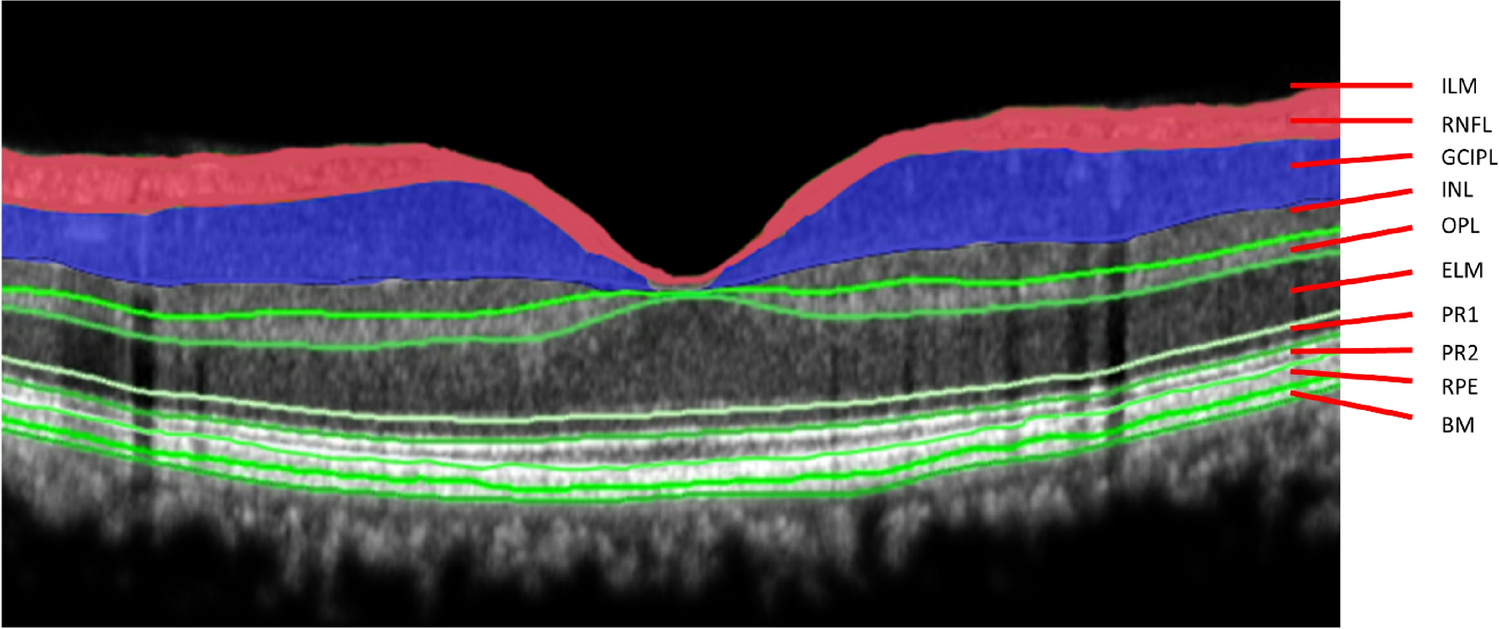
Researchers analysed data from 51,293 UK Biobank participants in a retrospective observational cohort study. They used optical coherence tomography, a non-invasive eye scan, to measure two retinal layers. The retina is the light-sensitive tissue at the back of the eye.
Over a median 14.7 years, greater thickness in both layers was associated with a lower rate of the combined outcome of stroke, heart attack or cardiovascular death, after adjustment for cardiovascular risk factors. The adjusted hazard ratios, which describe relative event rates, were 0.92 for the nerve fibre layer and 0.96 for the layer containing nerve cells and their connections. The nerve fibre layer was more strongly associated with future heart attacks. The other layer was more strongly associated with future strokes.
Why it matters
Preventing cardiovascular disease is an important goal for healthy aging. The authors suggested that retinal measurements could contribute to assessing cardiovascular risk.
Caveats
This observational study cannot establish cause and effect or whether eye scans improve risk prediction. For the layer containing nerve cells and their connections, the range of likely values included no difference.
From the paper
- Participants
Of all 502,128 UKBB participants, 51,293 participants (55.1% women) were included in our analysis (Fig. 2).
Results, Patient characteristics and thickness of retinal layers depending on prior CVD
- Follow-up
Median follow-up time was 14.7 years.
- Result
Both RNFL thickness (aHR 0.92, 95% CI 0.89–0.96, p < 0.001) and GCIPL thickness (aHR 0.96, 95% CI 0.92–1.00, p = 0.04) were statistically associated with incident MACE in cause-specific hazard models adjusted for CVRF.
- Limitation
First, only participants between 40 and 69 years of age were recruited to the UKBB.
Quoted word for word from the full text on link.springer.com.
- Stroke
- Cardiovascular disease
- Myocardial infarction
- Ganglion cell-inner plexiform layer thickness
- Retinal nerve fiber layer thickness
- Humans
The paper
University Hospital Zurich and University of Zurich
Journal of Neurology, 15 Oct 2026