A study exploring the effects of exercise on cuproptosis targets in Alzheimer's disease brains based on large-scale data
Abstract
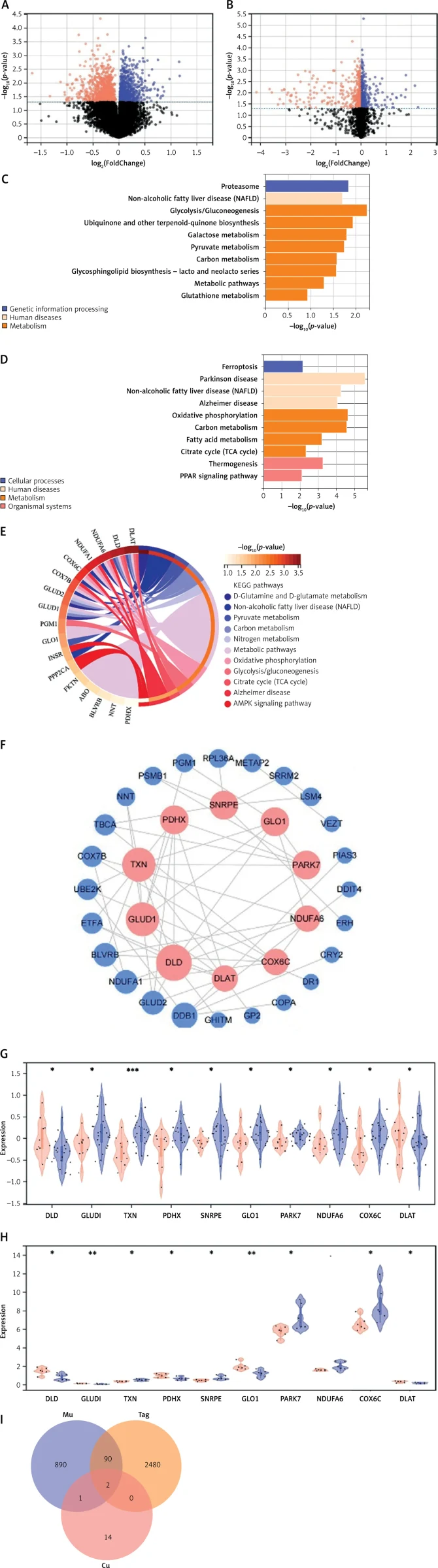
INTRODUCTION: Alzheimer's disease (AD) is a progressive neurodegenerative disorder marked by memory loss and cognitive decline. Epidemiological studies have linked sedentary behaviour to increased risk of chronic diseases, but the molecular mechanisms connecting prolonged inactivity to AD remain unclear. Copper dyshomeostasis and a newly defined form of copper-induced cell death - cuproptosis - have been implicated in neurodegeneration. This study investigates the role of cuproptosis-related genes in sedentary elderly individuals and AD patients to identify potential biomarkers and therapeutic targets. MATERIAL AND METHODS: Gene expression profiles from GEO datasets GSE110298 (hippocampus, sedentary AD vs. control) and GSE9103 (skeletal muscle, sedentary vs. active aging) were processed with the limma package (|log₂FC| ≥ 1, adj. p < 0.05). Differentially expressed genes (DEGs) were intersected with a curated cuproptosis gene list. KEGG and GO analyses identified enriched pathways. Protein-protein interaction (PPI) networks in Cytoscape highlighted hub genes. Key candidates were validated by quantitative PCR (qPCR) and Western blot in hippocampal and quadriceps tissues of exercise and sedentary mouse models. RESULTS: In GSE110298 and GSE9103, 2480 and 890 DEGs were identified, respectively, with 90 overlapping genes enriched in mitochondrial metabolism and neurodegeneration pathways. PPI analysis ranked DLD and DLAT as top hubs; these two remained after intersecting with the cuproptosis gene set. Both DLD and DLAT were significantly upregulated in hippocampi of sedentary AD subjects and in skeletal muscle of sedentary aging individuals. qPCR confirmed 1.6- to 2.8-fold mRNA increases for DLD and DLAT (p < 0.001), and Western blot showed 1.5- to 2.0-fold protein elevation (p < 0.05). Additional modulation of TXN and FDX1 was observed. CONCLUSIONS: Our integrative analysis identifies DLD and DLAT as key cuproptosis markers dysregulated by sedentary behaviour in AD-relevant tissues. These findings implicate copper-driven cell death in linking prolonged inactivity to neurodegeneration, and highlight DLD/DLAT as promising biomarkers and therapeutic targets. Future work should expand cohort validation and dissect mechanistic roles via multi-omics and functional assays.
The paper
Anhui Medical University
Archives of Medical Science, 16 Apr 2026, Open access