Chronotype and Peripheral Clock Genes: Association With Frailty and Insomnia in Mexican Older Adults
Abstract
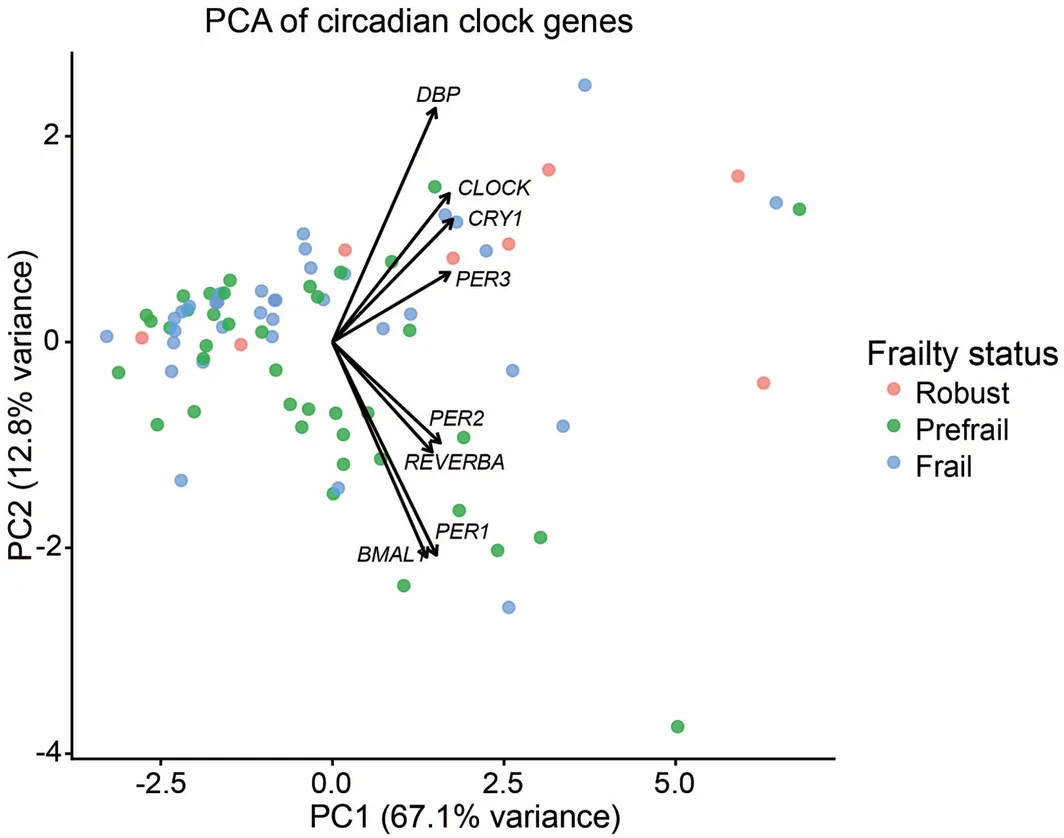
OBJECTIVES: Frailty is a geriatric syndrome associated with increased vulnerability to adverse health outcomes in older adults. Circadian rhythms regulate multiple physiological processes relevant to aging, including sleep, metabolism, and immune function; however, the relationship between circadian biology and frailty remains incompletely understood. This study aimed to examine associations between chronotype, insomnia, metabolic parameters, and peripheral clock gene expression in Mexican older adults. METHODS: A total of 751 community-dwelling older adults were included. Chronotype was assessed using the Morningness-Eveningness Questionnaire (MEQ), and associations with insomnia and metabolic parameters were evaluated using multivariate regression models. Peripheral circadian clock gene expression was analyzed in peripheral blood mononuclear cells (PBMCs) from a subsample of 82 participants using principal component analysis (PCA) and gene-specific linear regression models. RESULTS: Most participants exhibited a morning chronotype. Individuals with an extreme morning chronotype had lower odds of insomnia than those with an intermediate chronotype (adjusted OR = 0.393, 95% CI 0.169-0.827, p = 0.020). No significant associations between chronotype and metabolic parameters remained after adjustment for covariates and correction for multiple comparisons. PCA identified a coordinated pattern of clock gene expression, with pre-frail and frail participants exhibiting lower PC1 scores than robust individuals. Gene-specific analyses showed lower expression of several clock genes in pre-frail and frail participants, while lower CLOCK expression remained significantly associated with pre-frailty after adjustment for chronotype, insomnia, age, sex, and body mass index. CONCLUSIONS: In this cohort of older adults, morning chronotype was associated with lower odds of insomnia, whereas frailty was associated with differences in peripheral clock gene expression measured at a morning time point. These findings support a relationship between circadian-related characteristics and frailty in older adults and warrant further investigation using longitudinal and multi-time-point circadian assessments.
The paper
Mexican Social Security Institute; Institute for Scientific and Technological Research
Aging Medicine (Milton (N.S.W)), 14 Oct 2026, Open access