Coordinated cellular architecture reveals weakened cortical structure-behavior coupling in normal aging
Abstract
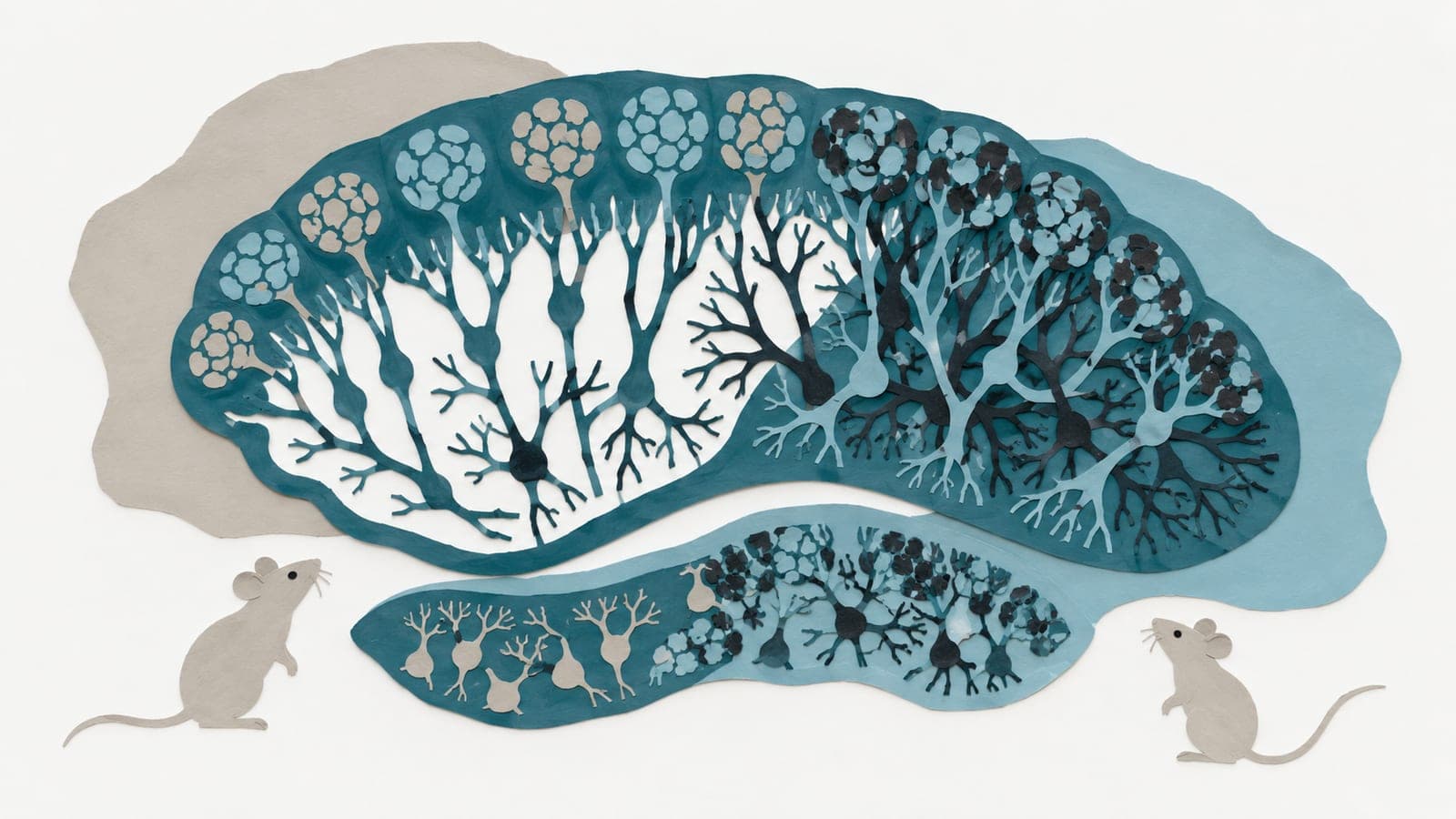
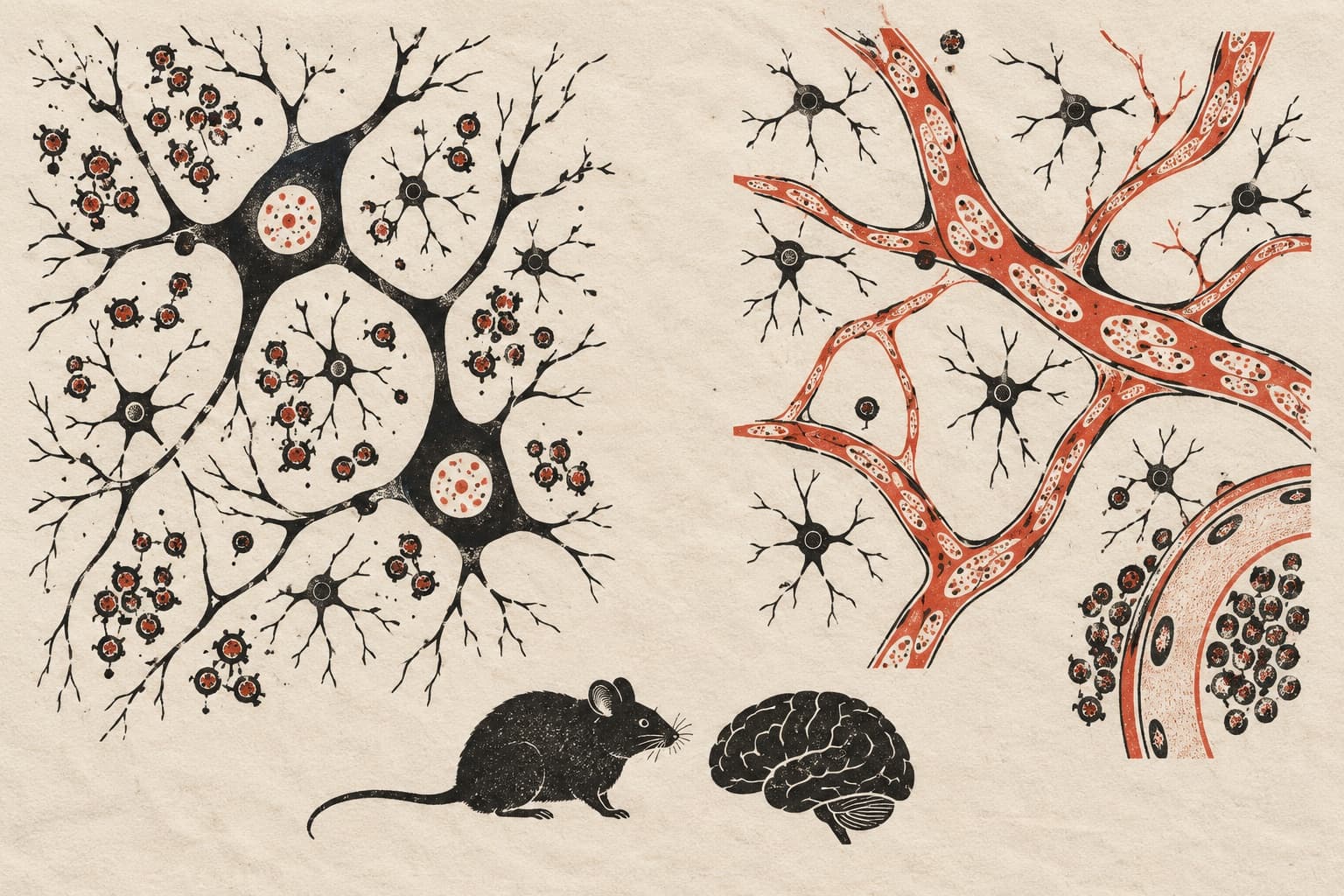
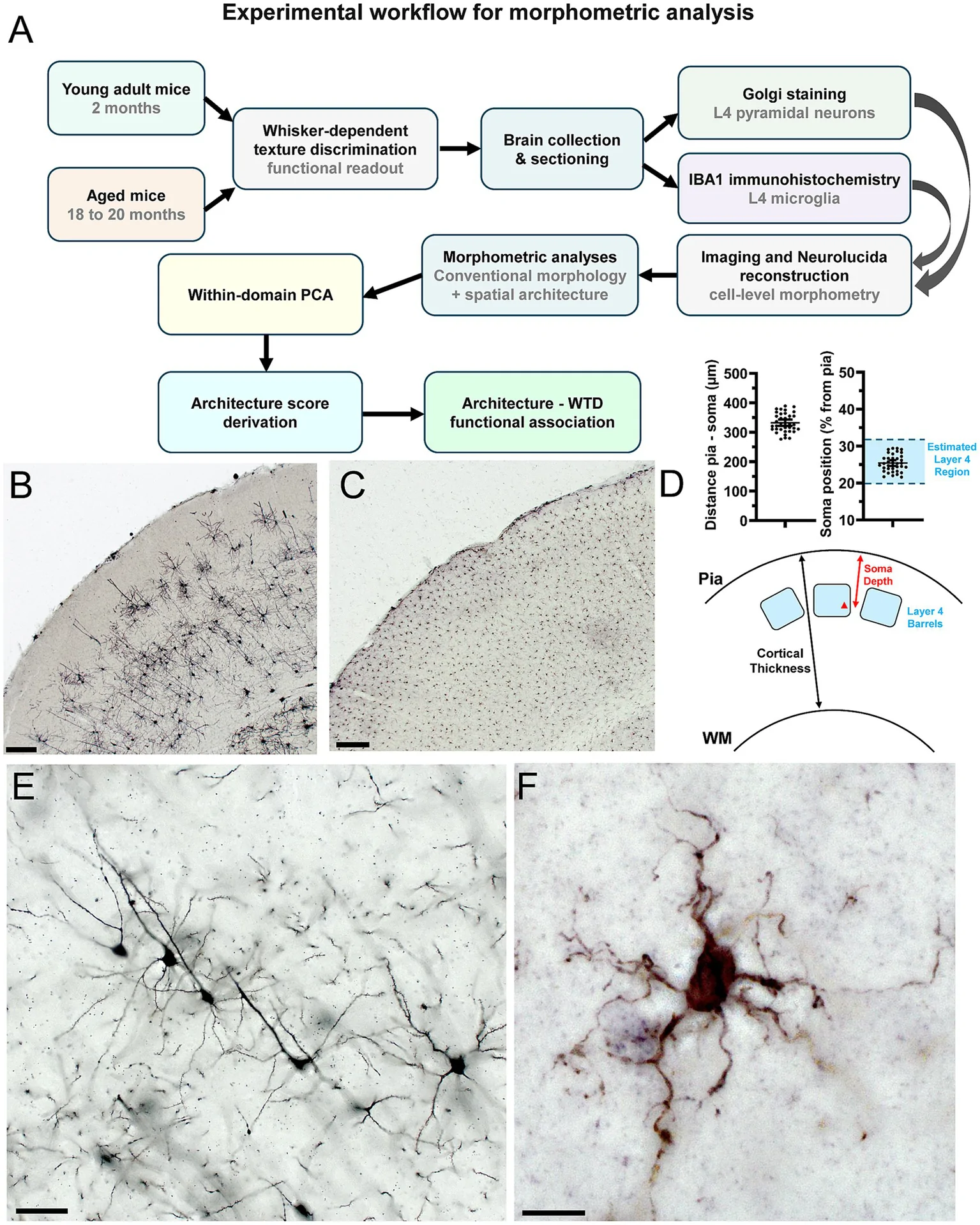
Normal aging compromises behavioral functions supported by cortical circuits, yet how age-related cellular reorganization relates to weakened circuit-behavior correspondence remains poorly defined. Here, we examined layer 4 (L4) of the mouse primary somatosensory barrel cortex, a thalamorecipient lamina in which dendritic organization, microglial process architecture, and whisker-dependent tactile function can be analyzed within the same sensory system. Aged mice showed impaired whisker-dependent texture discrimination. Using high-resolution three-dimensional cellular reconstructions, we quantified the morphology and spatial architecture of L4 pyramidal neurons and microglia in young and aged mice. We then applied within-domain principal component analysis (PCA) to derive architecture scores and tested how these scores mapped onto whisker-dependent behavior. Aging reduced the complexity and spatial extent of L4 pyramidal dendritic arbors, while microglia showed reduced process complexity and territorial occupancy. Across both cell types, these changes converged on a more spatially restricted local cellular architecture. PCA organized high-dimensional morphometric variables into dominant architecture scores that captured coordinated morphometric organization within the neuronal and microglial domains. In young animals, dominant architecture scores were associated with whisker-dependent tactile discrimination; residual scores and same-texture encoding indices did not show significant corresponding association. Within-age permutation analyses and direct Fisher r-to-z comparisons supported an age-dependent weakening of architecture-behavior correspondence. These findings identify parallel neuronal and microglial morphological changes as an anatomical axis of cortical aging, with restricted cellular architecture accompanied by weakened architecture-behavior correspondence in sensory cortex.
- Microglial process complexity and territorial occupancy
- PCA cellular architecture scores
- Pyramidal dendritic arbor complexity and spatial extent
- Residual architecture scores
- Same-texture encoding indices
- Mice
The paper
Duke Kunshan University; University of California, Santa Cruz
Frontiers in Aging Neuroscience, 30 Sep 2026, Open access