Brain cells organize into distinct DNA repair niches during mouse aging
Spatial transcriptomics shows neuronal and vascular DNA damage responses correspond to distinct local cell neighborhoods in aging brains.
bioRxiv
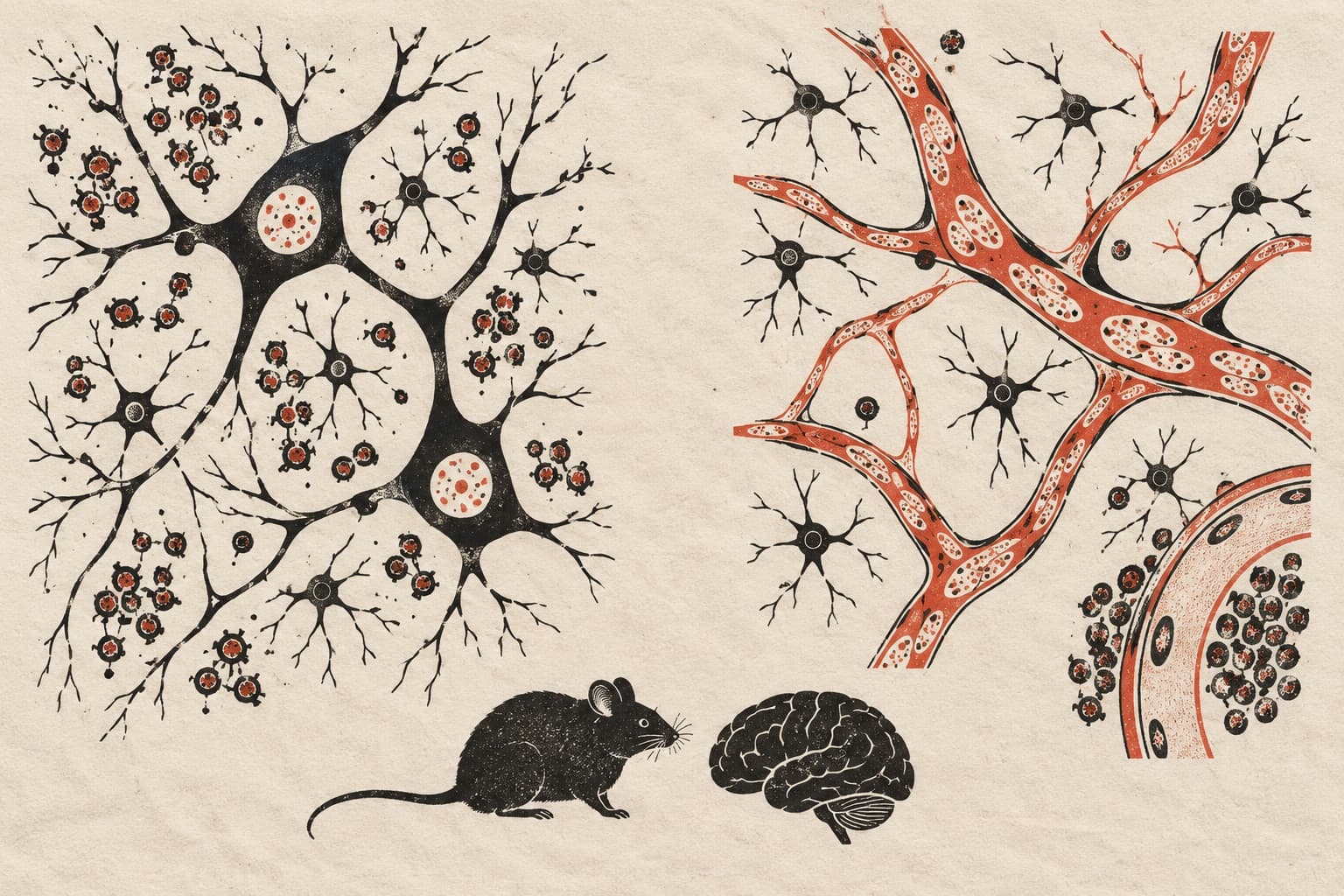
In this preprint, researchers studied brain tissue from 2- to 3-month-old and 22-month-old mice to investigate how DNA repair relates to tissue architecture. Using MERFISH, the team mapped curated DNA damage response (DDR) programs across 604,252 cells. Regional DDR expression formed an age-dependent mosaic accompanied by immune and oligodendroglial shifts. The researchers found that genome-maintenance states organized into specific multicellular niches depending on the anchor cell. Low-DDR neurons resided in niches enriched with immune cells and OPC-oligodendroglia. Conversely, DDR-high vascular anchors associated with vascular enrichment, and in the cortex and cerebral nuclei, with OPC-oligodendroglial enrichment. Immune cells instead gathered around DDR-low vascular anchors.
Why it matters
These results reveal that genome maintenance during brain aging is spatially organized across multicellular neighborhoods, which may influence regional tissue vulnerability.
Caveats
The findings are based entirely on mouse tissue, and the study is a preprint that has not yet undergone peer review.
The paper
University of Toronto · Pennsylvania State University
bioRxiv · 10 Sep 2026 · Preprint, not peer-reviewed