G3BP1 reduction during cellular senescence promotes SVIL expression and selected senescence-associated phenotypes
Abstract
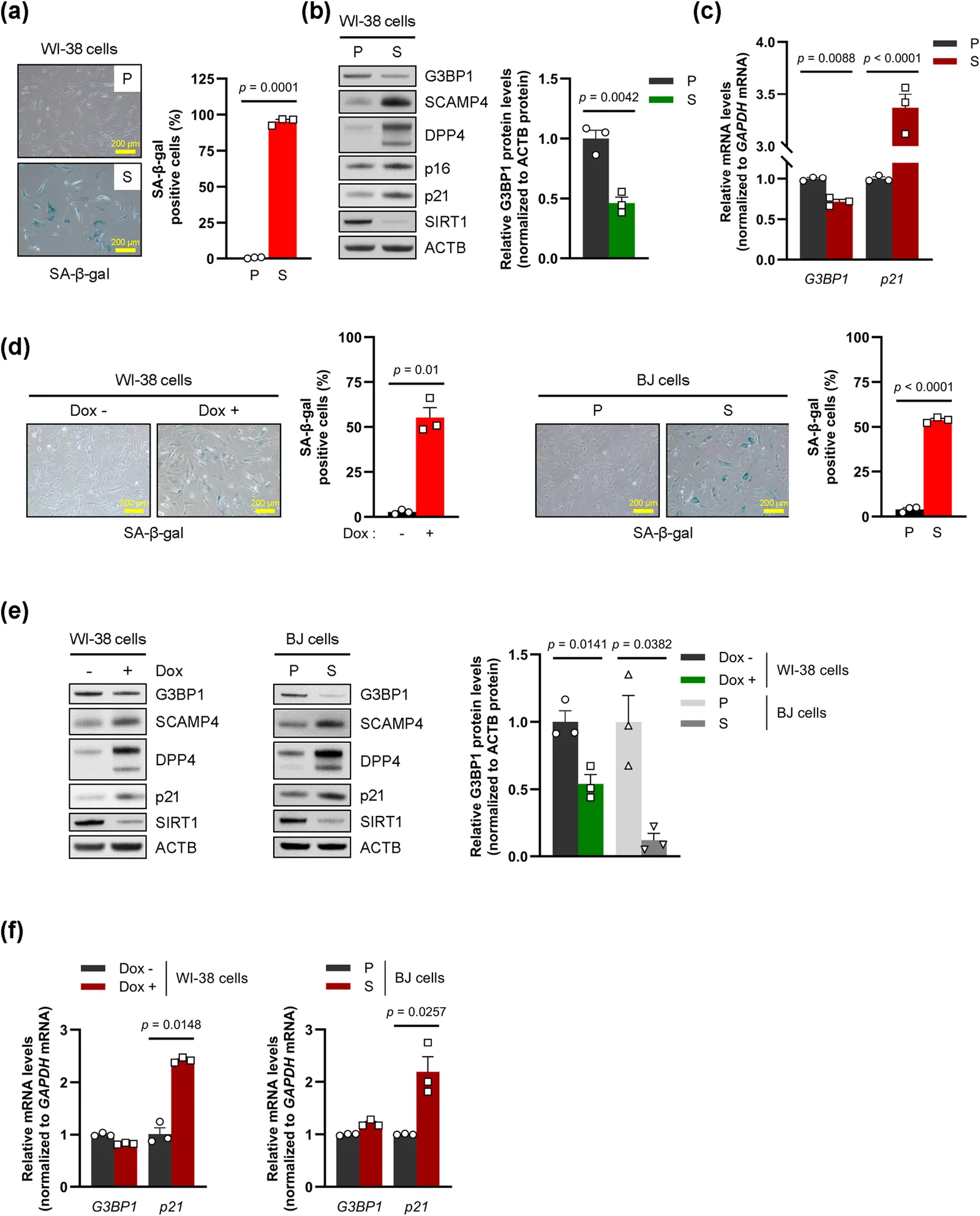
RNA-binding proteins (RBPs) can regulate gene expression through multiple post-transcriptional mechanisms, including the control of mRNA stability. In this study, we identified the Ras GTPase-activating protein-binding protein 1 (G3BP1) as a post-transcriptional regulator of supervillin (SVIL) expression. G3BP1 protein levels were consistently reduced across multiple senescence models, whereas SVIL mRNA and SVIL protein levels were increased. RIP analysis showed that SVIL mRNA was associated with G3BP1-containing ribonucleoprotein complexes, and G3BP1 depletion in proliferating cells prolonged the half-life of SVIL mRNA and increased SVIL expression. In particular, SVIL overexpression increased senescence-associated β-galactosidase (SA-β-gal) activity and selectively elevated a subset of senescence-associated secretory phenotype (SASP)-related mRNAs. These findings suggest that reduced G3BP1 expression during senescence contributes to SVIL upregulation through increased SVIL mRNA stability, while elevated SVIL may promote selected senescence-associated phenotypes, including increased expression of SASP-related mRNAs.
The paper
Chungnam National University
Frontiers in Cell and Developmental Biology, 30 Sep 2026, Open access