Dysregulation of neuronal androgen receptor signaling by divergent collaborative transcription factors in Alzheimer's disease
Abstract
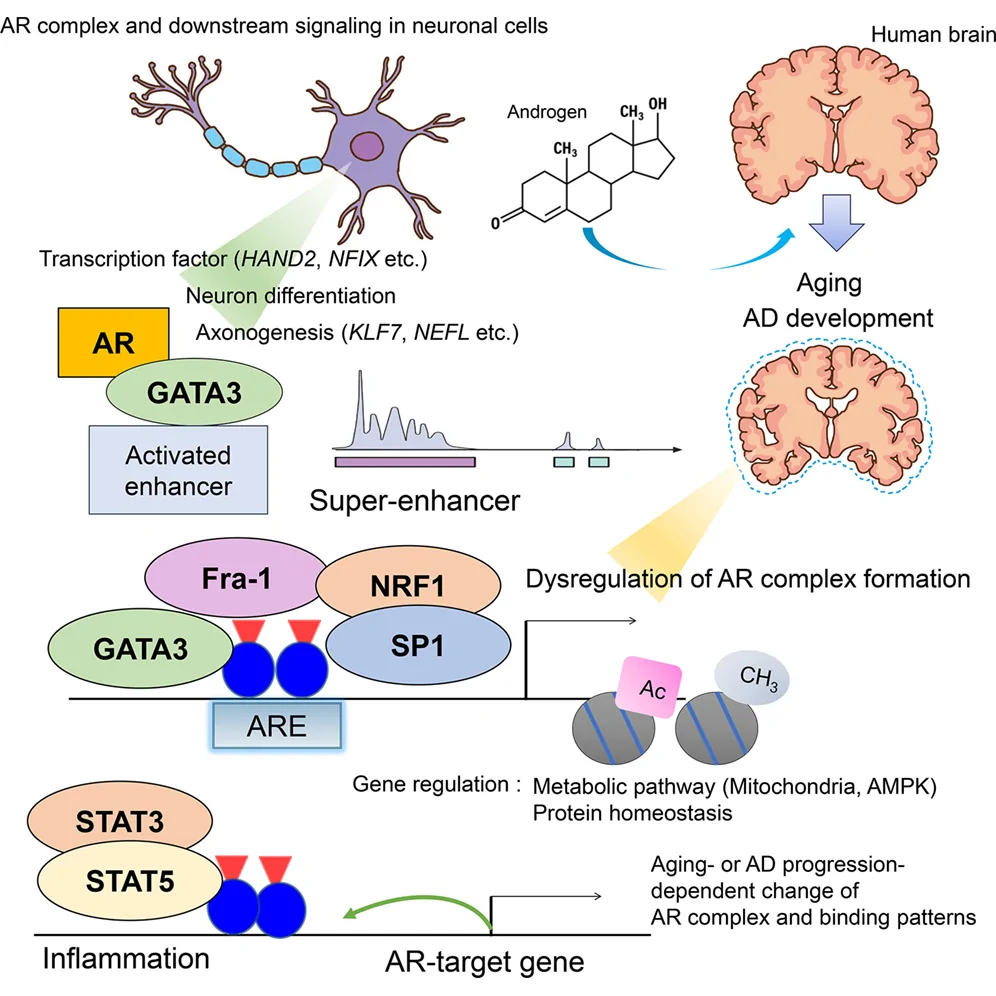
The transcriptional mechanisms through which androgens and androgen receptor (AR) exert specific effects on human tissues remain elusive. Here, we demonstrated that neuronal cell-specific transcription factors (TFs) may play an important role as epigenetic modifiers that shape the AR cistrome during neuronal activity. The binding of GATA3 to specific regulatory sequences in human neuronal cell models is associated with enhanced AR-mediated transcription. AR-binding sites (ARBSs) are enriched in regions overlapping with super-enhancers (SEs) that encode critical neuronal factors. Furthermore, AR signaling in aged human male brains indicates its role in supporting neural function and declines during the progression of Alzheimer's disease (AD). The expression levels of AR-associated TFs were dysregulated during aging and AD development. Altered expression of TFs may contribute to disruption of AR signaling. Thus, collaborative TFs could contribute to the neuronal androgen response and epigenetic regulation involved in aging and the progression of dementia.


