Brown fat linked to less cardiovascular and psychiatric disease
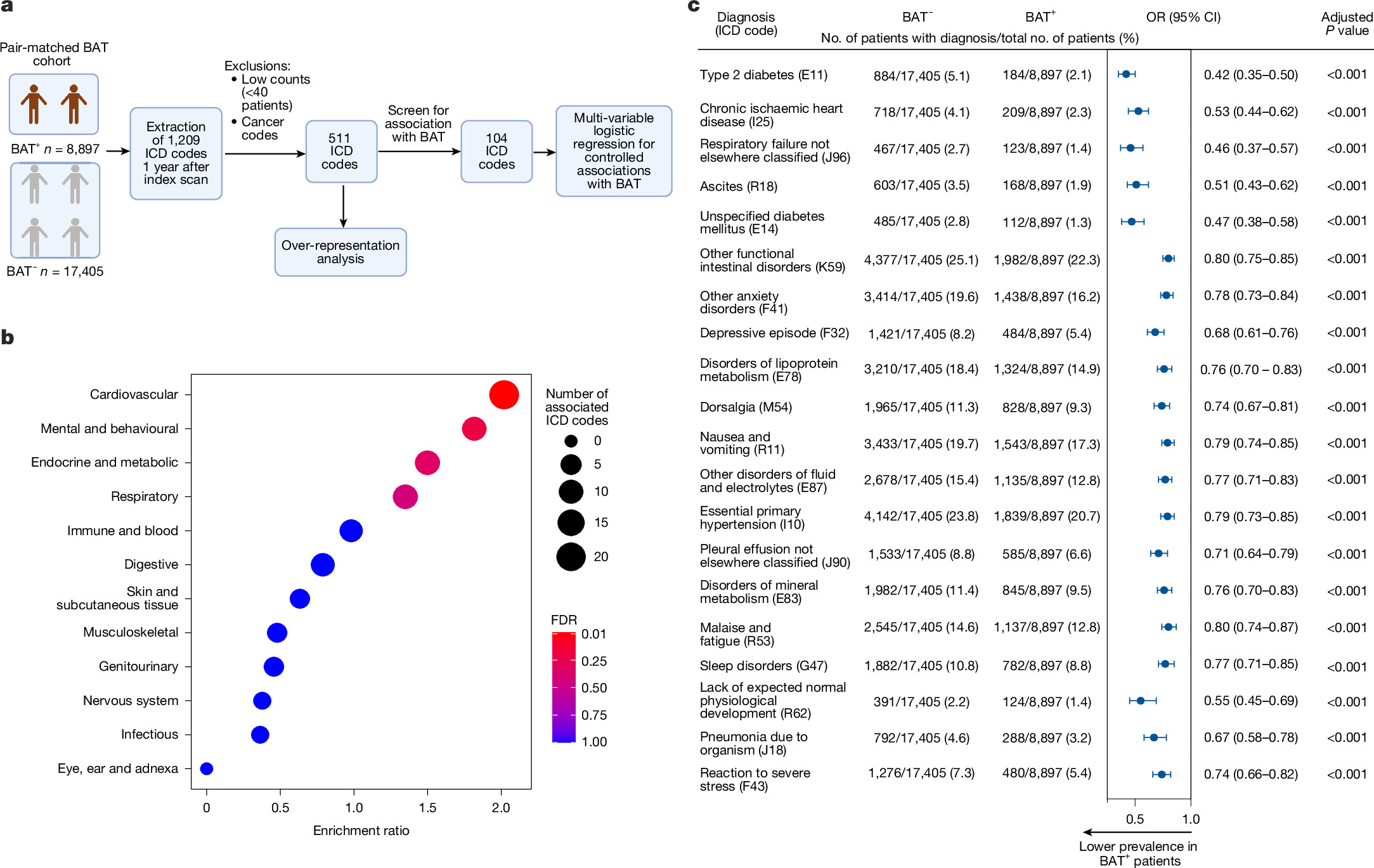
An observational study of 101,243 patients at a large cancer centre linked detectable brown fat to lower prevalence of cardiovascular and psychiatric diseases.
101,243 participants, cross-sectional study
Limit: Tumour types or cancer therapies could influence the associations despite adjustment
Stake: An author sits on the board of Amarin.
In an observational study of 101,243 patients from a large cancer centre, researchers used artificial intelligence to examine health conditions linked to detectable brown fat. This tissue uses energy to produce heat. Heart and blood vessel diseases and mental health conditions were less prevalent among people with detectable brown fat.
The team also used machine learning to quantify brown fat activity in approximately 8,700 patients. Higher activity, especially in the armpit area, was associated with lower odds of heart and metabolic diseases and a healthier distribution of white fat, which stores energy. People with brown fat also had more favourable blood sugar, blood fat and inflammation measures.
Why it matters
Heart and metabolic diseases are important concerns in aging. Mapping their links with brown fat may help guide research into repurposing drugs to activate this energy-using tissue.
Caveats
These observational associations cannot show that brown fat reduces disease risk. The patients came from a large cancer centre, so the findings may not apply to the general population.
From the paper
- Limitation
First, its retrospective design highlights the need for large prospective studies; however, we controlled for several clinical confounders and validated the association of losartan with BAT experimentally.
Quoted word for word from the full text on nature.com.
- Machine learning
- Angiotensin receptor blockers
- Inflammation
- Psychiatric disease
- Cardiovascular disease
- Humans
The paper
Artificial intelligence-enabled clinical phenotyping of human brown fat
Memorial Sloan Kettering Cancer Center; Rockefeller University
Nature, 14 Oct 2026, Open access


