Challenges and dilemmas of exercise therapy in the management of osteoporosis: a narrative review
Abstract
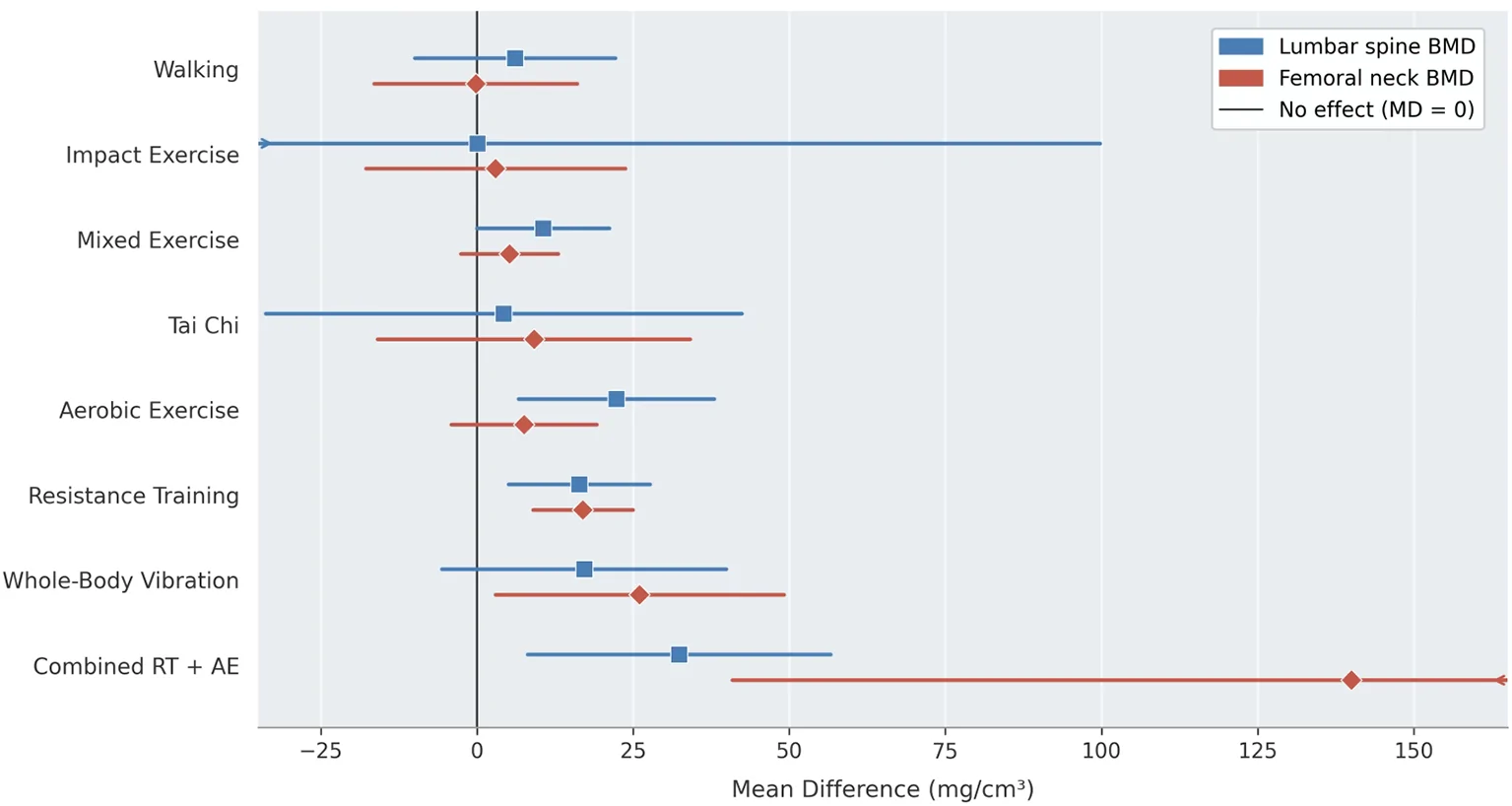
Osteoporosis is a chronic, progressive bone condition that impacts over 200 million people globally, with fragility fractures significantly burdening healthcare systems and diminishing patient quality of life. Exercise is universally recommended as a foundational non-pharmacological intervention for osteoporosis management; however, a persistent translational gap separates the efficacy demonstrated in controlled trials from the outcomes observed in real-world clinical practice. This narrative review identifies and critically examines the multifaceted challenges confronting the evidence-based application of exercise therapy in contemporary osteoporosis care. Seven principal interrelated dilemmas are elucidated: the surrogate endpoint dependency on bone mineral density (BMD) rather than fracture incidence, profound heterogeneity of osteogenic effects across exercise modalities, the tension between effective osteogenic thresholds (≥70% 1RM) and safety concerns in high-risk subgroups, the absence of validated patient stratification tools, poor real-world adherence amid scarce supervised infrastructure and fragmented care pathways, pervasive nutritional inadequacies that undermine the skeletal response to mechanical loading, and methodologically heterogeneous evidence for traditional mind-body exercises that limits their equivalence to progressive resistance training. The reversibility of bone gains upon detraining further underscores that exercise must be conceptualized as a lifelong behavior rather than a time-limited intervention. Future priorities include fracture-powered pragmatic trials, validated osteoporosis-specific pre-exercise risk stratification instruments, implementation science addressing behavioral and systemic barriers, and integrated multidisciplinary care models that unite exercise professionals with bone specialists and dietitians. Until such evidence matures, clinicians must navigate a landscape of conditional recommendations, individualized risk-benefit assessments, and honest communication of uncertainty to patients.
From the paper
- Harms
A meta-analysis of 19 studies reported that exercise intervention adverse event rates in individuals with vertebral fractures were only 6%, comparable to control conditions, and that no study reported an increase in vertebral fracture incidence attributable to the intervention.
Quoted word for word from the full text on PubMed Central.
The paper
Xi'an Jiaotong University
Frontiers in Endocrinology, 29 Sep 2026, Open access