Osteocalcin links brain volume to cognition in osteoporosis
In people with osteoporosis, higher undercarboxylated osteocalcin correlated with greater medial prefrontal cortex volume, which predicted one-year cognitive decline with an AUC of 0.84.
Our read
Biomarkers- Studied:
- Cohort study in people (1 year, independent replication)
Editor of record: Boris Djordjevic · AgingResearch.News
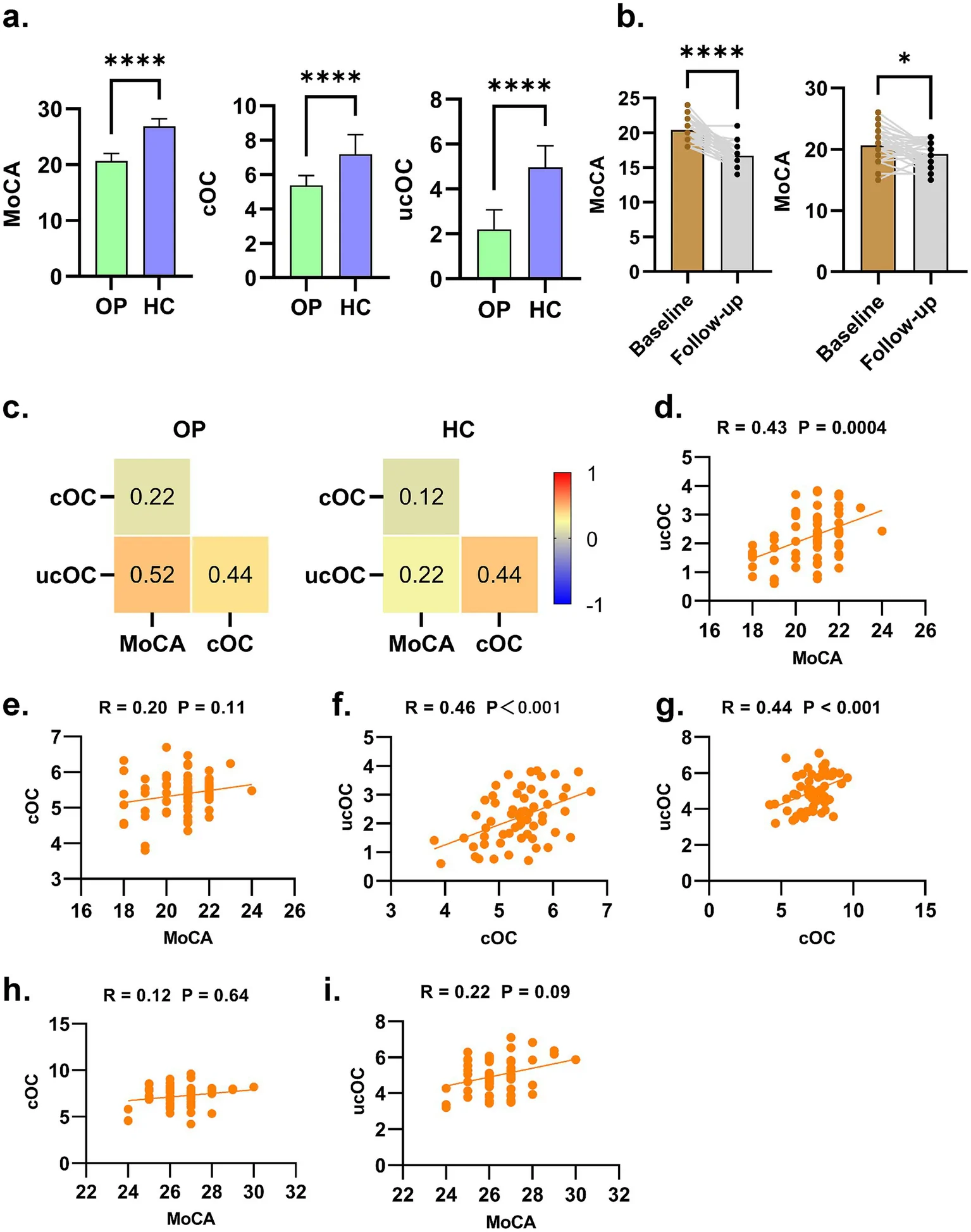
In a study of human patients, researchers evaluated how undercarboxylated osteocalcin, a bone-derived hormone, relates to brain structure and cognitive decline in osteoporosis. The team analyzed brain scans and cognitive scores across two cohorts, comparing 63 osteoporosis patients with 60 healthy controls in an initial dataset and 32 patients with 31 controls in a second cohort. Patients with osteoporosis showed lower Montreal Cognitive Assessment scores and reduced medial prefrontal cortex gray matter volume relative to controls. In patients, serum undercarboxylated osteocalcin positively correlated with cognitive scores and prefrontal volume, whereas carboxylated osteocalcin did not. Mediation analysis indicated that prefrontal volume statistically mediated the relationship between hormone levels and cognition. An XGBoost model based on this brain region predicted one-year cognitive decline in the second cohort with an AUC of 0.84.
Why it matters
The findings highlight a bone-to-brain signaling axis that helps explain why skeletal aging often coincides with neurocognitive decline. Tracking active osteocalcin and related brain changes could aid in identifying age-related cognitive deterioration earlier.
Caveats
The study was observational and cannot establish direct physiological causality. Additionally, both cohorts were recruited from a single medical center with modest sample sizes, and serum osteocalcin was measured only in the initial cohort.
From the paper
- Limitation
Firstly, it is limited to the collection and analysis of brain structural data; functional aspects of the brain, including the Amplitude of Low-Frequency Fluctuations (ALFF) and Regional Homogeneity (ReHo), require additional investigation.
Quoted word for word from the full text on PubMed Central.
The paper
China-Japan Friendship Hospital
Frontiers in Neurology, Sep 16, 2026, Open access


Comments
Be the first to comment.