Associations between sarcopenia, lower urinary tract symptoms, and urinary incontinence-related anxiety in community-dwelling older women: a cross-sectional study
Abstract
PURPOSE: This study aimed to examine the associations among sarcopenia, lower urinary tract symptoms, and anxiety in urinary incontinence in community-dwelling older women. METHODS: We analyzed data from 194 older women (mean age: 74.7 ± 5.8 years) who participated in a community cohort study. Sarcopenia was defined according to the Asian Working Group for Sarcopenia 2019 criteria. Lower urinary tract symptoms were classified into two groups based on the presence or absence of urinary incontinence, increased daytime frequency, and nocturia. Anxiety was classified into two groups based on the presence or absence of urinary incontinence-related anxiety in urinary incontinence. Associations among sarcopenia, lower urinary tract symptoms, and anxiety in urinary incontinence were examined using binary logistic regression analysis. RESULTS: Of the participants, 31 (16%) were classified as having sarcopenia, of whom 67.7% had nocturia, which was a significantly higher proportion (42.9%) than that in those without sarcopenia (p = 0.011). Multivariate analysis revealed that sarcopenia was significantly associated with nocturia (odds ratio: 2.61; 95% confidence interval: 1.05-6.49). No association was observed between sarcopenia and urinary incontinence, increased daytime frequency, or anxiety in urinary incontinence. CONCLUSIONS: Sarcopenia was independently associated with nocturia in community-dwelling older women, regardless of the presence or absence of concomitant lower urinary tract symptoms. These findings suggest that sarcopenia is related to nocturia and highlight the potential importance of evaluating sarcopenia in addition to pelvic floor muscles in older women.
From the paper
- Participants
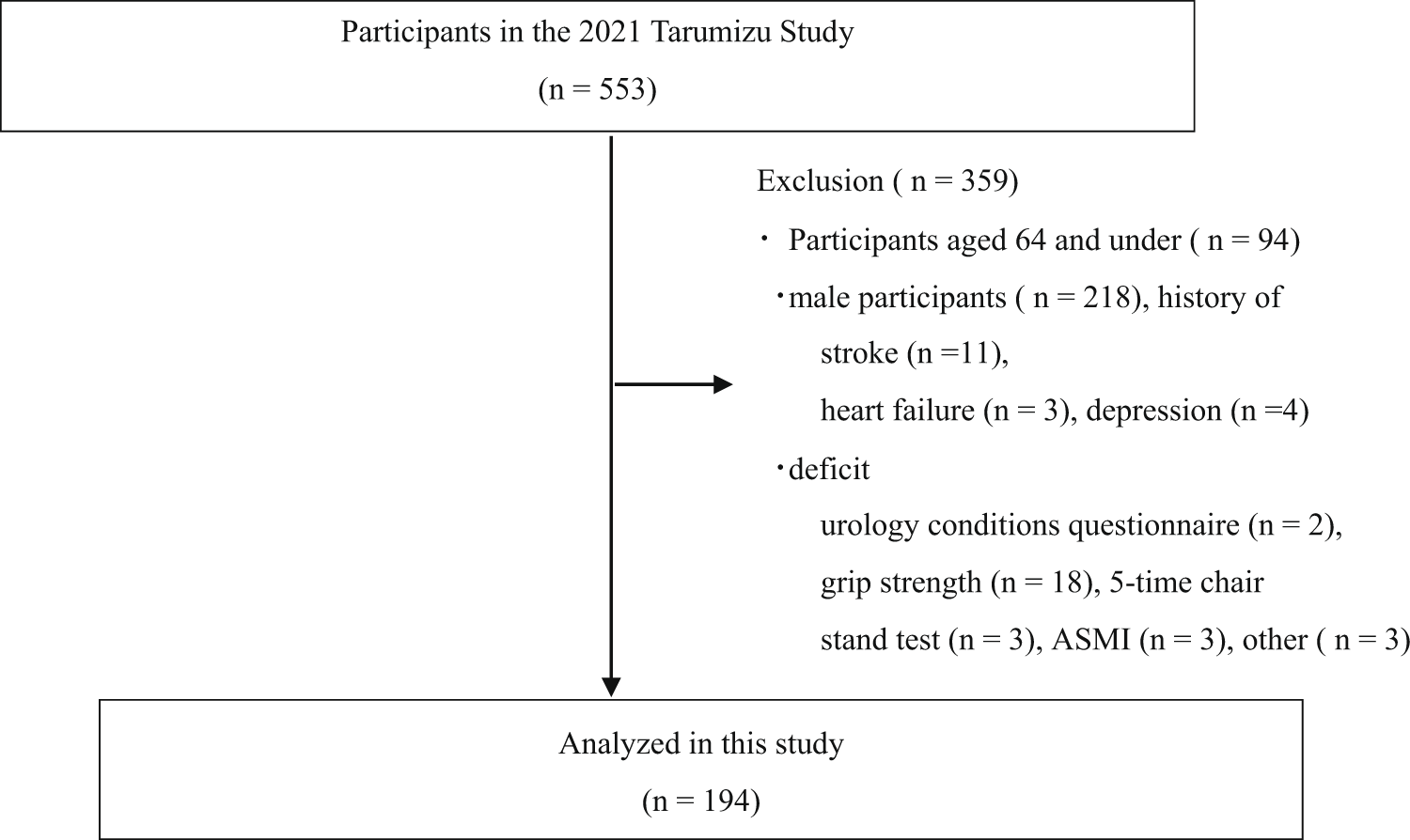
We analyzed data from 194 older women (mean age: 74.7 ± 5.8 years) who participated in a community cohort study.
- Result
Multivariate analysis revealed that sarcopenia was significantly associated with nocturia (odds ratio: 2.61; 95% confidence interval: 1.05–6.49).
- Limitation
First, this study was cross-sectional; thus, no causal relationships could be inferred.
Quoted word for word from the full text on link.springer.com.
- Sarcopenia
- Lower urinary tract symptoms
- Urinary incontinence
- Urinary incontinence-related anxiety
- Increased daytime urinary frequency
- Humans
The paper
Kagoshima University
World Journal of Urology, 13 Oct 2026, Open access


