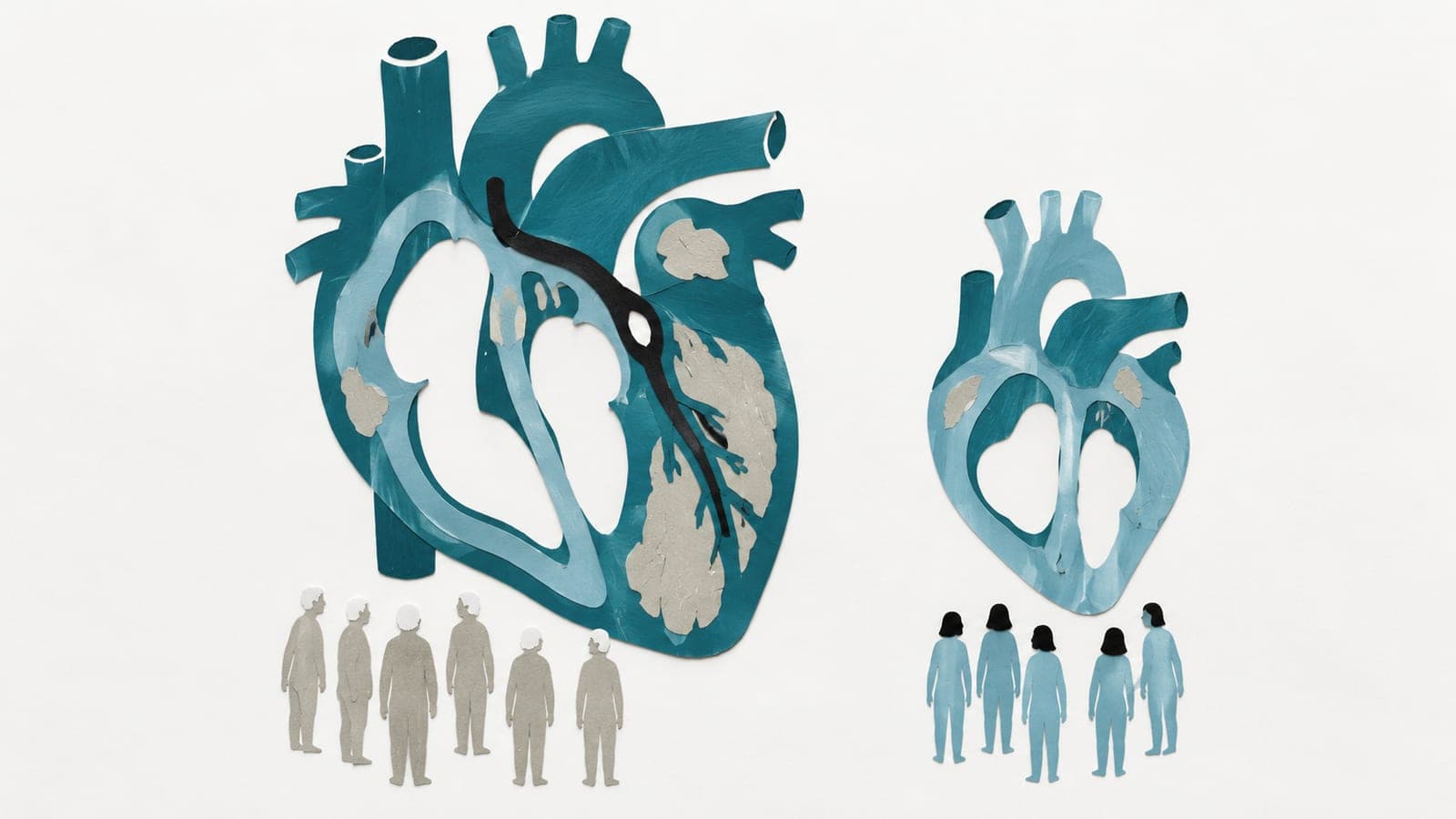
Heart failure grew more common as rates of new cases fell
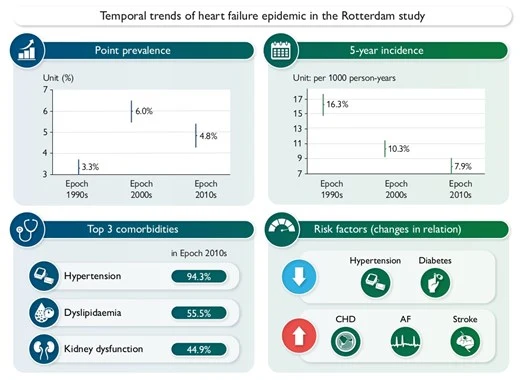
Heart failure affected 3.3% of participants in the 1990s and 4.8% in the 2010s; new case rates fell from 16.3 to 7.9 per 1,000 person-years.
An observational analysis of the population-based Rotterdam cohort compared groups of 7,983, 7,738 and 6,170 people with a mean age of nearly 70. The groups covered 1989–1993, 1997–2001 and 2009–2014, respectively.
Heart failure affected 3.3%, 6.0% and 4.8% at the start of each period, rising overall despite the later decline. Over five years, new case rates fell across the groups from 16.3 to 10.3 to 7.9 per 1,000 person-years, a measure of participants’ combined follow-up time. High blood pressure was the most common accompanying condition. Its association with new heart failure weakened over time, as did the association with diabetes. Coronary heart disease, which affects the heart’s blood supply, showed trends towards stronger associations. So did atrial fibrillation, an irregular heartbeat, and stroke.
Why it matters
Tracking heart failure in older people helps assess how the burden of disease changes over time and which conditions remain linked to its development.
Caveats
This observational study could not determine what caused the trends or whether the associated conditions caused heart failure. The findings came from one population-based cohort.
The paper
Temporal trends of heart failure epidemic in the Rotterdam Study over three decades
University Medical Center Rotterdam
European Journal of Preventive Cardiology, 13 Oct 2026