Alignment with lifestyle recommendations and physical health in breast cancer survivors and women without cancer
Abstract
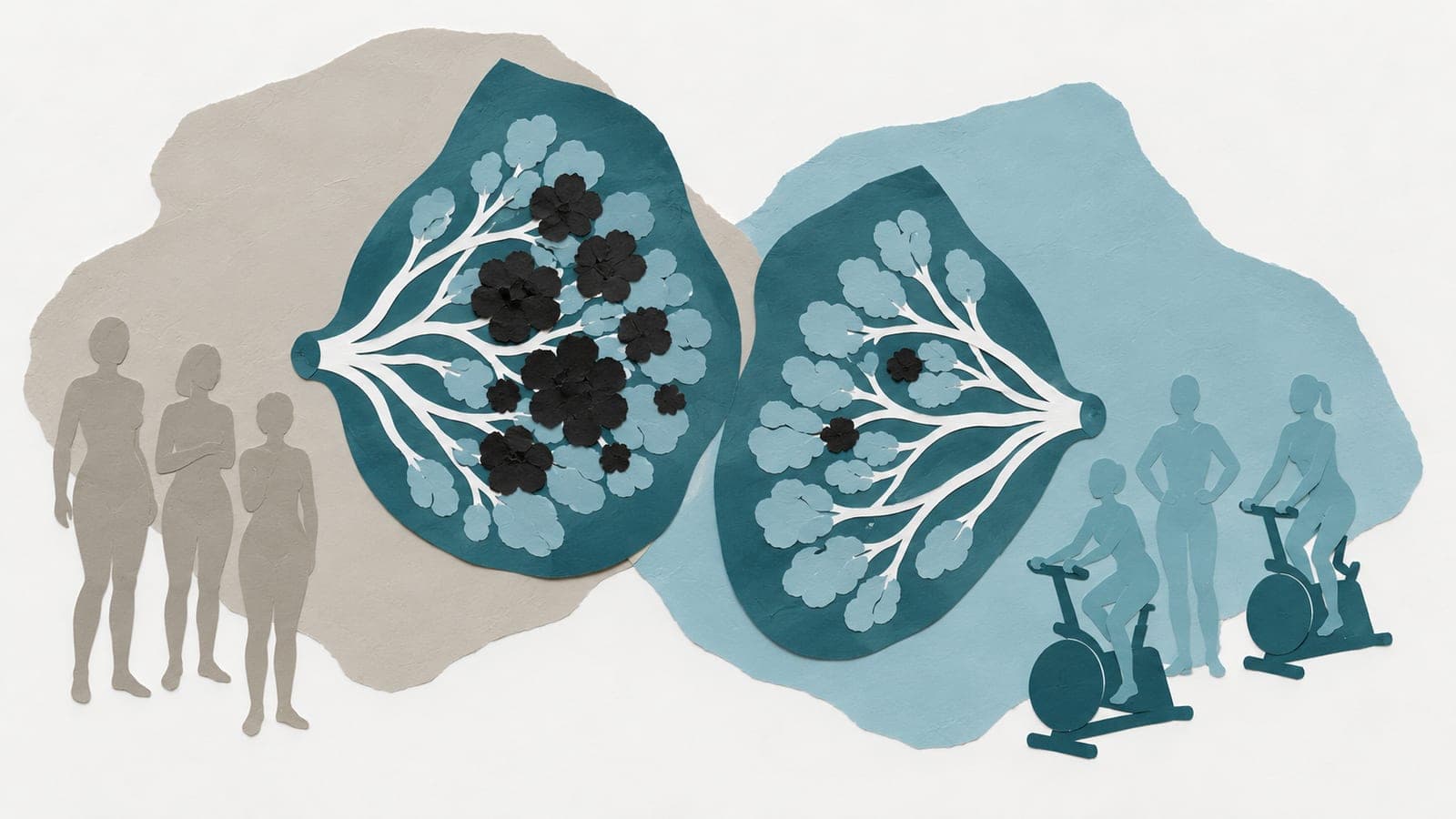
BACKGROUND: Breast cancer (BC) survivors, particularly those treated with chemotherapy, experience declines in physical health compared with age-matched women without cancer. We investigated whether alignment with healthy lifestyle behaviors, including body weight, physical activity, diet, and alcohol, was associated with better physical health among BC survivors. METHODS: This analysis included 1,610 BC survivors and 16,100 age- and survey date-matched women without cancer from the American Cancer Society (ACS) Cancer Prevention Study-3 prospective cohort. Lifestyle alignment was assessed using the ACS guideline score (0-8), categorized as low (0-4) or high (5-8). Physical health was measured using the Patient-Reported Outcomes Measurement Information System Global Health Scale. Associations between a combined treatment-lifestyle variable and physical health were estimated using linear regression adjusted for matching factors at pre-diagnosis, <3, and ≥3 years post-diagnosis. RESULTS: Higher guideline alignment was associated with better physical health (P < 0.001). Compared with women without cancer and low alignment, chemotherapy-treated BC survivors with low alignment had worse physical health (<3 years: β = -2.67, 95% CI = -3.77 to - 1.58; ≥3 years: β = -2.10, 95% CI = -3.70 to - 0.51). In contrast, chemotherapy-treated survivors with high alignment had better physical health (<3 years: β = 1.09, 95% CI = 0.30 to 1.89; ≥3 years: β = 2.56, 95% CI = 1.40 to 3.72). Survivors with higher alignment were predicted to have physical health comparable to the average U.S. population. CONCLUSION: Higher alignment with ACS lifestyle guidelines was associated with better physical health among BC survivors, including chemotherapy-treated survivors. These findings highlight the potential relevance of healthy lifestyle behaviors for supporting physical health among survivors.
The paper
Department of Population Science
Journal of the National Cancer Institute, 13 Oct 2026