Complement system in kidney transplantation: from innate immune surveillance to a therapeutic and genetic engineering target
Abstract
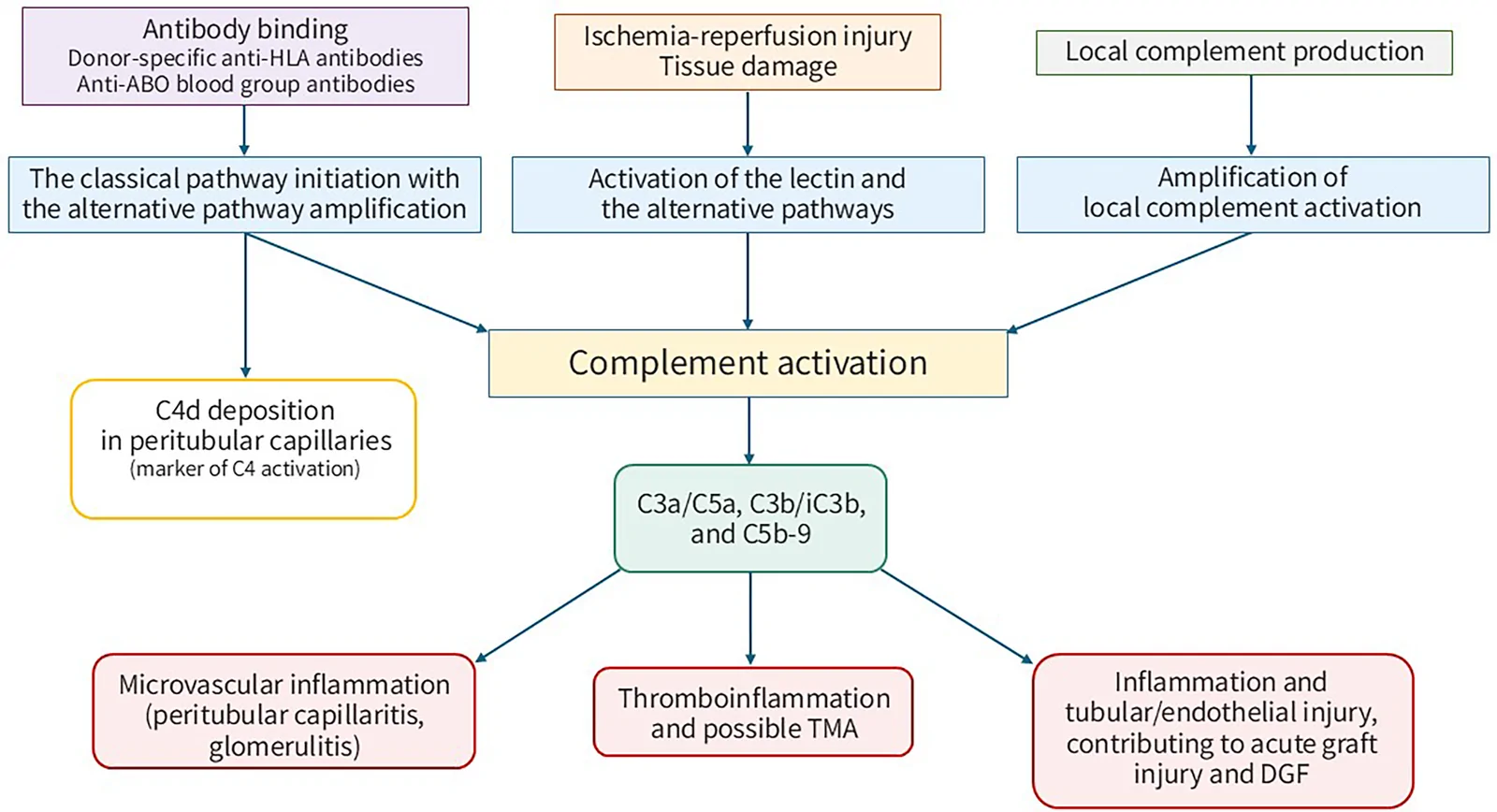
Kidney transplantation remains the most effective treatment for end-stage kidney disease; however, long-term graft survival is constrained by rejection and chronic graft injury, and donor shortages continue to drive interest in xenotransplantation. The complement system is increasingly recognized both as a terminal effector of antibody-mediated injury and as a regulatory network linking antibody responses, endothelial activation, ischemia-reperfusion injury, coagulation, and innate immune cell responses. In this review, we compare the role of complement in allogeneic and xenogeneic kidney transplantation and provide an overview of emerging therapeutic strategies. In allogeneic transplantation, donor-specific anti-HLA and anti-ABO blood group antibodies activate complement, particularly via the classical pathway, and contribute to antibody-mediated rejection. Although C4d deposition is a key marker of complement activation, its clinical significance depends on the presence of microvascular inflammation, endothelial injury, and other immune mechanisms. Complement-binding donor-specific antibodies may improve risk stratification, whereas the clinical benefits of inhibiting C5, C3, and upstream complement in chronic active antibody-mediated rejection remain uncertain. In xenotransplantation, α-Gal and non-Gal antigens, their corresponding natural antibodies, complement activation via the classical, lectin, and alternative pathways, and interspecies incompatibilities in complement regulation collectively promote vascular endothelial injury and thromboinflammation. Multiplex genetic modification of donor pigs, including deletion of major carbohydrate antigens and expression of human complement and coagulation regulatory proteins, has substantially mitigated hyperacute rejection. However, achieving durable xenograft survival requires effective control of macrophages, natural killer cells, neutrophils, and their interactions with the graft endothelium. Therefore, integrated strategies combining genetic complement regulation, pharmacological complement inhibition, coagulation regulation, and innate immune modulation may be essential for preventing chronic allograft injury and improving long-term kidney xenograft survival.
The paper
The University of Osaka
Frontiers in Immunology, 28 Sep 2026