Airborne benzene linked to fatty liver disease in UK adults
Each 0.151 microgram per cubic metre increase in residential benzene was associated with a 26% higher risk of developing non-alcoholic fatty liver disease.
Dose-response
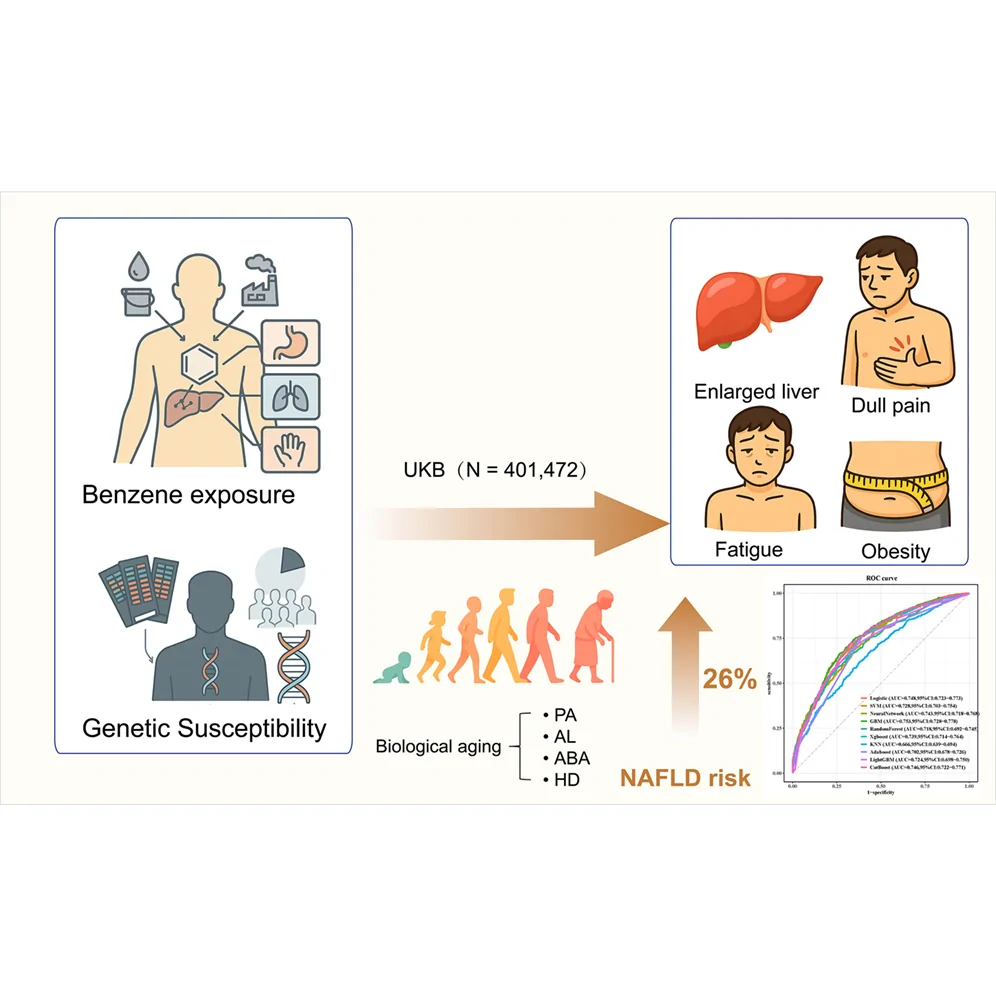
Researchers studied 401,472 adults from the UK Biobank in an observational cohort study of benzene exposure and non-alcoholic fatty liver disease, a build-up of liver fat not due to heavy drinking. They estimated benzene levels at participants’ homes using a model covering 2006–2020, with a resolution of one kilometre.
After accounting for other factors, each 0.151 microgram per cubic metre increase in benzene was associated with a 26% higher risk of developing the disease. The relationship was not linear. The researchers’ statistical analysis estimated that accelerated biological aging—age-related changes in the body—accounted for 6.5% of this association.
Why it matters
Biological aging offers a way to investigate whether age-related changes in the body help connect long-term pollution exposure with liver disease.
Caveats
This observational study could not establish that benzene caused fatty liver disease or that biological aging caused part of the association. Exposure estimates came from residential models, not personal measurements.