Childhood trauma and cognitive decline in women: an empirical analysis of cognitive vulnerability in later life
Abstract
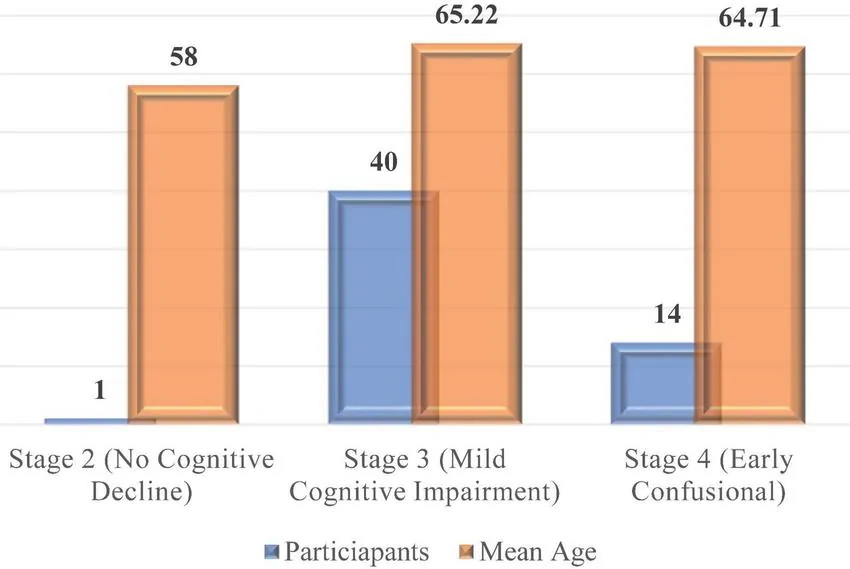
Childhood trauma has lasted consequences for women's cognitive health and this may contribute to memory decline and increased vulnerability to cognitive impairment in later life. A cross sectional study was carried out to assess the correlation between childhood trauma and cognitive status among 55 women aged 58-79 years were selected from Departments of Psychiatry and General Medicine, Tanta University Hospital, Egypt. The Montreal Cognitive Assessment (MoCA) was used to evaluate cognitive performance, the Global Deterioration Scale (GDS) for global clinical staging, and the Childhood Trauma Questionnaire (CTQ) for childhood adversity. Overall, emotional abuse was exposed the most with a high mean score on the CTQ subscale. Pearson correlations and multiple linear regression models (controlling for age) showed that emotional neglect and physical neglect were the strongest predictors across both outcomes. For MoCA performance, emotional neglect (β = -0.0877, r = -0.85, p < 0.01) and physical neglect (β = -0.0100, r = -0.80, p < 0.01) showed the largest effects. GDS coefficients had an absolute value that was proportionately smaller (emotional neglect: β = 0.0112; physical neglect: β = 0.0013) and, consistent with the higher-is-worse nature of the GDS, were positive in direction. Additional findings show a greater amount of neglect predicted more advanced clinical staging, and that there was no change to the relative order of effects by predictor compared to the MoCA model. The regression model accounted for 72.5% of the variance (R² = 0.725) in MoCA. The results indicate that childhood neglect, especially emotional neglect, might be an important risk factor for cognitive vulnerability in adulthood and highlight the necessity to intervene early in childhood to promote cognitive health in women.
- Childhood trauma
- Childhood neglect
- Emotional abuse
- Cognitive impairment
- Childhood Trauma Questionnaire
- Humans
The paper
Tanta University; Bond University
Frontiers in Aging Neuroscience, 28 Sep 2026