Divergent ocular safety profiles of glucagon-like peptide-1 receptor agonists: a pharmacological heterogeneity framework
Abstract
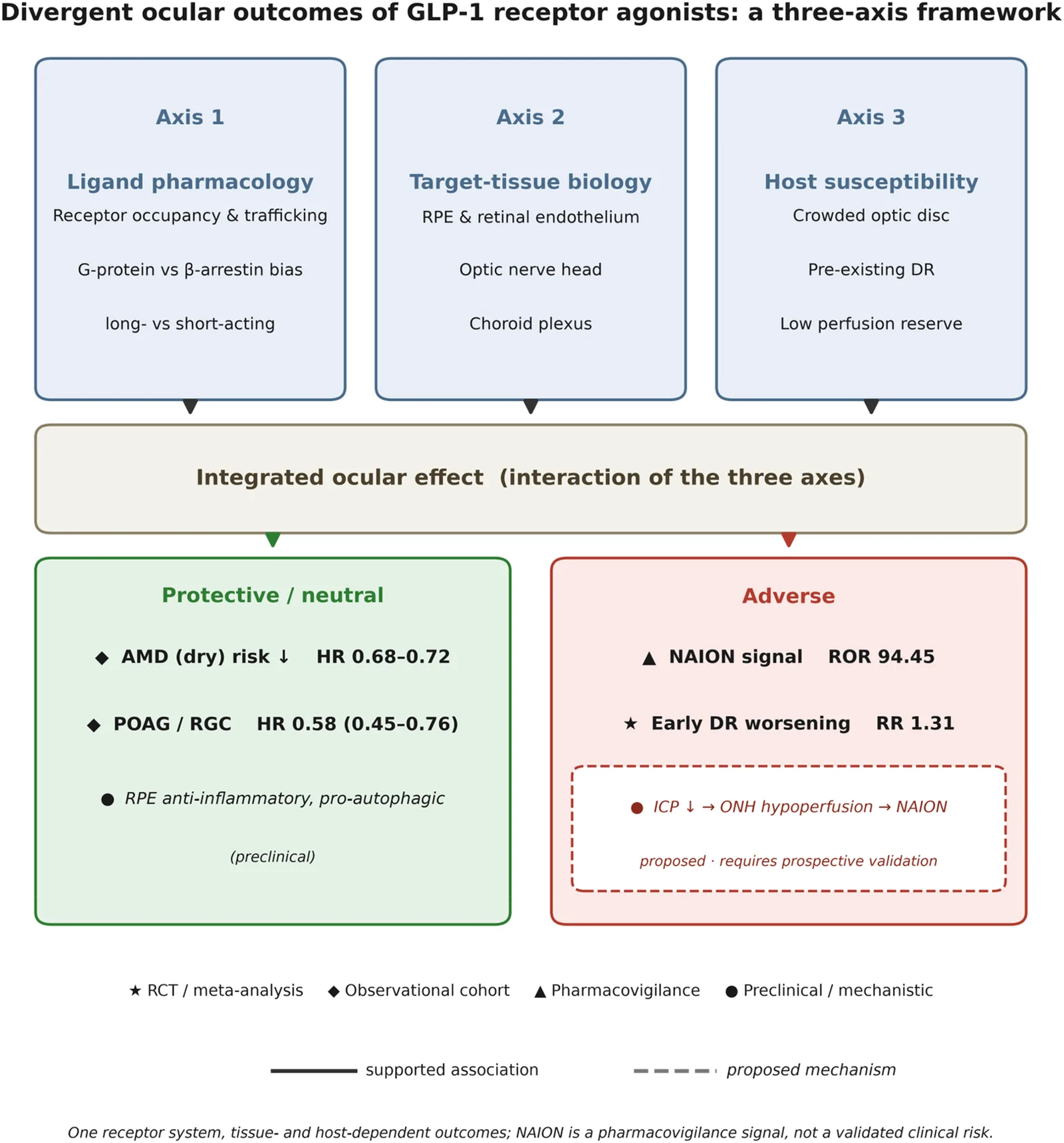
Glucagon-like peptide-1 receptor agonists (GLP-1RAs) have revolutionized the treatment of type 2 diabetes and obesity, yet their ocular safety profile remains contested. The longer-acting semaglutide has been repeatedly linked to an increased risk of non-arteritic anterior ischemic optic neuropathy (NAION) and, in situations of rapid glycemic correction, to early deterioration of diabetic retinopathy, while shorter-acting drugs such as liraglutide and exenatide show much weaker signals. This review explores the pharmacological underpinnings of this difference by combining three lines of evidence: biased agonism and trafficking at the receptor level, cell-type-specific signaling microenvironments, and a recently proposed hemodynamic mechanism based on GLP-1RA-mediated changes in intracranial pressure. The ocular liabilities of GLP-1RAs may be influenced by a multifactorial interplay between ligand-dictated receptor occupancy profiles, cell-type-specific signaling milieu, and individual anatomical vulnerabilities. This model makes testable predictions and has implications for drug choice, risk stratified monitoring, and the development of future agonists with enhanced ocular safety. Key areas for future research include head-to-head comparisons of different GLP-1RAs' signaling in specific ocular cell types and the risk-benefit equation in non-diabetic individuals using these drugs for weight loss.
- Exenatide
- GLP-1 receptor agonists
- GLP1R
- GLP-1 and incretin signalling
- Diabetic retinopathy
- Non-arteritic anterior ischemic optic neuropathy
The paper
Chongqing College of Traditional Chinese Medicine
Frontiers in Medicine, 28 Sep 2026, Open access