Semaglutide improved heart artery function in pigs
In pigs with metabolic syndrome and coronary artery disease, semaglutide improved blood vessel widening without weight loss.
Research Square
In pigs with metabolic syndrome, a cluster of metabolic risk factors, and disease of the heart’s arteries, researchers tested the drug semaglutide in an animal experiment. They also studied obese ZSF-1 rats modelling heart failure with preserved ejection fraction, in which the heart pumps out a normal share of blood with each beat.
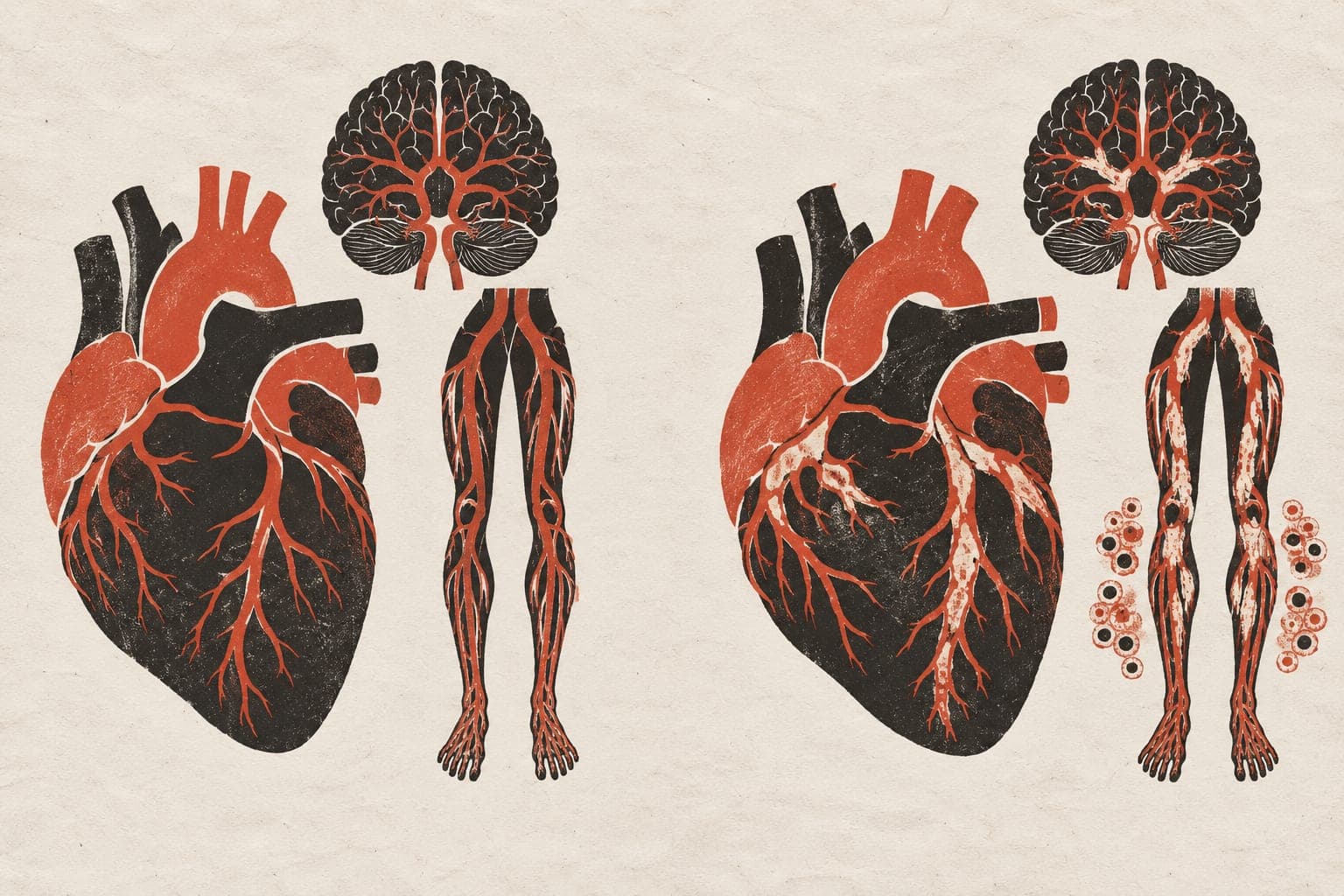
In both models, semaglutide did not change body weight. It improved blood vessel widening that depends on the vessels’ inner lining, both in heart arteries and in the aorta, the body’s main artery. It reduced structural changes and scarring in heart arteries and increased the density of tiny blood vessels in heart muscle. It also changed the mix of fats in blood, including reductions in two types called ceramides and diacylglycerols.
Why it matters
For age-related heart failure, the study addresses whether blood vessel and metabolic effects may contribute to semaglutide’s cardiovascular benefits independently of weight loss.
Caveats
These were animal experiments, not a test of clinical benefits in people. The report is a preprint and has not been peer-reviewed.
- Semaglutide
- Extracellular matrix remodelling
- Lipid and ceramide metabolism
- Metabolic syndrome
- Coronary artery disease
- Pigs
The paper
Show 7 more authors
Craig Resch, Annie Butt, Faisal Rahman, Cinthia Drachenberg, David Burk, Timothy Allerton, Amir Ravandi,Research Square · 11 Aug 2026 · Preprint, not peer-reviewed