Lower blood pressure linked to lower risk in advanced kidney disease
The hazard ratio, comparing heart and blood vessel risk over time, was 0.93 for pressures of 120 to below 130 versus 130 to below 140 millimetres of mercury.
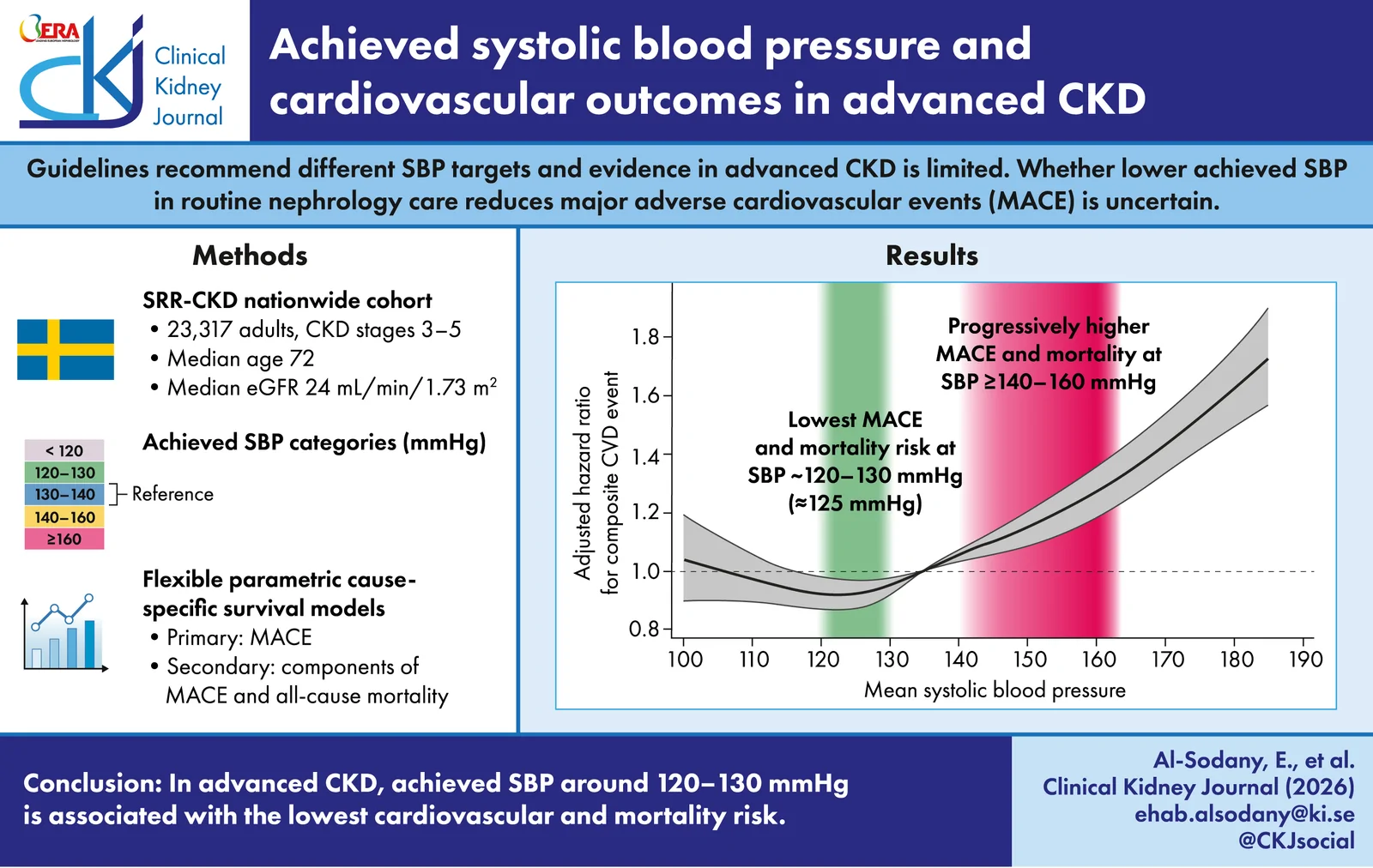
An observational cohort study followed 23,317 adults with stage 3 to 5 chronic kidney disease referred to kidney specialist clinics in Sweden. Their median age was 72. Researchers grouped patients by their average clinic systolic blood pressure—the pressure when the heart contracts—during the first year.
Over a median 2.5 years, 8,556 experienced major heart and blood vessel events and 7,686 died. Compared with 130 to below 140 millimetres of mercury, pressure of 120 to below 130 was linked to lower risks of these events and death. Both adjusted hazard ratios were 0.93. Cardiovascular risk was lowest near 125 millimetres of mercury when researchers analysed pressure across its range. Pressure of 160 or higher was linked to higher risks of cardiovascular events and death.
Why it matters
Guidelines disagree on blood pressure targets in advanced kidney disease. The study informs that debate in a population with a median age of 72, connecting it to cardiovascular health in later life.
Caveats
This observational study could not establish whether lowering blood pressure caused the differences in risk. The findings concerned adults with advanced kidney disease referred to specialist clinics.