Drug class linked to fewer deaths or complications in kidney disease
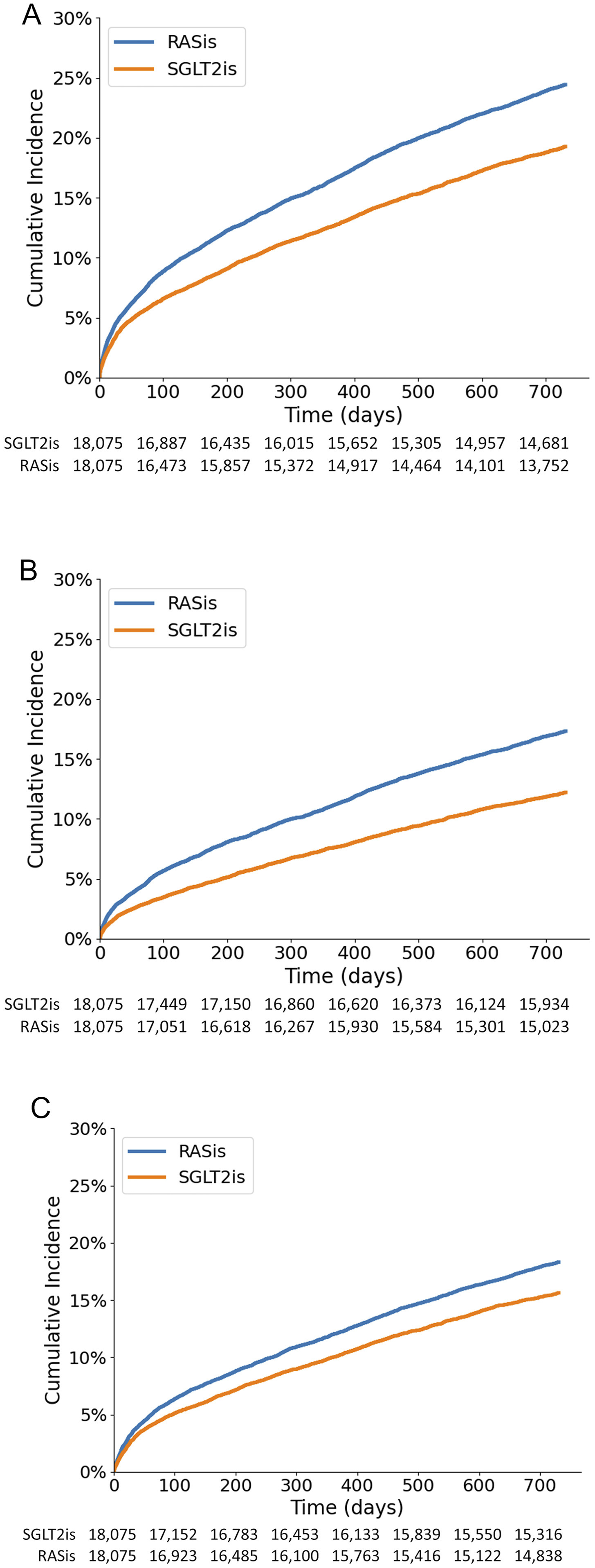
The two-year combined outcome rate was 15.6% for sodium-glucose cotransporter 2 inhibitors versus 19.9% for renin-angiotensin system inhibitors, the comparison drug class.
The American Journal of Cardiology
Adults with chronic kidney disease and no previous heart failure were studied in an observational cohort analysis of electronic health records. Heart failure means the heart cannot pump blood adequately. Researchers analysed 18,075 matched pairs who started sodium-glucose cotransporter 2 inhibitors or renin-angiotensin system inhibitors between 2020 and 2023. Matching aimed to balance their starting characteristics.
Over two years, starting the first drug class was linked to a lower rate of a combined outcome: death from any cause, new heart failure, dialysis to filter the blood, or kidney function falling below a specified threshold. Rates were 15.6% versus 19.9% with the comparison class. Findings were consistent across subgroups, including people with and without diabetes and different levels of kidney disease severity.
Why it matters
Chronic kidney disease is an age-related health concern. This comparison addresses which medicines may be associated with better heart and kidney outcomes in people living with the condition.
Caveats
This observational comparison could not establish that the drugs caused the difference; matching may not have accounted for all differences between the groups. The main result combined several outcomes rather than measuring any one alone.
- Sodium-glucose cotransporter 2 inhibitors
- Chronic kidney disease
- Heart failure
- Estimated glomerular filtration rate
- Urine albumin-to-creatinine ratio
- Humans
The paper
Mitsui Memorial Hospital · University of California San Diego
The American Journal of Cardiology · 7 Oct 2026