Underweight is linked to higher kidney disease risk in diabetes
Underweight carried an odds ratio of 1.41 for incident chronic kidney disease compared with no obesity, whereas excess adiposity showed an odds ratio of 1.03.
Frontiers in Endocrinology
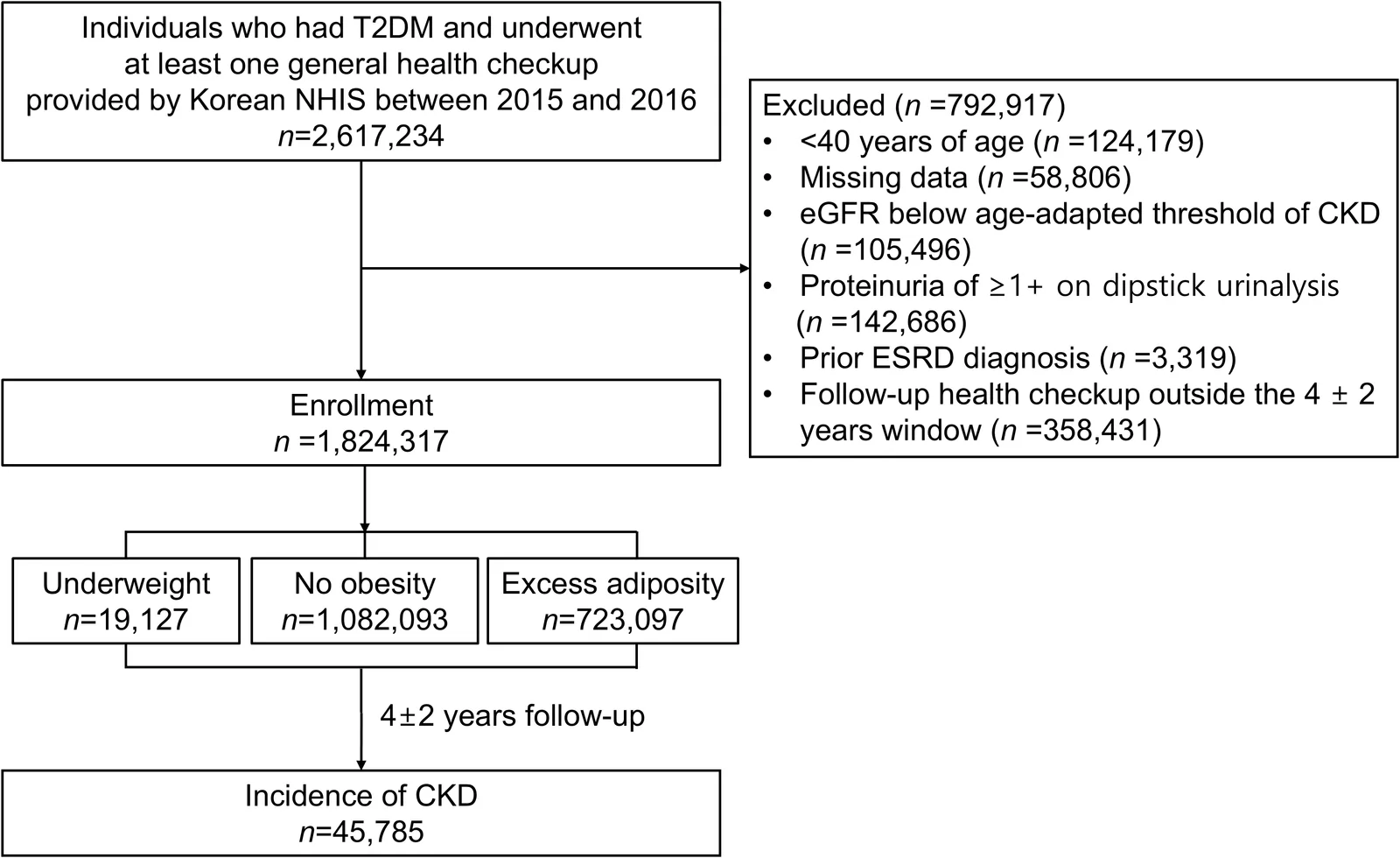
In a nationwide cohort of 1,824,317 Korean adults aged 40 years and older with type 2 diabetes, researchers tracked kidney function over four years of follow-up. Using health insurance records, they classified participants by combined body mass index and waist circumference into underweight, no obesity, and excess adiposity categories. Incident chronic kidney disease was defined using age-adapted estimated glomerular filtration rate thresholds. Over the study period, chronic kidney disease developed in 2.8% of underweight adults, 2.3% of those without obesity, and 2.9% of those with excess adiposity. After full adjustment, underweight was associated with a higher risk of incident disease (odds ratio 1.41) than excess adiposity (odds ratio 1.03), relative to no obesity. Underweight was tied to increased risk across all age and sex groups, especially in middle-aged men. Excess adiposity was linked to increased risk in women but not in men.
Why it matters
The findings suggest that low body mass and potential muscle wasting may present a greater hazard for renal aging than excess fat in diabetes. They also highlight that adiposity-related kidney risks differ markedly by chronological age and sex.
Caveats
The study relies on observational health insurance data, which cannot establish causality, and used estimated filtration rate thresholds without incorporating proteinuria data into incident outcomes. The analysis was also restricted to a Korean population.
The paper
Yeungnam University College · Korea University Ansan Hospital
Frontiers in Endocrinology · 17 Sep 2026