Effects of exercise on cognitive function in older adults: a systematic review and meta-analysis of the mediating role of sleep
Abstract
BACKGROUND: Sleep disturbances affect nearly half of older adults and are linked to cognitive decline, yet the mechanistic pathways linking exercise to cognitive benefits remain poorly understood. We hypothesized that sleep quality mediates the exercise-cognition relationship in older adults. METHODS: We systematically searched PubMed, Web of Science, Cochrane CENTRAL, Embase, and PsycINFO from inception to June 2026 for randomized controlled trials examining structured exercise interventions (≥4 weeks) in adults aged ≥60 years that reported both cognitive and sleep outcomes. Random-effects meta-analyses and meta-analytic structural equation modeling (MASEM) were used to test the mediation hypothesis. Subgroup analyses examined baseline cognitive status and intervention duration. RESULTS: Eight studies (841 participants) were included. Exercise significantly improved cognitive function (SMD = 1.32, 95% CI: 0.70-1.94) and sleep quality (SMD = -1.13, 95% CI: -1.73 to -0.53). MASEM confirmed sleep quality as a significant partial mediator, with an indirect effect of β = 0.300 (95% CI: 0.125-0.404), accounting for 50.8% of the total cognitive benefit. The mediation proportion was larger in individuals with mild cognitive impairment (67.6%) than in cognitively healthy older adults (31.9%). CONCLUSION: Sleep quality significantly mediates the exercise-cognition relationship in older adults, accounting for approximately half of the cognitive benefit. These findings identify sleep as a candidate mechanistic target for optimizing exercise interventions, though larger mediation-designed trials are needed to confirm these exploratory estimates.
From the paper
- Participants
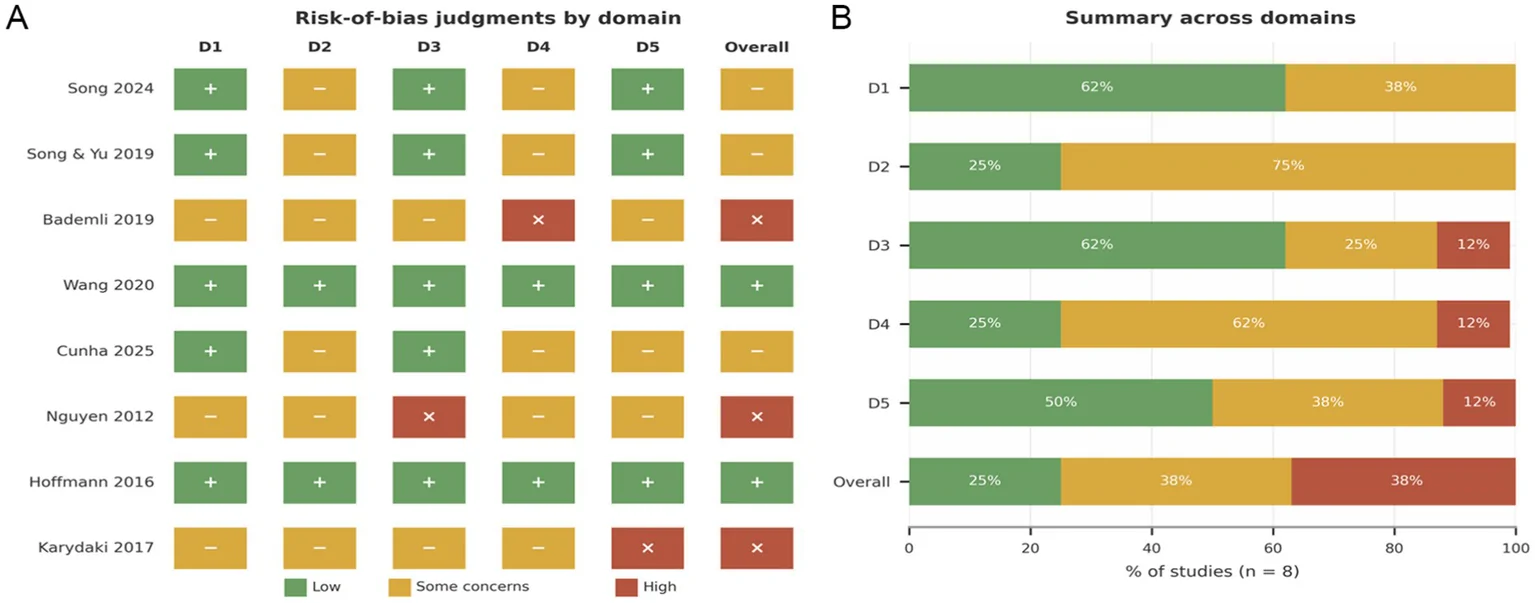
The eight included studies involved a total of 841 participants (439 in intervention groups and 402 in control groups), with analysed sample sizes per study ranging from 49 to 190.
- Result
Exercise was found to significantly improve global cognitive function, with a pooled standardised mean difference of 1.32 (95% CI: 0.70–1.94, p < 0.001), although heterogeneity was substantial ( I = 93.7%, τ = 0.64; see Figure 3A ).
Quoted word for word from the full text on frontiersin.org.
The paper
Guangzhou Sport University
Frontiers in Human Neuroscience, 28 Sep 2026