Cancer Risk in Haemodialysis Patients Compared With That in the General Population: A Multicenter Questionnaire-Based Study in Okinawa, Japan
Multicentre
Abstract
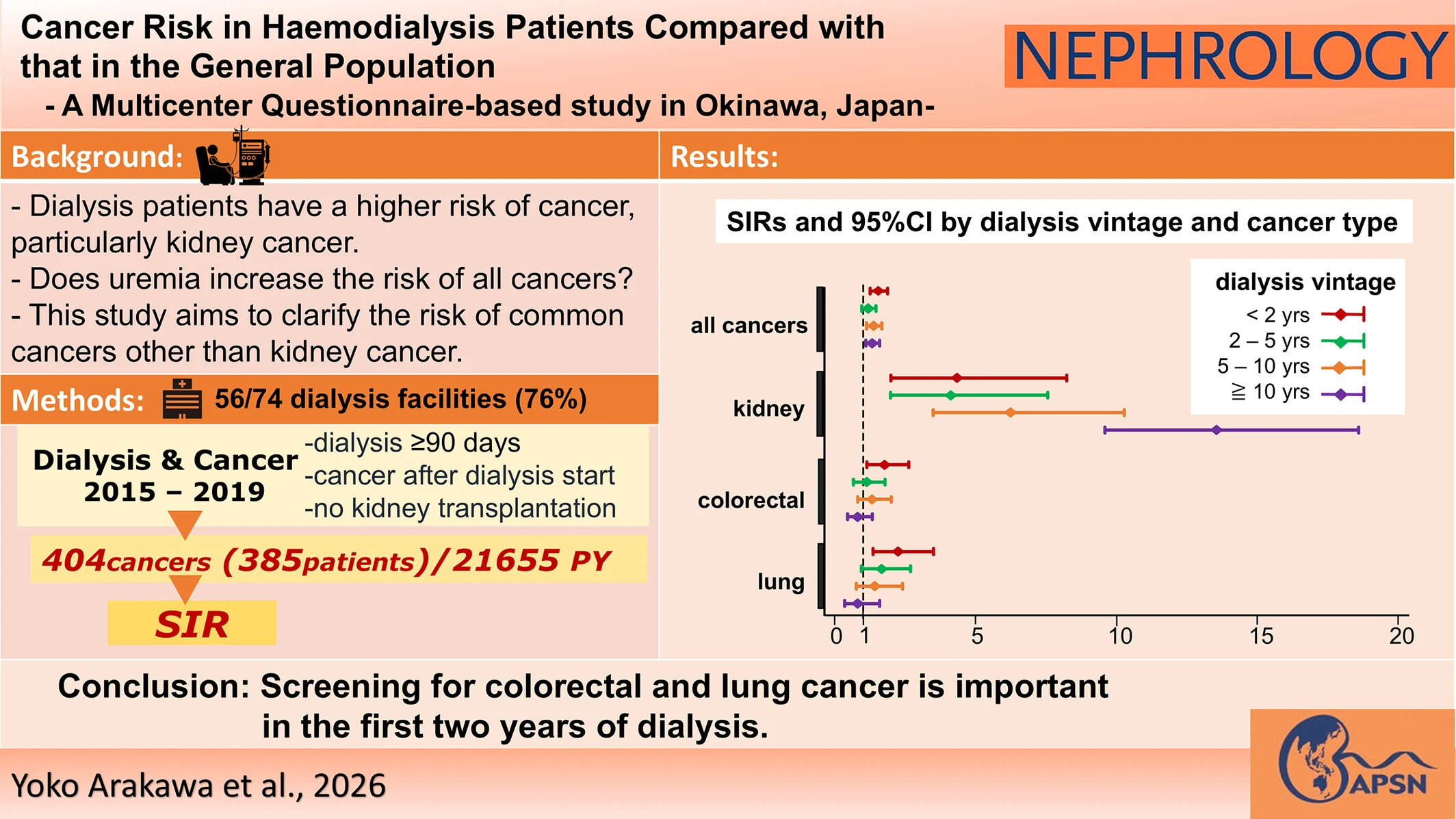
AIM: Dialysis patients face a heightened risk of cancer, particularly kidney cancer. The global aging of dialysis patients suggests that managing cancer may become a critical factor in future healthcare. Given that the chronic uremic state is a cancer risk factor, dialysis patients may face an elevated risk for all cancers. However, the epidemiology of nonkidney cancers, such as colorectal cancer, remains to be fully elucidated. METHODS: This was a retrospective cohort study targeting 74 dialysis facilities in Okinawa Prefecture, Japan. The subjects were patients who received dialysis for a minimum of 90 days between 2015 and 2019 and were diagnosed with cancer after initiating dialysis during this period. The cancer incidence ratio for the study population (21 655 person-years) was then compared with that of the general Okinawan population using standardized incidence ratios. RESULTS: A total of 404 cancer cases were collected from 56 facilities (76%). The standardized incidence ratios for all cancers was 1.36, with the risk of kidney cancer increasing with longer dialysis vintage. Patients with a dialysis vintage of less than 2 years showed an increased risk of colorectal and lung cancer. The risk of breast cancer was similar to that of the general population. CONCLUSION: The present study revealed that not all cancer risks were increased among patients receiving haemodialysis. Screening for colorectal and lung cancer in the first 2 years after commencement of dialysis may be important. Further research is needed to determine the efficacy of this approach for patients receiving dialysis.
From the paper
- Participants
A total of 404 cancer cases were collected from 56 facilities (76%).
- Limitation
First, cancer ascertainment was based on questionnaire data abstracted from medical records at participating dialysis facilities, and individual-level linkage with the cancer registry or external audit was not performed.
Quoted word for word from the full text on onlinelibrary.wiley.com.
The paper
Shuri Jokamachi Clinic Daiichi; Okinawa Heart and Renal Association (OHRA)
Nephrology, 1 Oct 2026