Better sleep linked to lower psychiatric risk in preclinical obesity
The highest sleep-score group had a hazard ratio of 0.47, a measure comparing risk over time, against the lowest group during 12.9 years’ average follow-up.
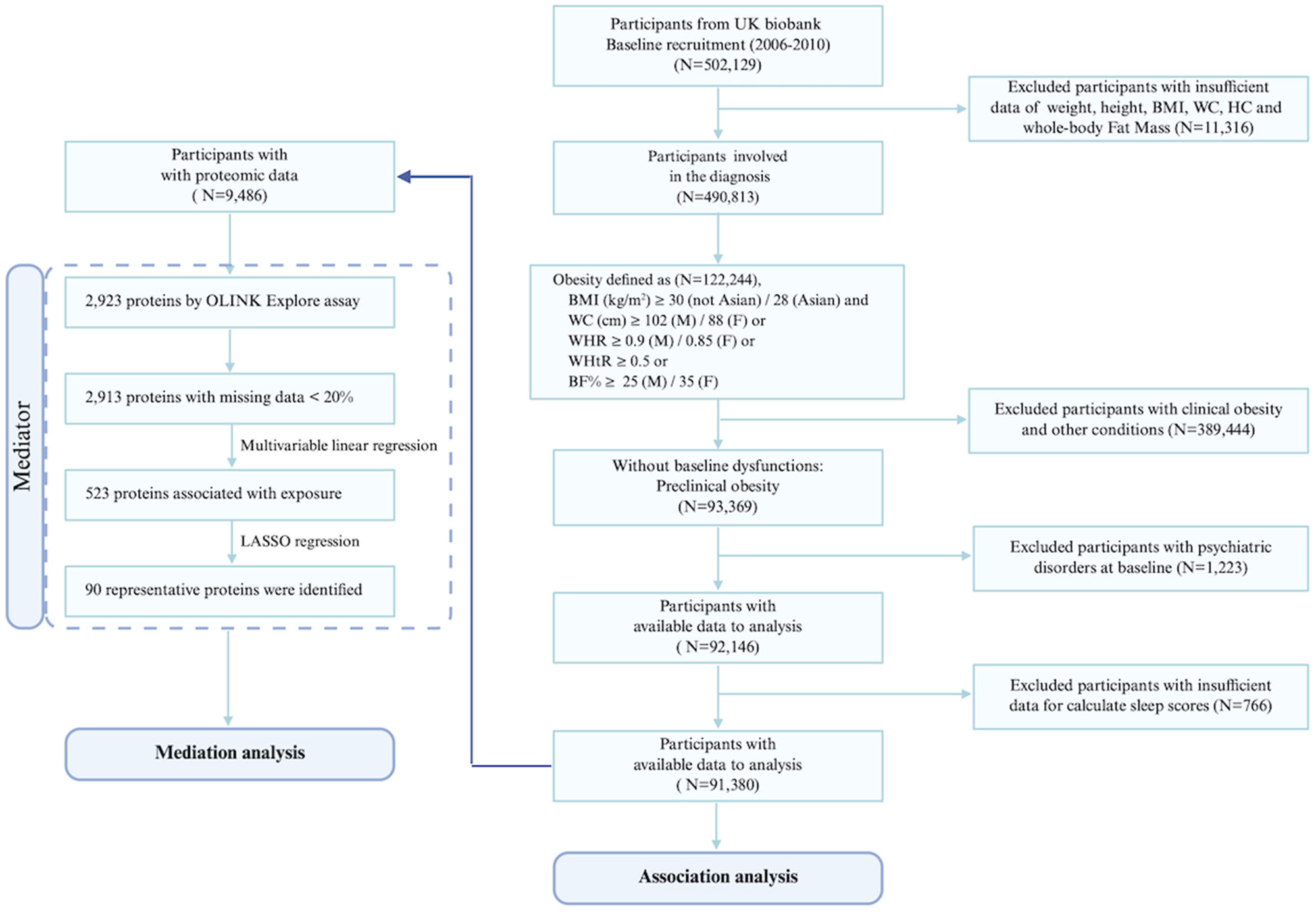
In a prospective cohort study, 91,380 UK Biobank participants with preclinical obesity—excess body fat not yet causing clinical illness—were grouped by their sleep scores. Researchers followed them for an average of 12.9 years and recorded 8,992 new cases of psychiatric disorders.
Higher sleep scores were associated with lower risk after adjustment for other factors. The highest-score group had the lowest risk. The association was strongest for attention deficit hyperactivity disorder, a condition affecting attention and impulse control. Researchers also analysed blood proteins in a subset of 9,486 participants. Their statistical analysis identified 16 proteins that might partly account for the association.
Why it matters
For people with preclinical obesity, sleep assessment may be relevant to psychiatric health, an important part of healthy aging.
Caveats
This observational study cannot show that better sleep caused the lower psychiatric risk or that the proteins formed a causal pathway. The findings concerned people with preclinical obesity.
From the paper
- Participants
A total of 91,380 UK Biobank participants were ultimately included in the association analysis (Fig. 1).
- Result
After stepwise adjustment for multiple confounders, the fully adjusted HRs in Model 3 across Groups 1–6 were 1.00, 0.85 (95% CI: 0.78–0.93), 0.72 (95% CI: 0.66–0.78), 0.60 (95% CI: 0.55–0.65), 0.51 (95% CI: 0.46–0.57) and 0.47 (95% CI: 0.33–0.67), respectively.
Results, Psychiatric disorder incidence risks across different groups
Quoted word for word from the full text on cambridge.org.
- Sleep
- Preclinical obesity
- Psychiatric disorder
- Attention deficit hyperactivity disorder
- Composite sleep score
- Humans
The paper
Shanghai Sixth People's Hospital; Chronic Disease Epidemiology Laboratory
Epidemiology and Psychiatric Sciences, 13 Oct 2026