Humanin attenuates neuronal cellular senescence and preserves neurotransmitter release in differentiated PC12 cells
Abstract
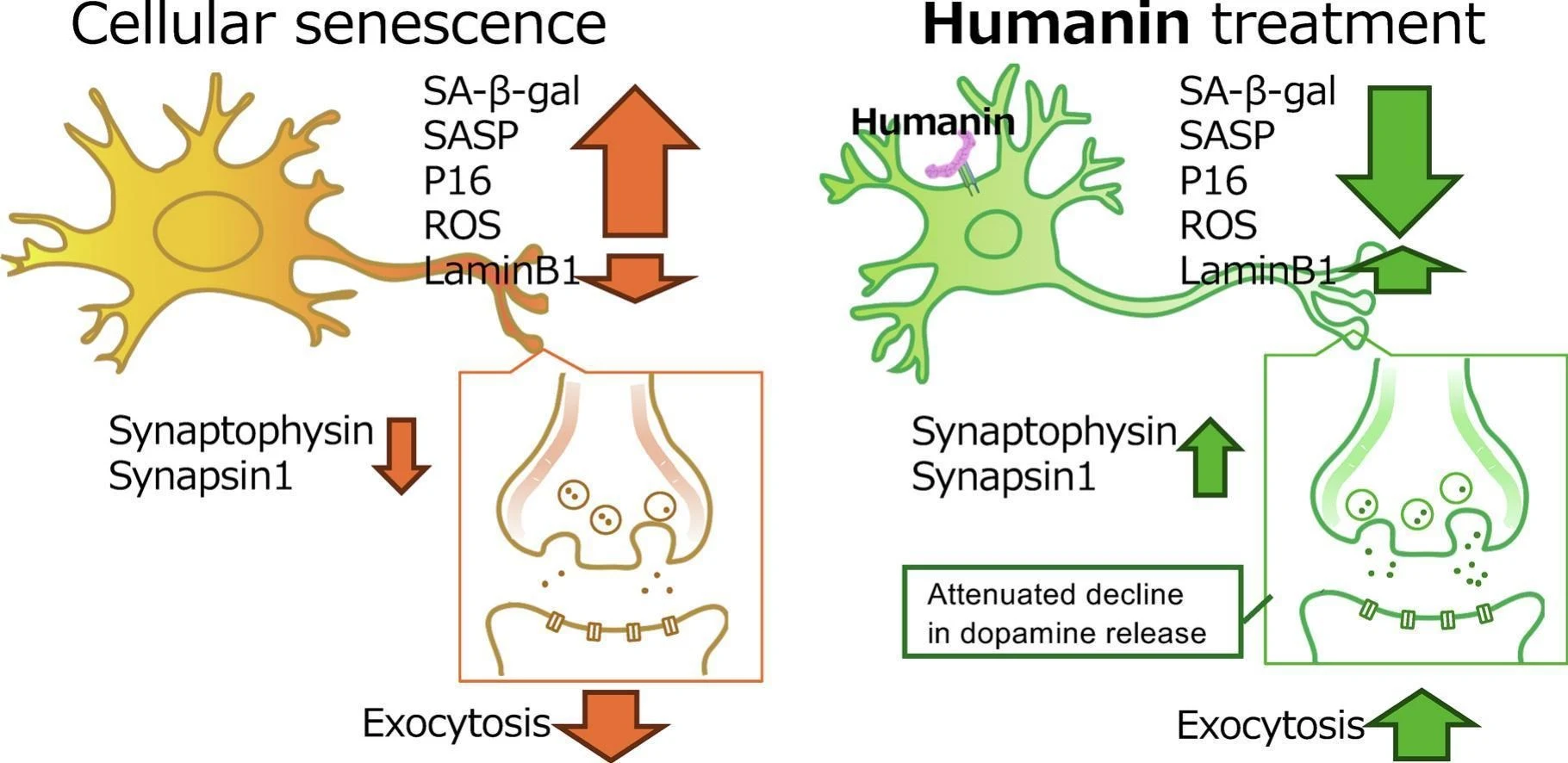
Cellular senescence, characterized as a permanent arrest of cell proliferation, is triggered by various types of stress. Senescent cells are identified by markers, including senescence-associated β-galactosidase (SA-β-gal) activity and the secretion of senescence-associated secretory phenotype (SASP) factors. These senescent phenotypes have been observed in neurons, suggesting that cellular senescence may contribute to the pathogenesis of neurodegenerative diseases. Humanin (HN), an endogenous short peptide, mitigates Alzheimer's disease-associated pathologies, including amyloid β-induced neuronal cell death. Overexpression of HN extends the lifespan of nematodes, suggesting a potential anti-aging role for this peptide. Here, we first investigated the effect of HN on cellular senescence in mouse primary cortical neurons. Chronic treatment with HNG, a highly potent HN derivative, attenuated prolonged culture-induced senescence. To further determine whether this anti-senescent effect is associated with preserved exocytotic function, we employed a glutamate-induced senescence model in neuronal-differentiated PC12 cells. In this system, HNG mitigated changes in senescence-associated markers, including increases in SA-β-gal activity, Ki67 expression, and SASP factor expression. In addition, acetylcholine-induced dopamine release was reduced in senescent PC12 cells, whereas chronic HN treatment sustained the expression levels of synapsin 1 and synaptophysin and attenuated the senescence-associated decrease in neurotransmitter release. These findings suggest that HN suppresses senescence and sustains exocytosis activity in neuronal cells, supporting an anti-aging function of HN at the cellular level.