Metagenomic and systematic analyses reveal the association between hemoglobin levels and metabolic disorders: an open cohort study of Tibetan adults in Qinghai Plateau
Abstract
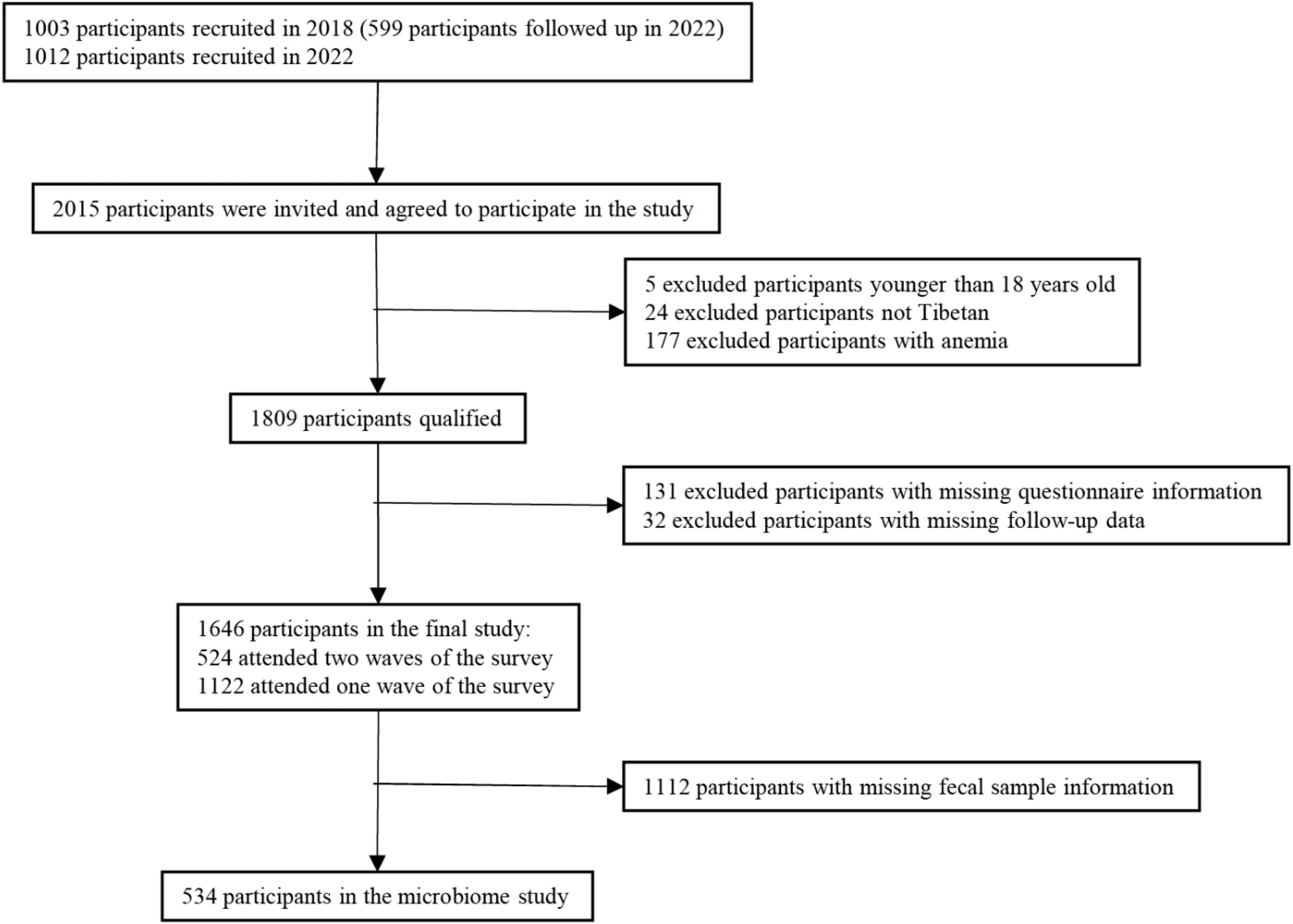
AIM: Hemoglobin (Hb) varies with altitude, but evidence linking Hb levels to metabolic diseases in high-altitude populations remains limited. We examined associations between Hb and seven metabolic diseases in high-altitude adults and potential mediation by gut microbiota. METHODS: We analyzed an observational cohort of 1,646 Tibetan adults from the Qinghai Plateau, stratified by Hb tertiles. Mixed-effects logistic regression and generalized additive mixed models assessed Hb-metabolic disease associations using pooled person-time data. Gut metagenomic sequencing and mediation analysis were performed on 534 fecal samples, with KEGG annotation characterizing microbial functional potential. RESULTS: Hb correlated positively with six metabolic diseases (P < 0.05). Compared with the lowest tertile (122-151 g/L), the highest Hb tertile (169-252 g/L) showed significantly increased adjusted ORs for diabetes (10.02; 95% CI 3.00-33.43), hypertension (2.08; 1.14-3.80), hypercholesterolemia (3.04; 1.24-7.45), hypertriglyceridemia (4.66; 1.60-13.56), overweight/obesity (5.15; 1.83-14.48) and metabolic syndrome (4.58; 2.50-8.38). High Hb were associated with differences in gut microbiota β-diversity (P = 0.001) and composition. Prevotella and Collinsella were enriched in high-Hb, Bifidobacterium and Anaerostipes dominated low-Hb. Twenty-three microbial species mediated Hb-metabolic relationships. Fructose-mannose metabolism and oxidative phosphorylation were enriched in high-Hb, while ABC transporters and fatty acid biosynthesis/metabolism were upregulated in low-Hb. CONCLUSION: Hb may serve as a useful biomarker for metabolic risk assessment in high-altitude populations, with gut microbiota potentially mediating this association.
- Lipid and ceramide metabolism
- Microbiome composition
- Oxidative phosphorylation
- Hemoglobin
- Metabolic disease
- Humans
The paper
Xi'an Jiaotong University; Qinghai University Medical College
Diabetes Research and Clinical Practice, 12 Oct 2026