Cellular Senescence in Heart Failure with Preserved Ejection Fraction: Mechanisms and Therapeutic Opportunities
Abstract
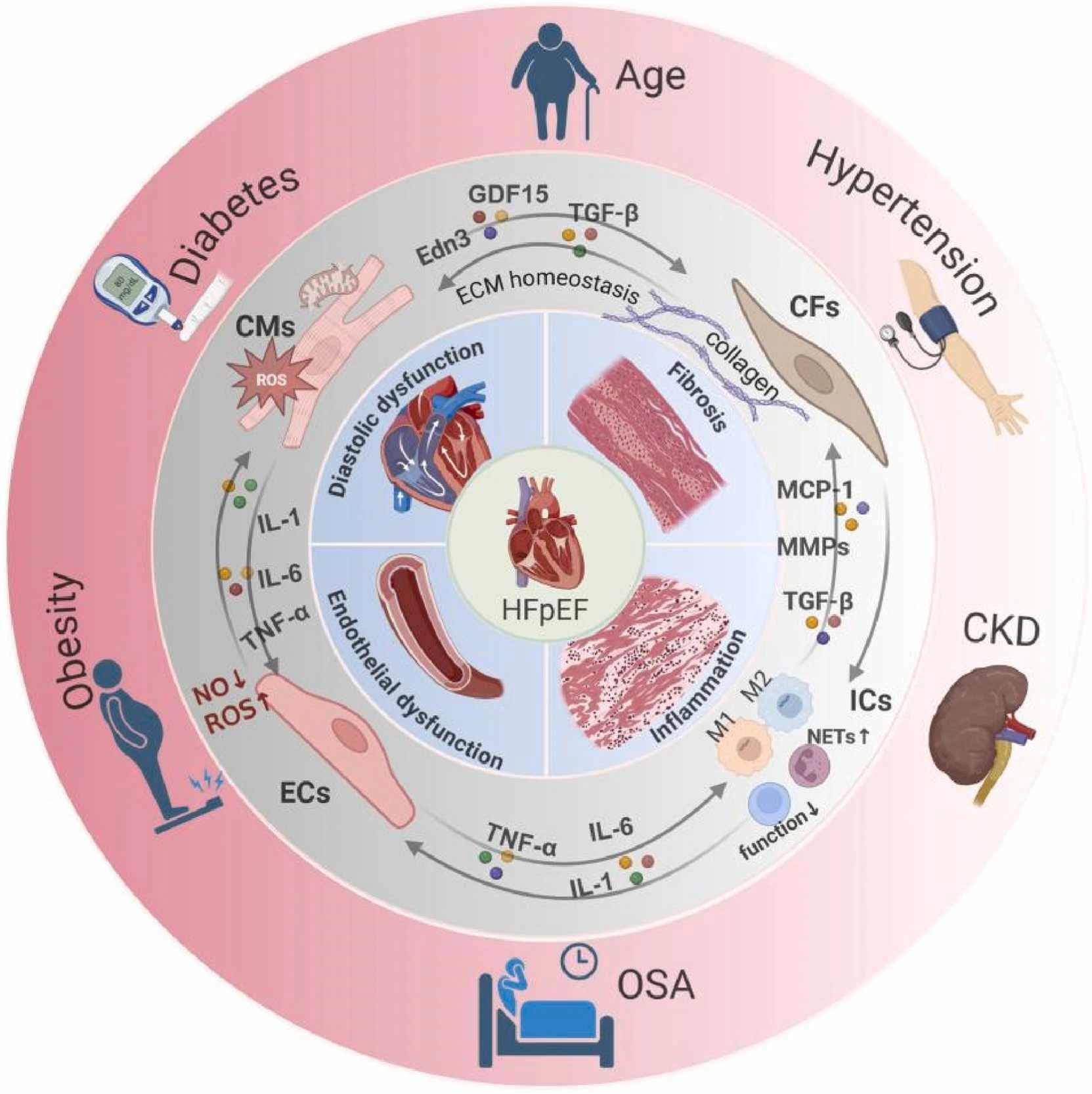
Heart failure with preserved ejection fraction (HFpEF) contributes to nearly 50% of the global heart failure (HF) cases, and remains a major clinical challenge because of its heterogeneous pathophysiology, substantial residual morbidity, and limited mechanism-based treatment options. HFpEF is increasingly recognized as a heterogeneous multisystem syndrome closely associated with aging, cardiometabolic comorbidities, and chronic low-grade inflammation. Cellular senescence and the senescence-associated secretory phenotype (SASP) have emerged as potential mechanisms linking several of these systemic stressors to cardiovascular dysfunction. By paracrine and endocrine communication, SASP creates a self-reinforcing circuit in the myocardium. However, the biological consequences of cellular senescence are highly context-, cell type-, and stage-dependent, and transient senescence may exert adaptive or tissue-protective effects under certain conditions. Moreover, much of the current evidence linking senescence to HFpEF remains preclinical or associative, and HFpEF-specific human data are still limited. This review systematically assesses the current evidence linking cellular senescence and SASP to HFpEF and examines the therapeutic potential and limitations of senolytics and senomorphics.
- Senolytics
- Senomorphics
- Cellular senescence
- Senescence-associated secretory phenotype (SASP)
- Heart failure with preserved ejection fraction
The paper
Tianjin University of Traditional Chinese Medicine; Second Affiliated Hospital of Tianjin University of Traditional Chinese Medicine
Ageing Research Reviews, 12 Oct 2026