Age-linked brain activity patterns recur across human datasets
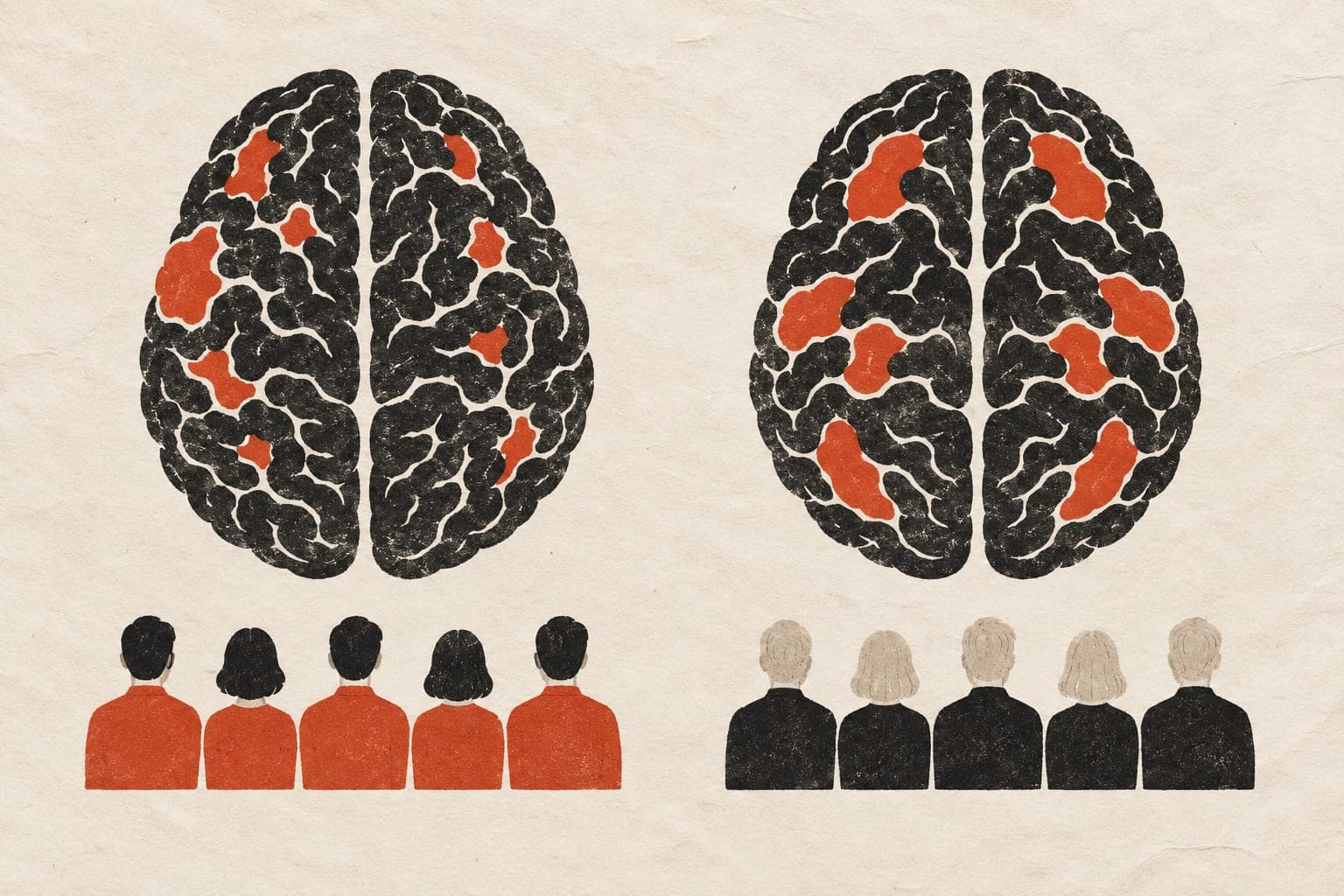
An observational analysis of people’s resting brain recordings found patterns that repeated across datasets and remained after accounting for several other factors.
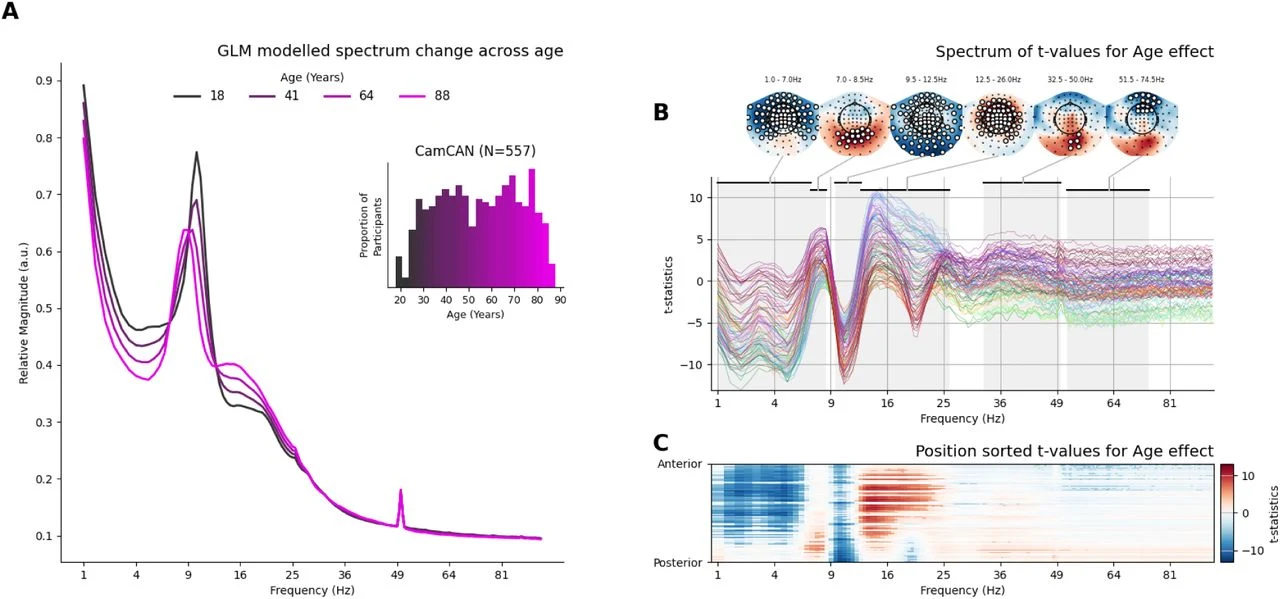
An observational study analysed brain recordings from people resting with their eyes closed. The recordings used magnetoencephalography, a non-invasive method that measures magnetic signals from brain activity. Researchers mapped associations between age and signal strength across the whole head and across frequencies, meaning how quickly the signals fluctuated.
The age-linked pattern repeated across open-access datasets and held up when researchers accounted for common factors that might affect the comparison. It was only partly robust after accounting for grey matter volume, the amount of brain tissue rich in nerve-cell bodies. Different parts of the frequency pattern had different-sized associations with age. Researchers therefore needed to plan study sizes around the particular signals they wanted to examine.
Why it matters
Resting brain activity is a potential source of measures of brain health in aging. This framework could help researchers compare and assess candidate measures more consistently.
Caveats
This observational analysis identified associations with age, not cause and effect. These patterns alone do not establish useful clinical measures of brain health.
The paper
Robust and replicable effects of ageing on resting-state brain electrophysiology measured with MEG
University of Birmingham; University of Oxford
eLife, 12 Oct 2026