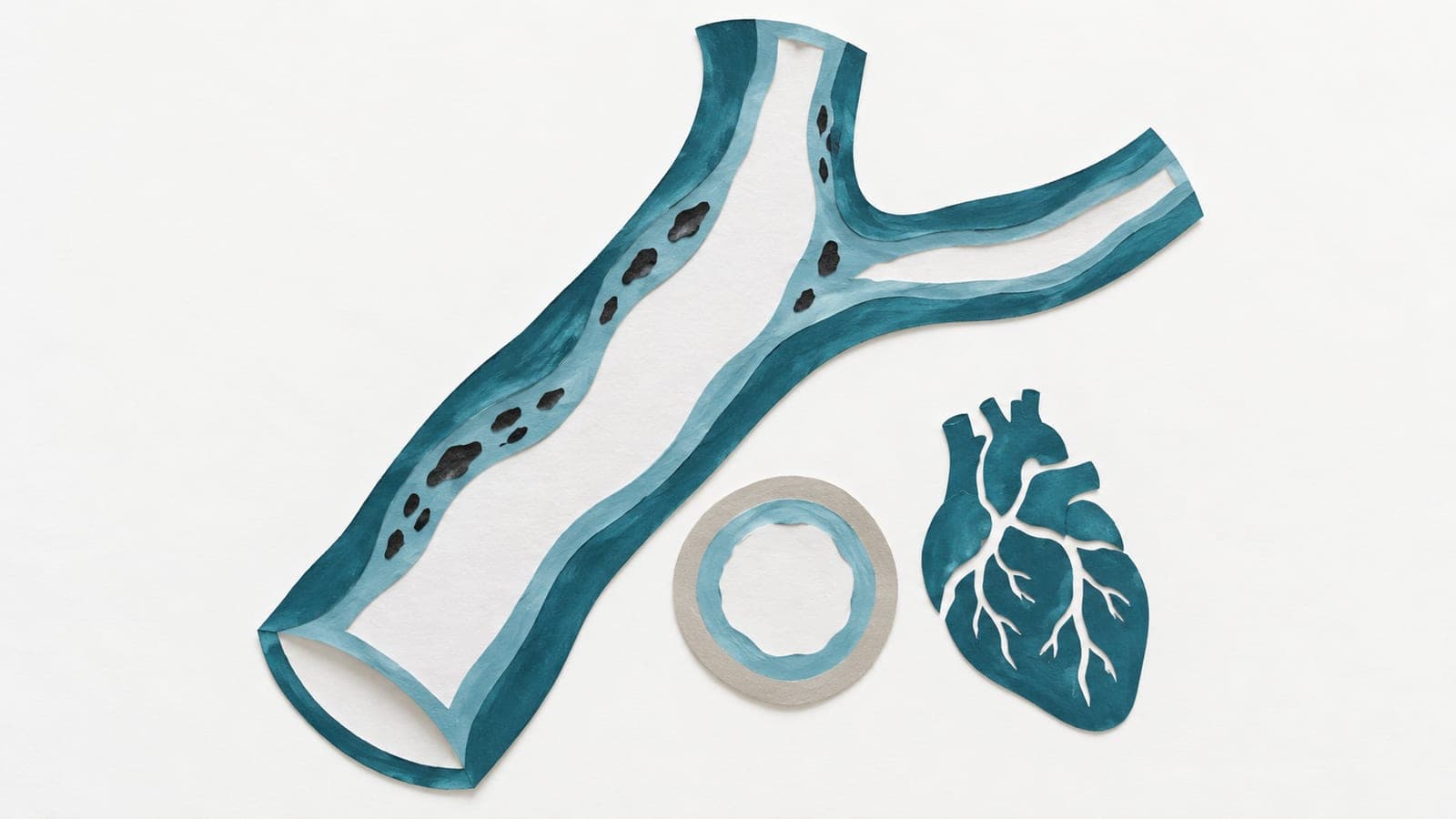
Revised artery calcium score better predicts heart disease
A measure of how well models ranked heart disease risk was 0.699 with the revised score versus 0.687 with the usual calcium score.

Independent replication
Researchers analysed 3,360 people with detectable calcium in their coronary arteries, which supply blood to the heart, in a prospective observational cohort study. They developed a score combining the volume and density of calcium deposits to predict coronary heart disease. Unlike the standard Agatston score, which gives more weight to denser deposits, the revised score adjusted calcium volume downward for higher density.
The researchers added each score to existing estimates of heart disease risk. The revised score better distinguished people who later had coronary heart disease from those who did not. It also improved risk classification. Prediction improved most among people with a lower calcium burden. Results were consistent across subgroup analyses and four other cohorts used to validate the score.
Why it matters
For an age-related disease such as coronary heart disease, the study addresses how to make better use of existing calcium scan reports to estimate future risk.
Caveats
This observational study assessed risk prediction, not whether using the revised score improves health outcomes. The development cohort included only people with detectable coronary artery calcium.
- Modelling and theory
- Coronary heart disease
- Agatston score
- CAC volume and density score
- Coronary artery calcium density
- Humans
The paper
Development and Validation of a Coronary Artery Calcium Volume and Density Score
University of California San Diego Health
Circulation Cardiovascular Imaging, 12 Oct 2026