Melissic acid reduces senescence in human stem cells via cAMP signaling
A screen of 800 natural compounds identified a phytochemical that activates autophagy and restores cell-cycle activity in models of cellular exhaustion.
Frontiers in Pharmacology
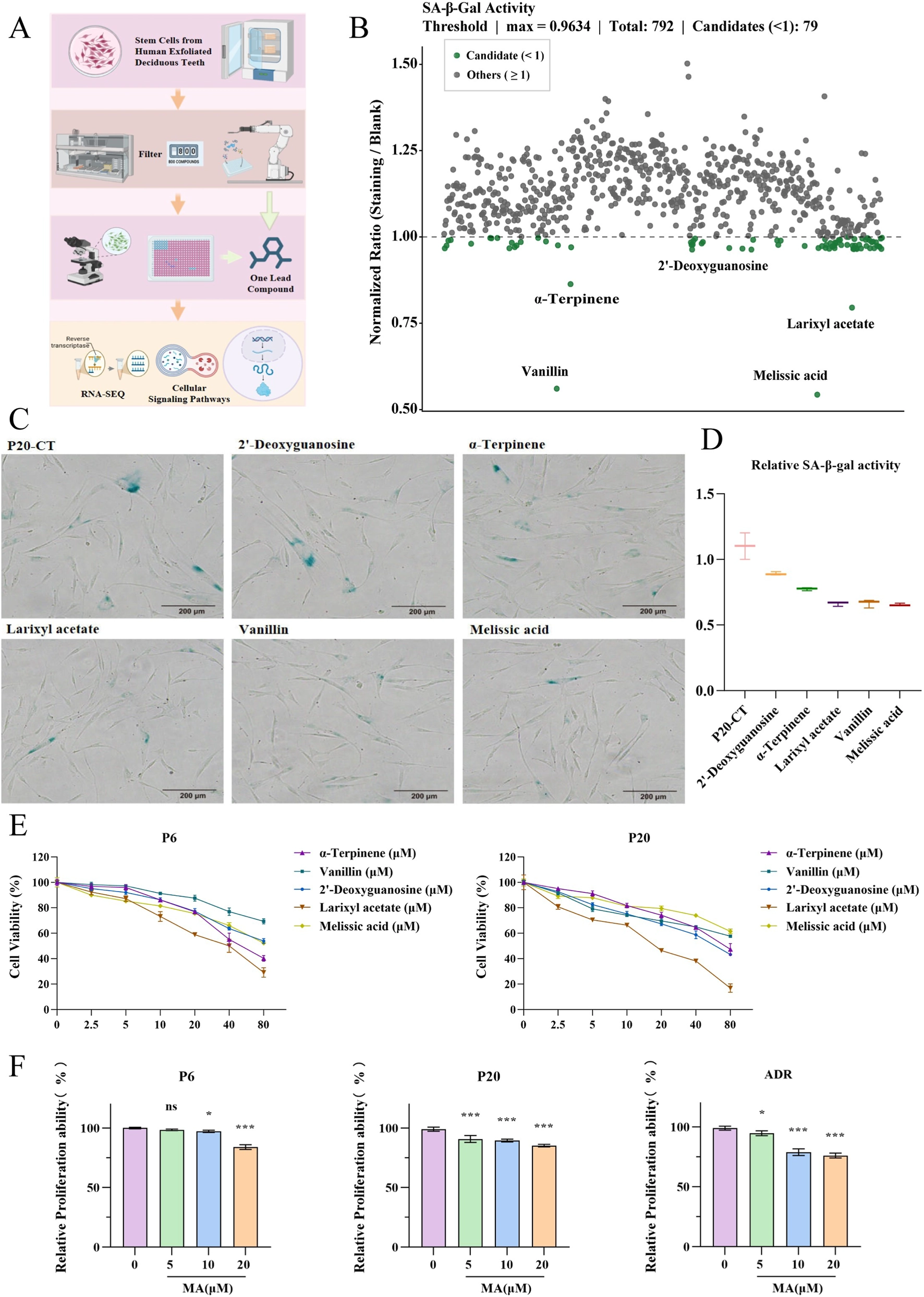
In cultured human exfoliated deciduous tooth stem cells, researchers identified the phytochemical melissic acid as a candidate to counter cellular senescence. The authors screened 800 natural compounds against replicatively senescent cells and confirmed their findings in both replicative exhaustion and doxorubicin-induced stress models. Melissic acid at 5 to 20 micromolar concentrations demonstrated minimal cytotoxicity and significantly reduced SA-beta-Gal activity alongside other senescence markers. Molecular analyses showed the compound upregulated ADCY5 and stimulated cAMP/CREB signaling, promoting autophagy via increased Beclin-1 and reduced p62. Melissic acid also lowered lipid peroxidation, restored mitochondrial membrane potential, and relieved G0/G1 arrest through Cyclin D1 upregulation and Rb phosphorylation.
Why it matters
The findings show that activating cAMP-dependent autophagy can mitigate stem cell senescence, highlighting melissic acid as a potential senomorphic agent to preserve regenerative capacity.
Caveats
The study was conducted entirely in cell culture models, meaning the compound's safety, bioavailability, and anti-senescence effects in living organisms remain unknown.
The paper
Shandong Medical and Pharmaceutical University Hospital · China Academy of Chinese Medical Sciences
Frontiers in Pharmacology · 17 Sep 2026