Building Engagement Using Financial Incentives for Colorectal Cancer Screening (BENEFIT-C) in a Rural Louisiana Federally Qualified Health Center
2 months
Abstract
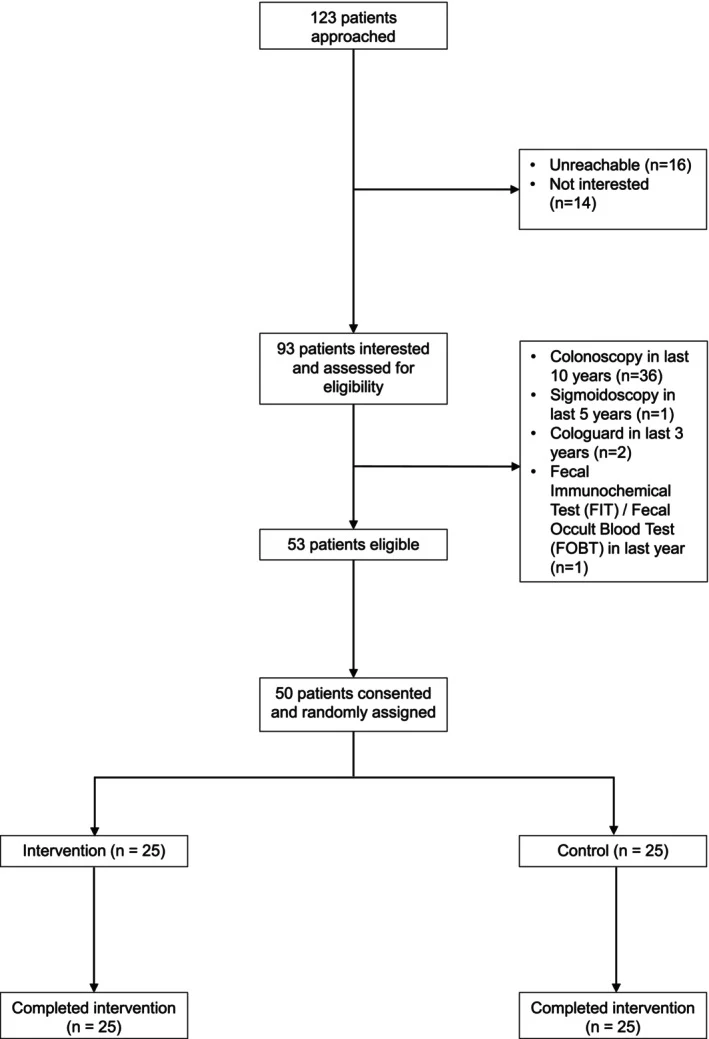
OBJECTIVE: To evaluate the preliminary effectiveness and feasibility of a community-engaged financial incentive intervention for increasing colorectal cancer (CRC) screening in a rural, low-resource primary care setting. STUDY SETTING AND DESIGN: A feasibility pilot trial at a federally qualified health center in the Acadiana region, Louisiana. Participants were identified via electronic health records (EHR), recruited by telephone, and randomized to intervention (n = 25) or control (n = 25). Both groups received incentives for flu and COVID-19 vaccines. The intervention group also received incentives for CRC screening. Fisher's Exact tests evaluated between-group differences in completion of CRC screening (primary outcome), flu, and COVID-19 vaccines 2 months post-enrollment. DATA SOURCES AND ANALYTIC SAMPLE: Eligible patients were aged 45-75, due for CRC screening, and English-speaking. From November 11, 2023 to March 31, 2024, completion of each outcome was obtained from the EHR. PRINCIPAL FINDINGS: 57% of interested individuals were eligible; 94% of eligible individuals enrolled. Participants were 70% female, 42% Black, 24% uninsured, with a mean age of 52.4 years. Completion of CRC screening was higher in the intervention versus control group (17 [68%] vs. 8 [32%], p = 0.02). CONCLUSION: Financial incentives significantly increased completion of CRC screening. Future research should confirm findings in larger samples and evaluate cost-effectiveness to inform health system policies.
The paper
Tulane University
Health Services Research, 22 Jul 2025