Ultrasound-activated quantum biomaterial pairs with senolytic to suppress colorectal cancer
Combining pyroptosis-inducing Pd3Sn nanostructures with the senolytic piperlongumine targets treatment-induced senescent cells and reduces metastatic tumor burden in animal models.
Advanced Science
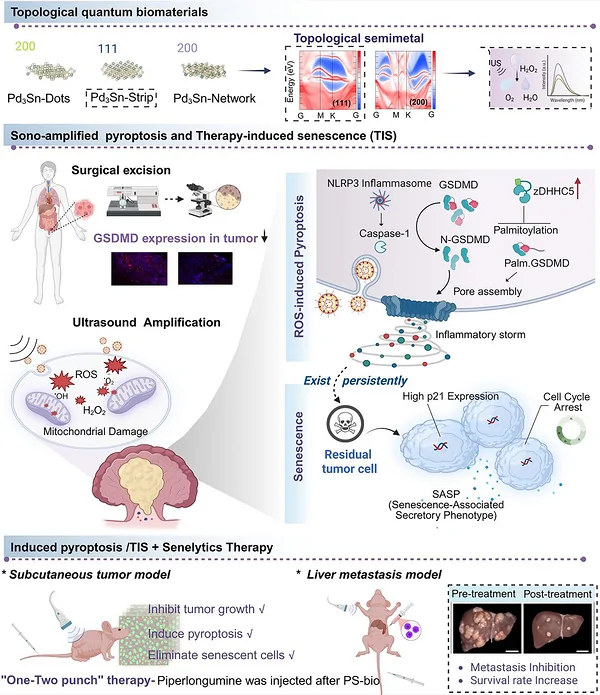
In animal models of subcutaneous colorectal cancer and liver metastasis, researchers tested a sequential therapy combining engineered Pd3Sn quantum biomaterials with the senolytic agent piperlongumine. Under ultrasound irradiation, the Pd3Sn nanostructures generated reactive oxygen species that initiated pyroptosis through zDHHC5-mediated S-acylation of gasdermin D. Senescence-associated secretory phenotype factors from these pyroptotic cells pushed surviving cancer cells into a senescent state. Adding piperlongumine selectively destroyed these senescent cells, curbing their pro-tumorigenic effects. Overall, this combined strategy suppressed tumor progression in the animal models, achieving an 83.4% tumor volume inhibition rate and a minimal liver metastatic burden.
Why it matters
The study demonstrates how the senescence-associated secretory phenotype can push surviving cells into senescence during therapy. It highlights how senolytics can be coupled with other interventions to clear therapy-induced senescent cells.
Caveats
The findings are limited to animal subcutaneous and liver metastasis models under specific experimental ultrasound conditions. The abstract provides no data on long-term survival or safety.
The paper
Show 7 more authors
Mengna Xu, Xinyue Dai, Renjun Gu, Fuqiong Zhou, Cheng Wang, Meiqi Chang, Yan Huang,Nanjing University of Chinese Medicine · Shanghai University
Advanced Science · 30 Sep 2026