Genetic data highlight potential drug targets for Alzheimer's
A Mendelian randomisation analysis identified 19 candidate targets in people of European ancestry and seven in people of African ancestry.
Stake: Authors work for EicOsis, founded it and sit on its board.
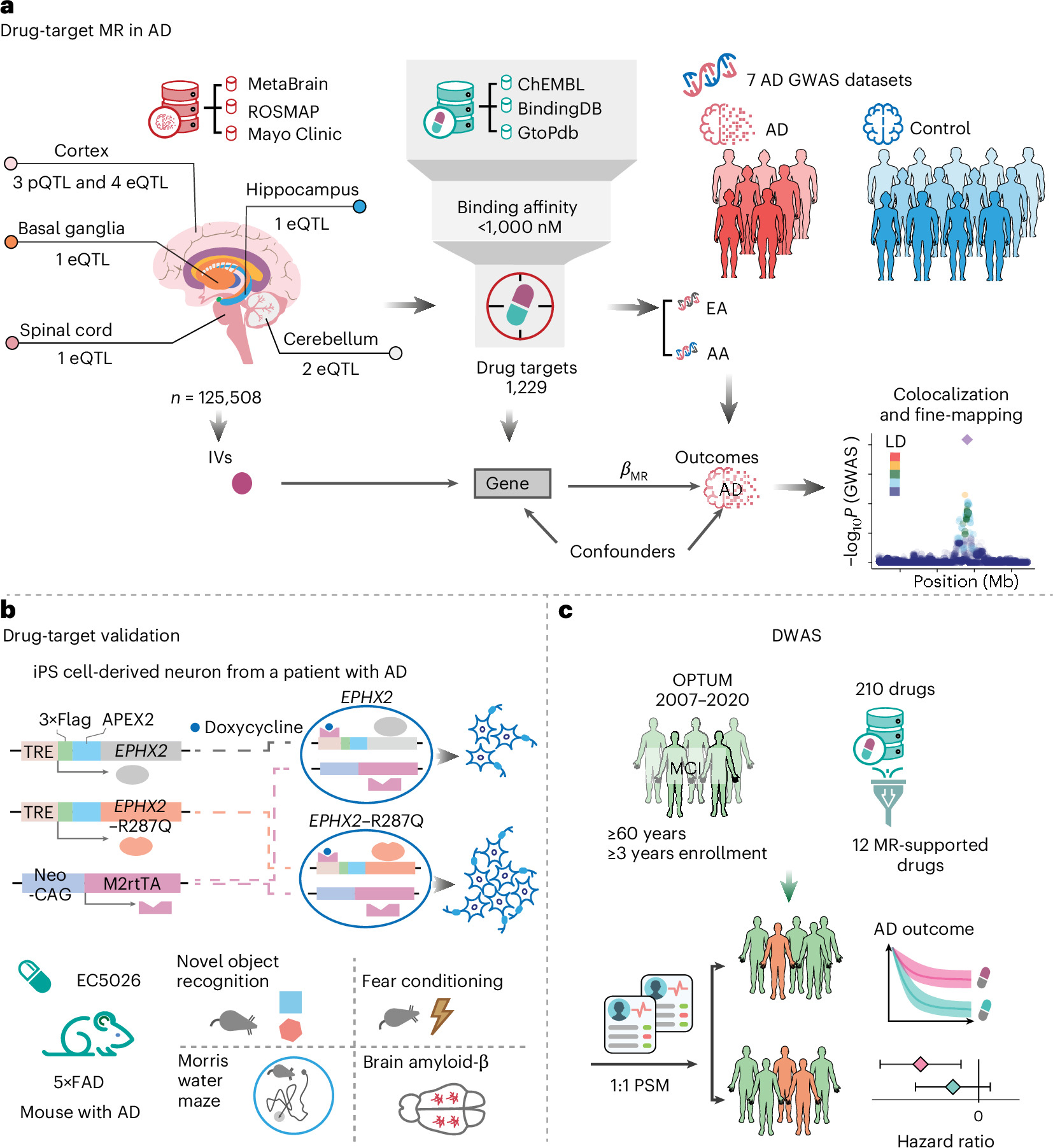
In a Mendelian randomisation analysis of genetic data from people with Alzheimer's disease, researchers screened molecular datasets to nominate druggable targets. They identified 19 candidate targets for individuals of European ancestry and seven for individuals of African ancestry. Among these was epoxide hydrolase 2, known as EPHX2. In lab-grown nerve cells and cerebral organoids derived from patients with Alzheimer's disease, a protective genetic variant reduced levels of EPHX2 and phosphorylated tau. In a mouse model of the disease, chemical inhibition of EPHX2 improved cognitive performance. Finally, in an observational analysis of electronic health records from 111,680 patients with mild cognitive impairment, 12 drugs were associated with reduced incidence of Alzheimer's disease, including trazodone and baclofen.
Why it matters
Alzheimer's disease is a major neurodegenerative condition that primarily affects older adults. Pinpointing candidate molecular targets and existing medicines linked to lower incidence bears on efforts to find new ways to treat age-related cognitive decline.
Caveats
The findings on existing medications come from observational health records, which show associations rather than proof of cause and effect. In addition, the experiments in cultured cells and mice cannot ensure that blocking EPHX2 will safely aid cognition in humans.
From the paper
- Participants
The final cohort included 39,918 LOAD cases and 358,140 controls.
- Result
Specifically, amlodipine (CACNA1D inhibitor (alzMR score = 11.4)) was significantly associated with 12% reduced risk of AD in patients with MCI (HR = 0.88; 95% confidence interval (CI) 0.85–0.91; FDR = 3.6 × 10⁻¹⁰; Extended Data Fig. 7).
Results, Population-based validation of alzMR-score-prioritized drug targets
Quoted word for word from the full text on nature.com.