Model links loneliness prevention to slower cognitive decline
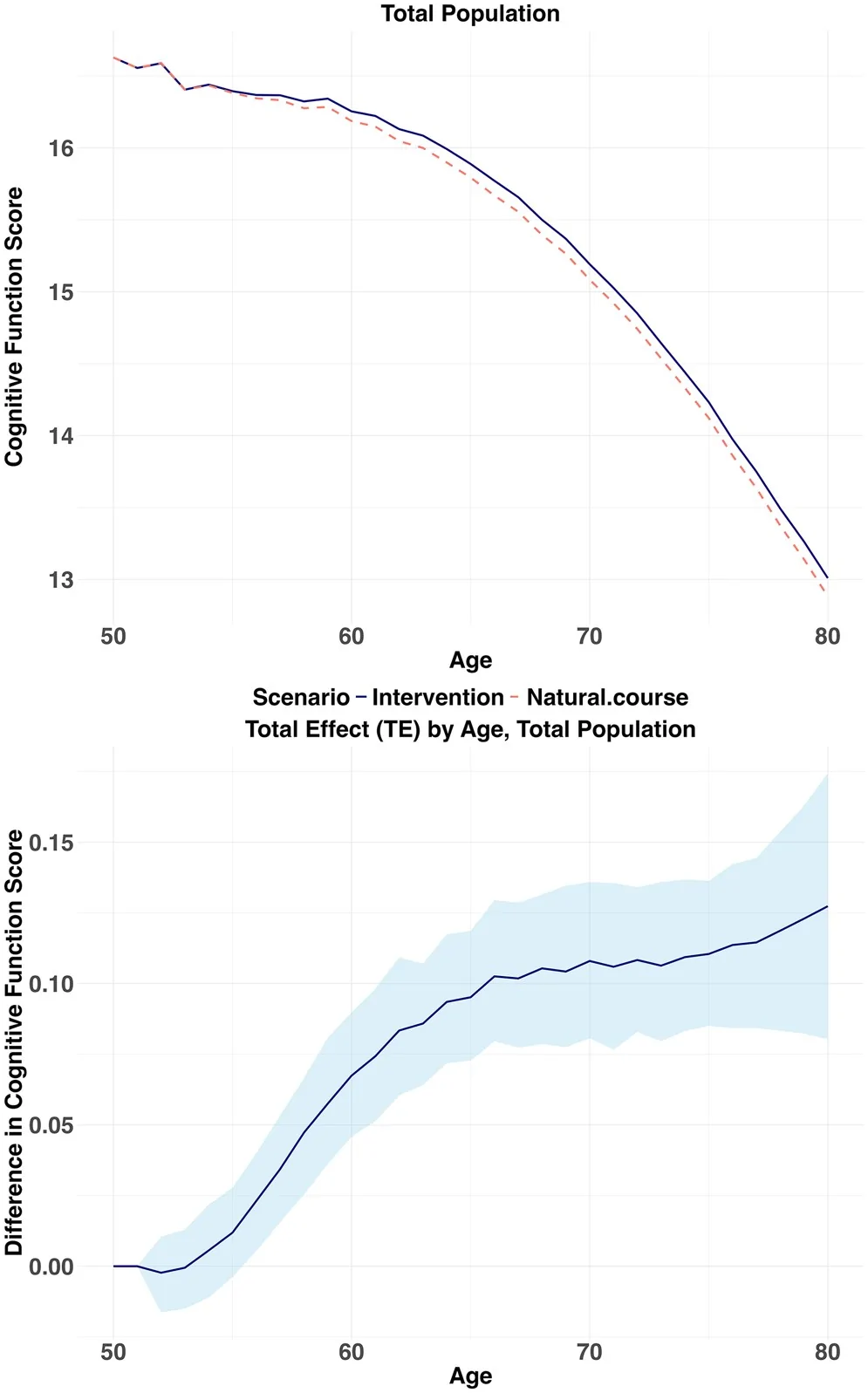
Simulated loneliness prevention was linked to 0.075 points less cognitive decline across the population than no prevention, averaged across ages.
Declared no competing interests
In an observational analysis of 34,774 people aged 50–80 years, researchers used Health and Retirement Study data from 1996–2018 to model loneliness prevention. They simulated an intervention rather than testing one in participants. They examined links with cognitive decline, or worsening thinking abilities, and assessed depression as a possible pathway.
The model linked preventing loneliness to less cognitive decline at every age studied, with larger estimated differences at older ages. Averaged across ages, the estimated difference was 0.075 points across the population and 0.157 points among people experiencing loneliness. A further analysis linked 17.3% of the modelled effect to depression, with proportions of 19.4% among men and 16.9% among women.
Why it matters
Loneliness is a public health challenge. The analysis addresses whether preventing it may help maintain thinking abilities as people age.
Caveats
These estimates came from a simulation using observational data, not a trial of loneliness prevention. The abstract does not specify the cognitive scale, limiting interpretation of the point differences.
The paper
Loneliness and cognitive function in later life: a population-based counterfactual analysis
University of Helsinki; Netherlands Interdisciplinary Demographic Institute
International Journal of Epidemiology, 18 Aug 2026, Open access