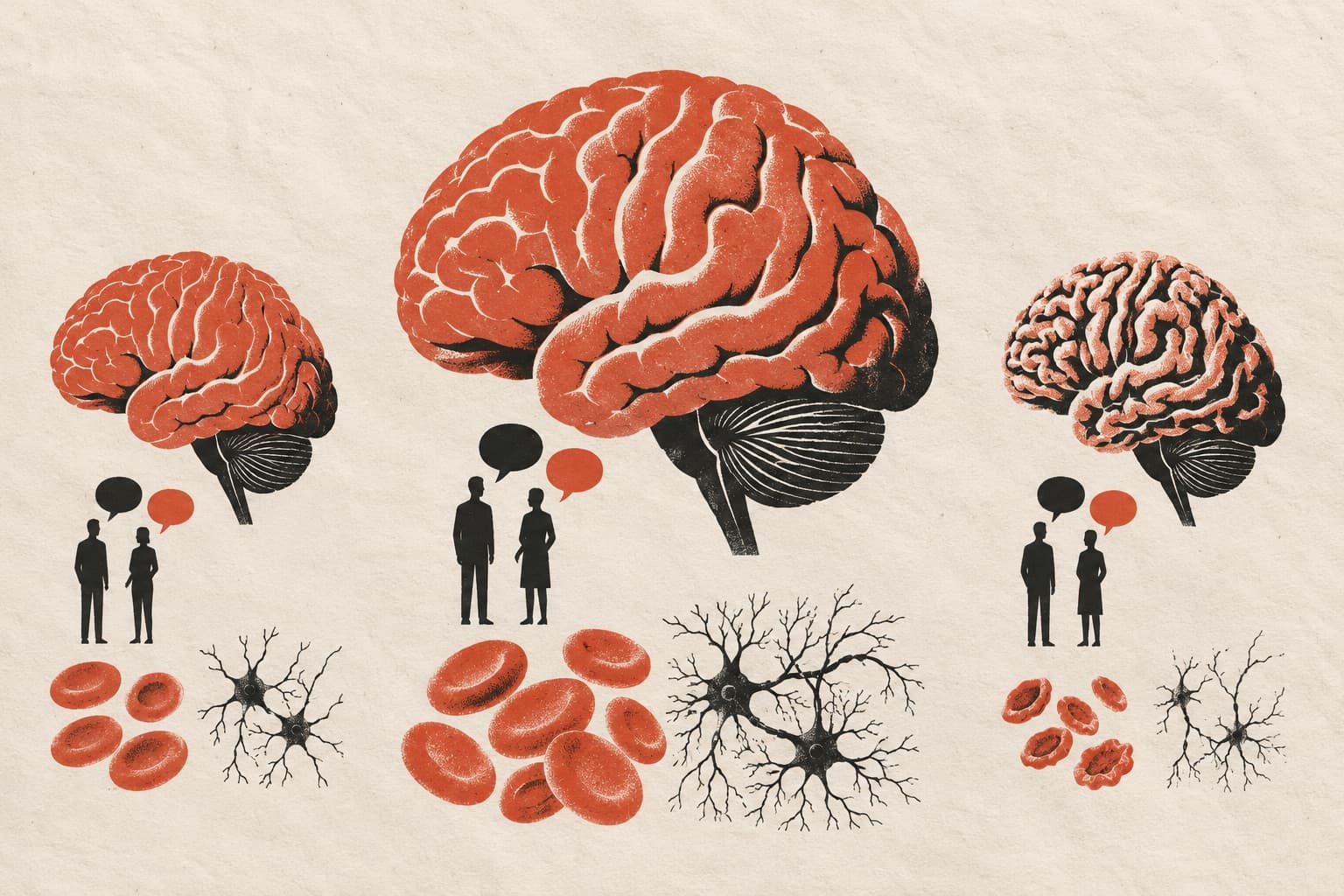
Brain age estimates were higher across six disorders
The gap between scan-estimated and actual age exceeded age-matched controls by 7.64 years in schizophrenia and 7.61 years in frontotemporal dementia.
Independent replication
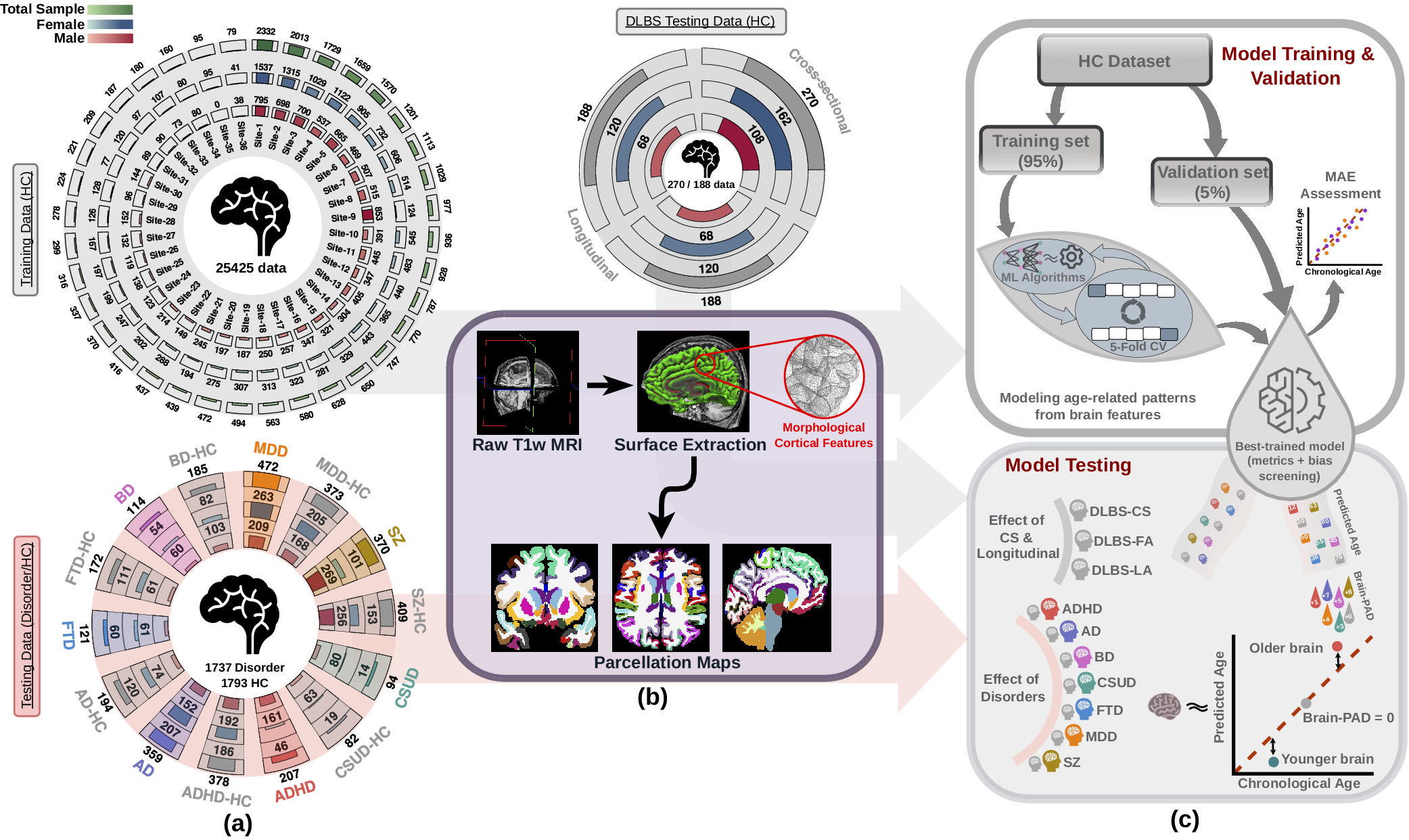
An observational study compared brain scans from 1,737 patients with seven psychiatric or neurodegenerative disorders with those from 1,793 age-matched controls. Researchers trained an age-prediction model on magnetic resonance imaging (MRI) scans from 25,425 healthy people aged 2–95 years. They tested it in independent groups, including people scanned over time. They measured the gap between predicted brain age and actual age, correcting for bias related to age.
Compared with controls, this gap was higher in schizophrenia, frontotemporal dementia, Alzheimer’s disease, bipolar disorder, major depressive disorder and chronic substance use disorder. It was not significantly higher in attention-deficit/hyperactivity disorder. The model’s average prediction error was about 5–7 years across validation and independent groups.
Why it matters
Psychiatric and neurodegenerative conditions were the focus of this framework for investigating brain aging across the lifespan.
Caveats
The clinical comparisons were observational, so they could not show that the disorders caused accelerated aging. Brain age was a scan-based estimate, not a direct measurement of how fast brains aged.
From the paper
- Limitation
First, despite harmonizing data across 36 sites using ComBat, residual scanner- or population-related variability may persist; and large multisite datasets improve generalizability but also introduce heterogeneity that is difficult to eliminate fully.
Quoted word for word from the full text on cambridge.org.
The paper
Jena University Hospital
Psychological Medicine, 7 Oct 2026, Open access