Biological aging and frailty linked to thinner central retinas
Blood metabolic profiles statistically accounted for 81.14% of the link with one biological age measure, compared with 19.92% for another and 32.27% for frailty.
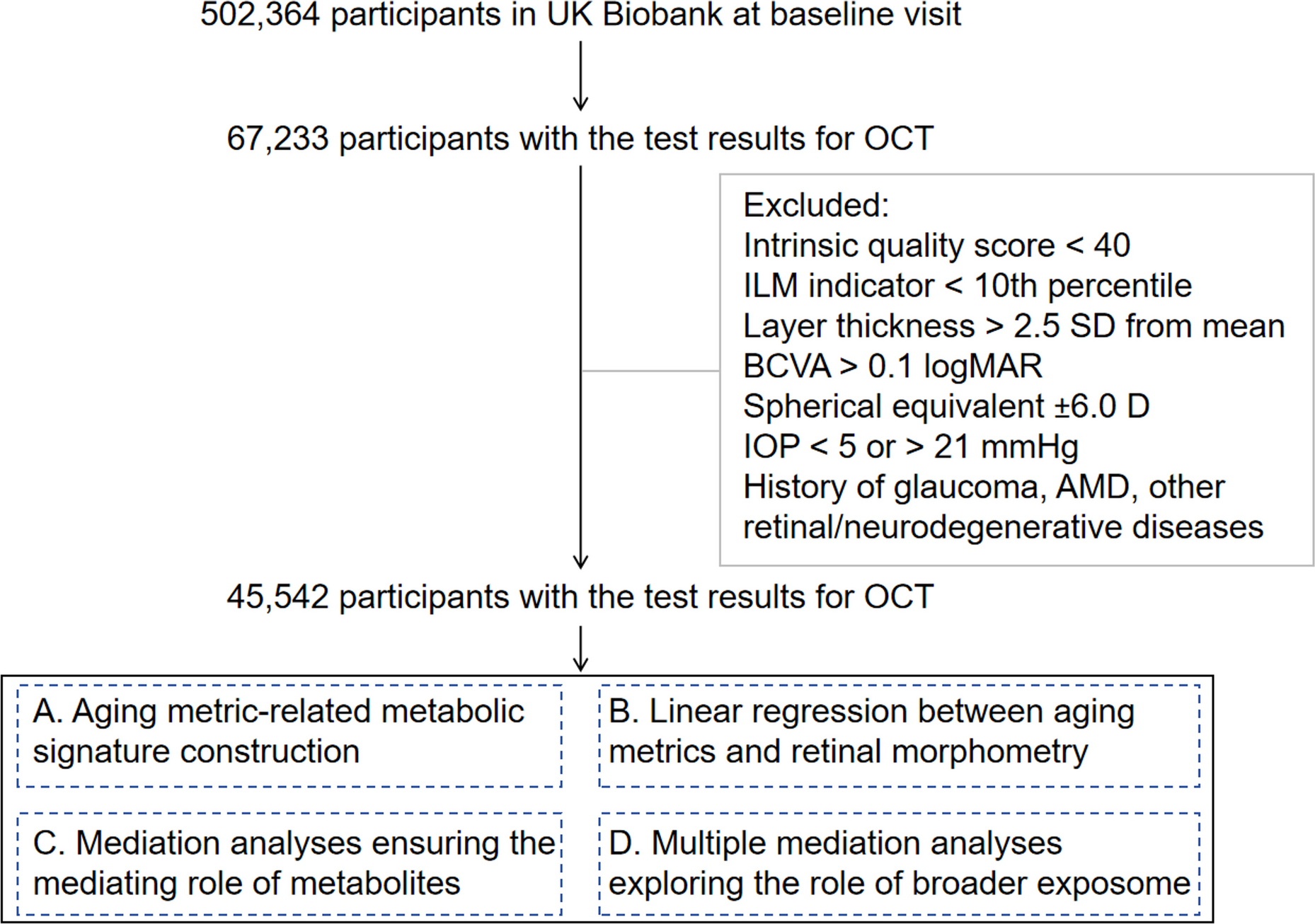
An observational study analysed 45,542 UK Biobank participants using data from 2006–2010. Researchers assessed biological age relative to calendar age using two scoring methods, alongside a frailty index. They examined the macula, the central part of the retina—the light-sensitive tissue at the back of the eye. They also analysed patterns of molecules in blood, alongside lifestyle, diet, pollution and mental health.
Higher biological age and frailty scores were associated with thinner inner regions of the macula. Blood profiles statistically accounted for 81.14% of the association for PhenoAge, one biological age measure, 19.92% for the Klemera-Doubal measure and 32.27% for frailty. Tobacco exposure, poor diet, air pollution and negative psychosocial states also correlated with thinner maculas.
Why it matters
Aging affects eye structures as well as blood metabolism. This analysis addresses how changes across the body align with structural changes in the retina.
Caveats
The observational design cannot establish cause and effect. The percentages describe statistical relationships, not proven biological pathways.