Baseline TyG-CVAI prospectively predicts higher frailty
Baseline TyG-CVAI predicted follow-up frailty index with a standardized β of 0.165, compared with a standardized β of 0.035 for the reverse path.
Frontiers in Public Health
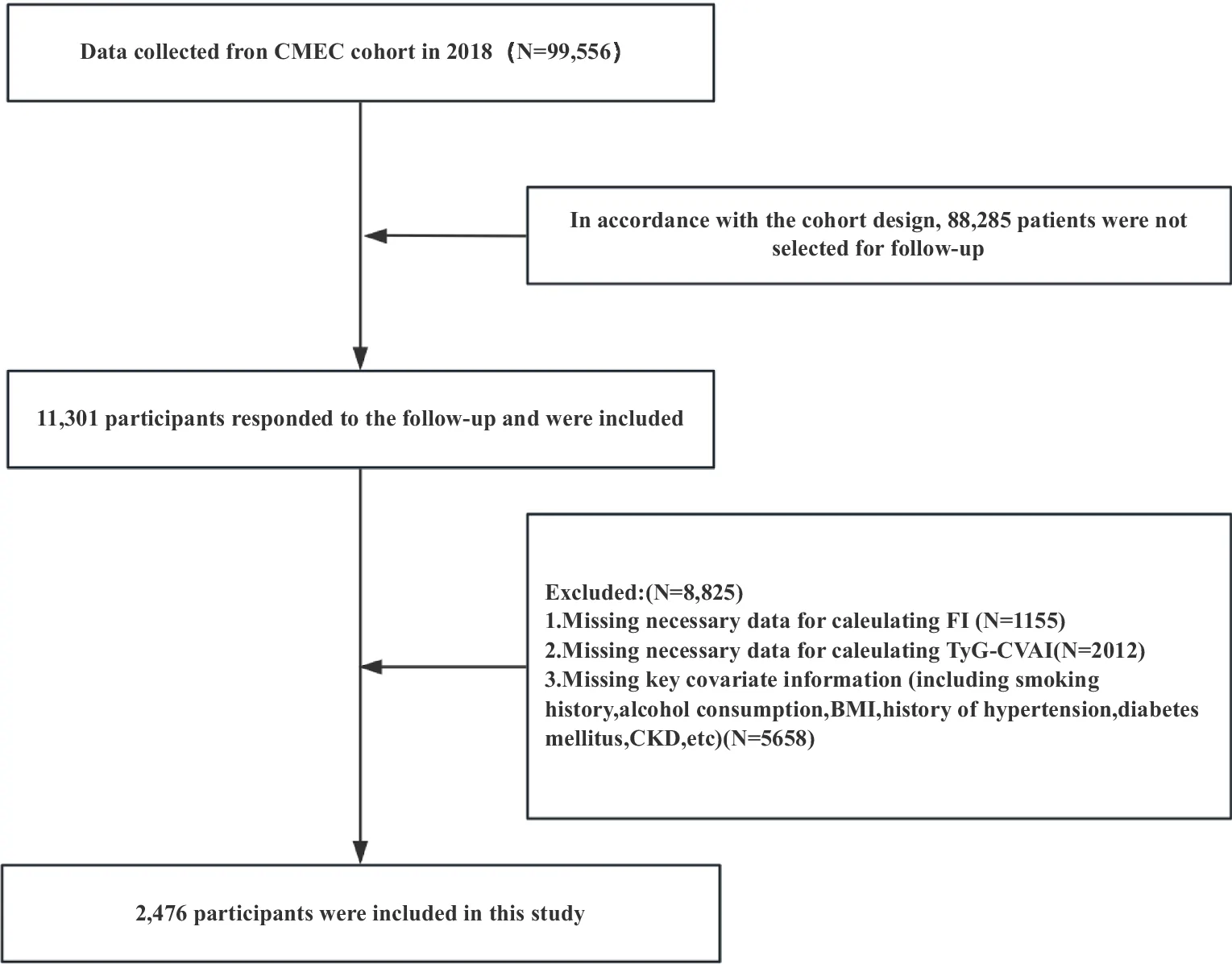
In 2,476 participants from the China Multi-Ethnic Cohort study in southwestern China, researchers examined the bidirectional relationship between TyG-CVAI—a composite marker of insulin resistance and visceral adiposity—and a 25-item frailty index over three years. A two-wave cross-lagged panel model revealed that baseline TyG-CVAI significantly predicted follow-up frailty index (standardized β = 0.165, p < 0.001), while the reverse path was considerably weaker (standardized β = 0.035, p < 0.001). Sensitivity analyses excluding overlapping components such as body mass index and diabetes yielded consistent results. The composite indicator showed a stronger prospective association with frailty than either the triglyceride-glucose index or visceral adiposity index alone. Subgroup analyses showed this prospective association was stronger in participants under age 60, ethnic minorities, and individuals without hypertension or diabetes, exhibiting a non-linear relationship that attenuated beyond the 50th percentile of TyG-CVAI.
Why it matters
The findings suggest that metabolic dysregulation and visceral fat accumulation may precede and contribute to the clinical accumulation of health deficits. This indicates that composite metabolic markers could potentially aid in the early identification of individuals at risk of developing frailty.
Caveats
The observational design cannot establish causality, and the analysis was restricted to a subset of participants with complete three-year follow-up data, which may introduce selection bias. In addition, the 25-item frailty index relied partly on self-reported health deficits and medical histories.
The paper
Sichuan University
Frontiers in Public Health · 14 Sep 2026 · CC BY