Activity and insulin resistance show opposite muscle gene links
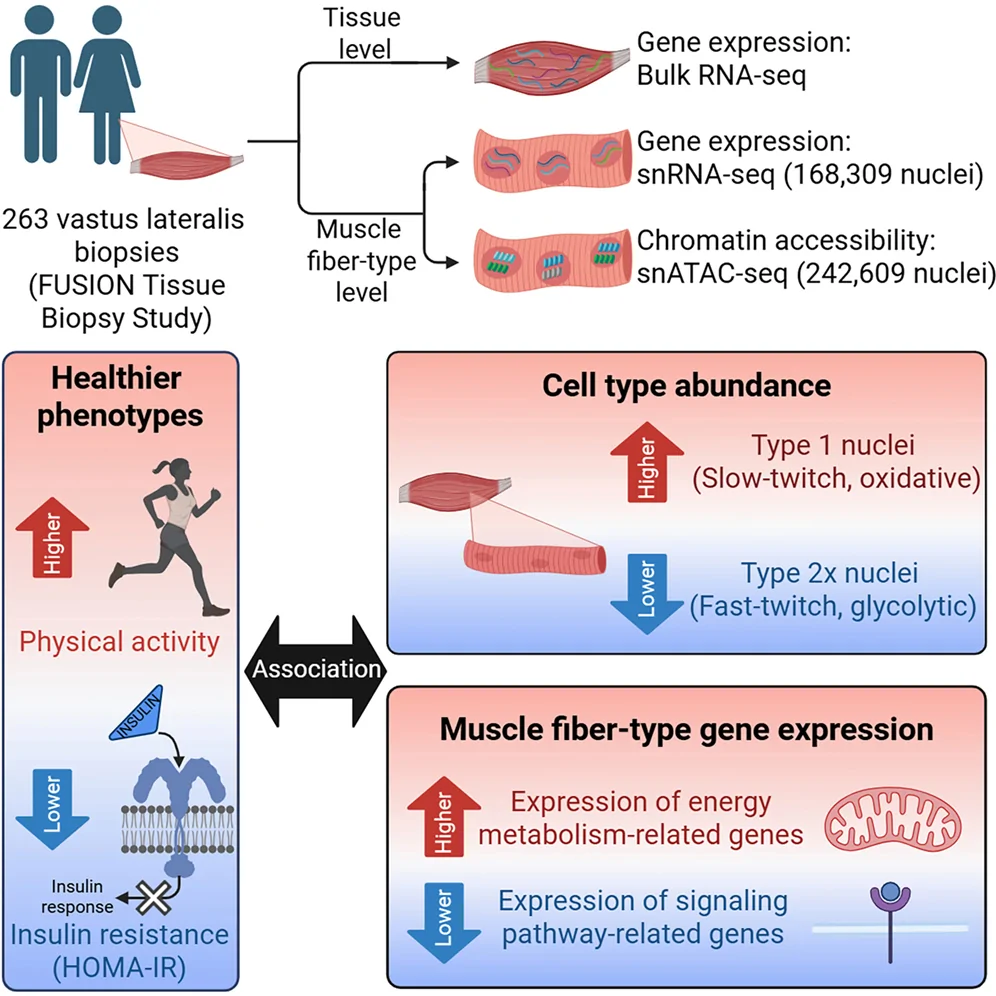
In an observational study of 263 Finnish individuals, higher physical activity and lower insulin resistance were both linked to higher proportions of Type 1 nuclei.
Stake: An author holds shares in Orion Pharma. An author holds shares in Aktivolabs. Authors also declare ties to 1 more company.
In an observational study of 263 Finnish individuals, researchers analysed gene expression across 168,309 muscle nuclei and chromatin accessibility, which measures how open DNA is to being read, across 242,069 nuclei. Both higher total physical activity and lower insulin resistance were associated with higher proportions of Type 1 nuclei and lower proportions of Type 2x nuclei. Lower insulin resistance and higher activity were also linked to higher expression of energy metabolism genes and lower expression of signalling pathway genes across muscle fibre types. When adjusted for both traits in the same model, physical activity and insulin resistance appeared to have inverse and partly independent directions of association.
Why it matters
Metabolic health often declines with age, with conditions involving insulin resistance becoming more common. Mapping how physical activity and insulin resistance relate to gene regulation across muscle cell types may help researchers study how lifestyle habits and metabolic traits influence muscle biology.
Caveats
The study relied on cross-sectional observational data, meaning it cannot show whether physical activity or insulin resistance caused the differences in muscle cell nuclei or gene expression. The findings were also drawn from a single cohort of Finnish individuals.
From the paper
- Participants
The Finland-United States Investigation of NIDDM Genetics (FUSION) Tissue Biopsy Study enrolled 331 living Finnish participants from three study sites in Finland (Helsinki, Kuopio, and Savitaipale) between 2009 and 2013.
- Limitation
The skeletal muscle biopsies in the FUSION Tissue Biopsy Study were obtained from older, Finnish individuals (mean age: 60.3 years), with >98% of participants older than 45 years of age.
Quoted word for word from the full text on PubMed Central.