Diet and exercise partly reverse muscle shifts in a heart failure type
In 45 patients with heart failure with preserved ejection fraction, diet and exercise partially reversed altered gene activity and DNA packaging in muscle.
bioRxiv
Researchers analysed skeletal muscle biopsies from 95 people, including 25 healthy controls and 70 patients with heart failure with preserved ejection fraction. Of these patients, 45 had biopsies taken before and after a supervised diet and exercise programme.
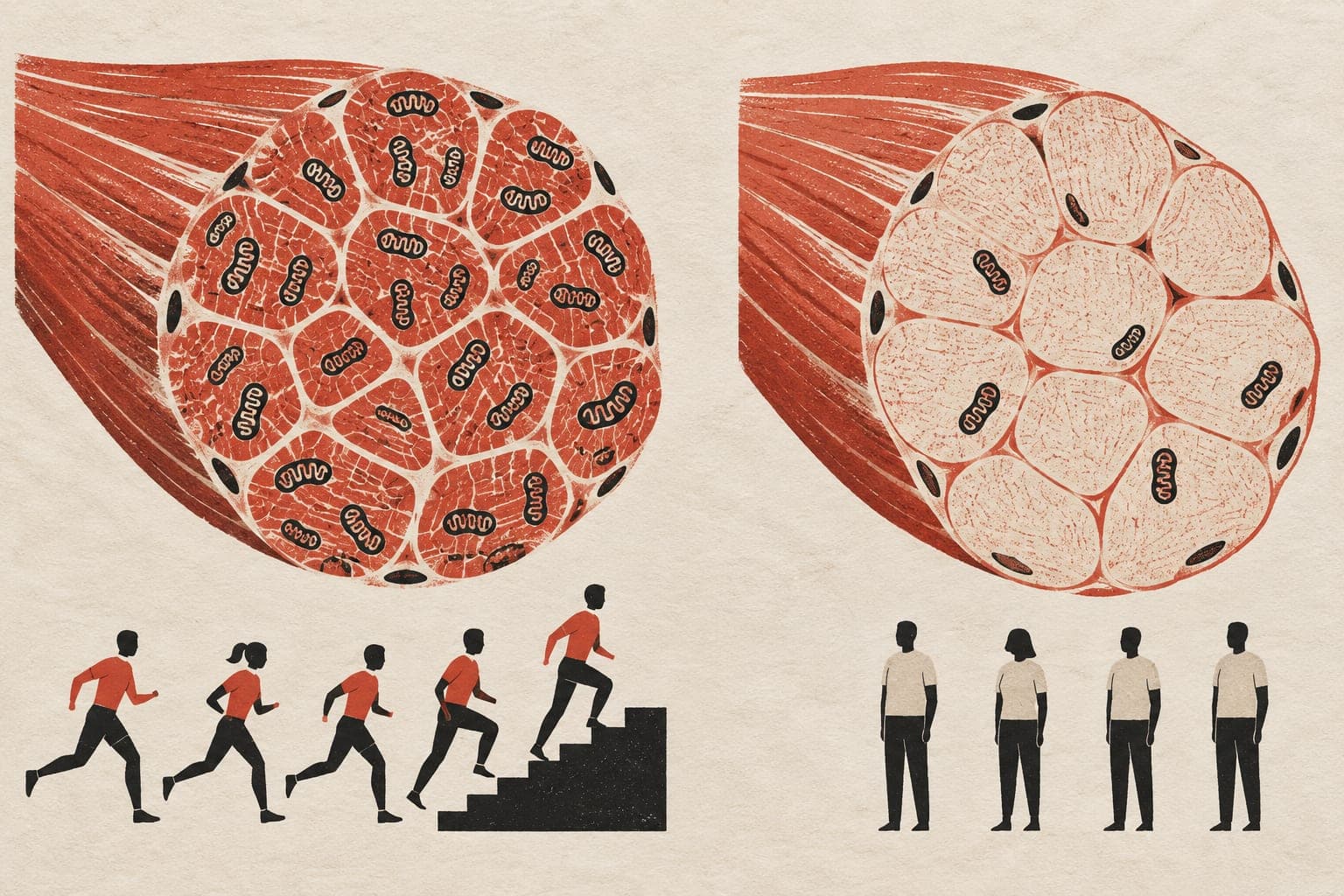
Using single-nucleus sequencing, the team examined gene activity and chromatin accessibility, the physical openness of DNA, across 132,568 muscle cell nuclei. Patients with the condition showed muscle remodelling, including fewer endurance-oriented type 1 fibres and fewer pericytes, cells that support small blood vessels. The team also observed disrupted metabolic and calcium-handling pathways. Following the diet and exercise programme, these changes in both chromatin accessibility and gene activity were partially reversed in patient muscle.
Why it matters
Skeletal muscle abnormalities are key contributors to reduced exercise capacity in heart failure with preserved ejection fraction. These findings highlight molecular pathways behind this muscle dysfunction and identify regulatory mechanisms that respond to lifestyle interventions.
Caveats
The lifestyle intervention lacked an untreated patient control group and included 45 people. The paper is also a preprint that has not yet been peer-reviewed.
- Diet and exercise
- Chromatin and 3D genome organisation
- Heart failure with preserved ejection fraction
- Chromatin
- Humans
The paper
Show 13 more authors
P. Orchard, M. Piper, E. Pashos, V. Dolgachev, N. Manickam, E. Curka, P. M. Jean-Beltran, D. Kitzman, E. Fauman, F. Damilano, R. J. Roth Flach, B. Nicklas, P. H. Brubaker,Gilbert S. Omenn Dept. of Computational Medicine and Bioinformatics, Dept. of Human Genetics, Dept. of BiostatisticsUniversity of Michigan, Ann Arbor, MI, USA
bioRxiv · 9 Oct 2026 · CC BY · Preprint, not peer-reviewed