Early social isolation accelerates TDP-43 pathology in flies
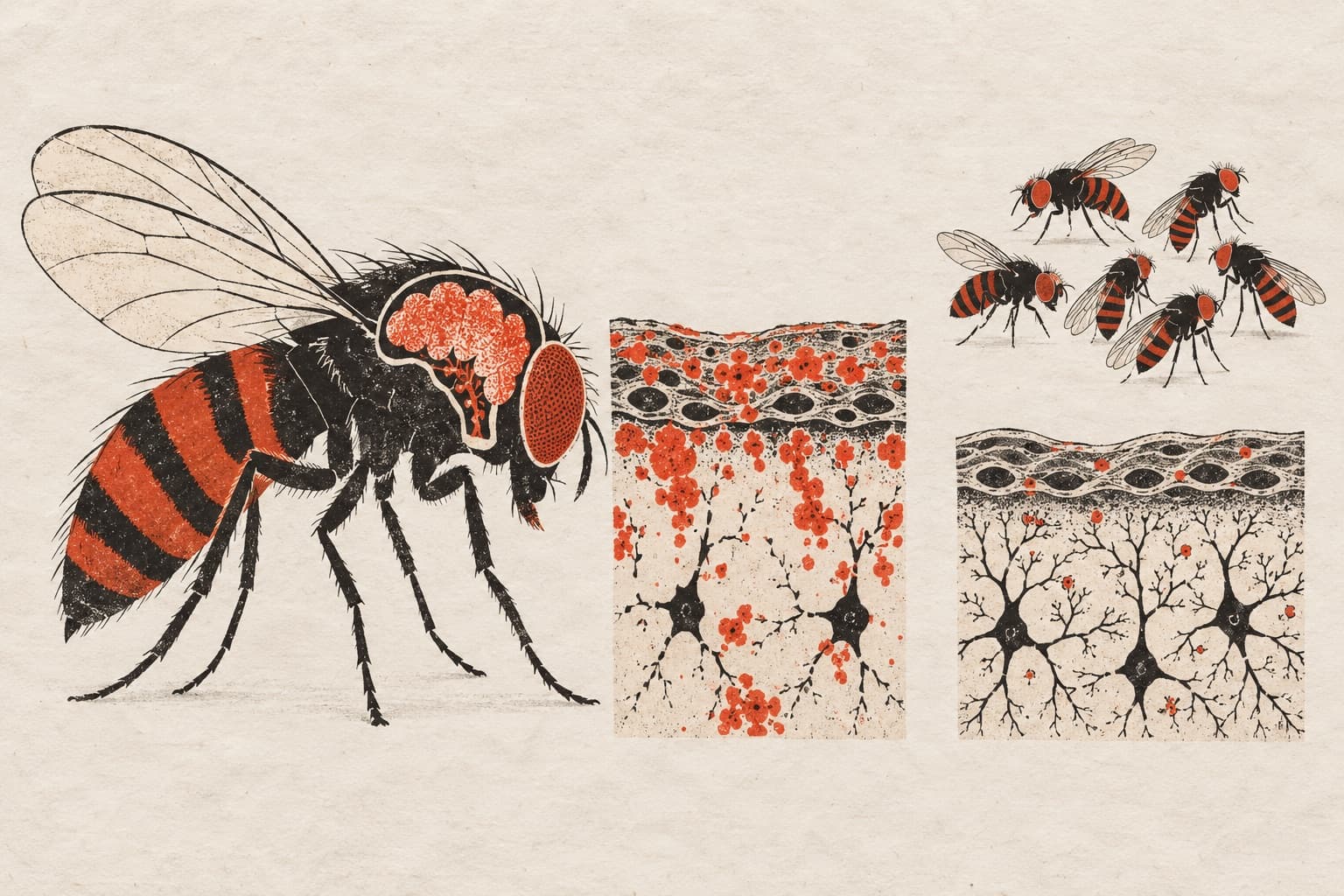
Young adult fruit flies housed alone showed faster retrovirus activation, accelerated spread of glial TDP-43 to neurons, and shortened lifespan compared to group-housed flies.
bioRxiv
In a preprint study, researchers tested whether early-life social stress influences neurodegeneration in fruit flies (Drosophila). Investigators housed flies as young adults either alone or in groups, then induced pathological levels of TDP-43, a protein whose abnormal cytoplasmic aggregation characterizes amyotrophic lateral sclerosis and frontotemporal dementia.
Early social isolation primed the insects for accelerated neurodegeneration after TDP-43 induction. Isolated flies displayed more rapid activation of mdg4, an endogenous retrovirus that mediates TDP-43 activity, and faster spread of TDP-43 pathology from surface glial cells to adjacent neurons. Lifespan was also shortened. Providing isolated flies with visual, olfactory, and tactile cues from conspecifics through a divider was insufficient to reduce these effects.
Why it matters
Epidemiological studies link loneliness to neurodegenerative risk, and these findings suggest that social stress can interact with endogenous retroelements and proteinopathies to alter brain vulnerability.
Caveats
The findings come from an invertebrate model with artificially induced protein pathology and may not fully reflect human disease. The paper is a preprint that has not yet undergone peer review.
The paper
Stony Brook School
bioRxiv · 28 Sep 2026 · Preprint, not peer-reviewed