SOX2 loss is linked to taste bud changes in aging mice
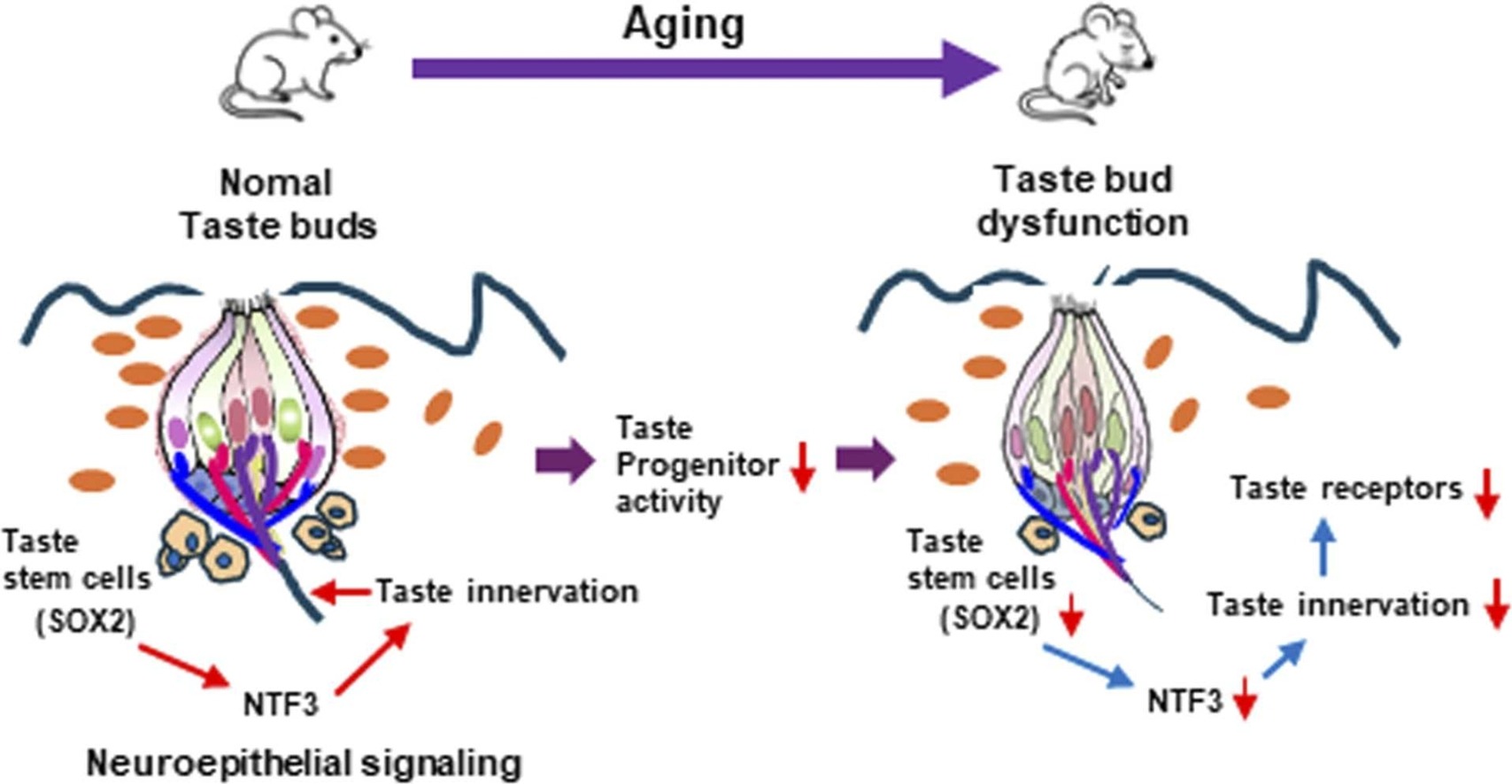
In Klotho-deficient mice, reduced SOX2 expression was linked to smaller taste buds, altered muscle structure, and lower levels of sensory neurotrophic factors.
Mechanisms of Ageing and Development
In Klotho-deficient mice, a model of accelerated aging, researchers examined structural and molecular shifts in the tongue epithelium compared with wild-type controls. The mutant mice showed altered muscle organization, increased clear spaces in the muscle compartment, and acinar cell atrophy in minor salivary glands. The animals also presented reduced taste bud diameter, together with decreased expression of type II taste cells and key taste receptors. Immunohistochemical and western blot analyses revealed lower SOX2 expression in the tongue epithelium and taste buds of the mutant mice. In molecular experiments, overexpressing SOX2 upregulated PLCB2, while knocking down SOX2 lowered the expression of taste-related genes and the neurotrophic factors NTF3 and BDNF. SOX2 directly regulated the NTF3 promoter, suggesting it contributes to taste bud maintenance.
Why it matters
Taste dysfunction frequently accompanies growing older, but the underlying mechanisms remain poorly understood. These findings suggest that SOX2 and neurotrophic factor regulation may play a role in structural taste bud alterations during aging.
Caveats
The findings rely on Klotho-deficient mice, an accelerated aging model that may not fully reflect normal chronological aging. In addition, the functional gene knockdown and promoter activity experiments were carried out in experimental molecular assays rather than tested therapeutically in living animals.
The paper
SOX2 and NTF3 expression are associated with taste-bud alterations in aging klotho-deficient mice
Chosun University
Mechanisms of Ageing and Development · 24 Sep 2026