Generational immigration status and gastric cancer incidence among Japanese descendants: an analysis of the Multiethnic Cohort (MEC) Study
Declared ties to: AstraZeneca
Abstract
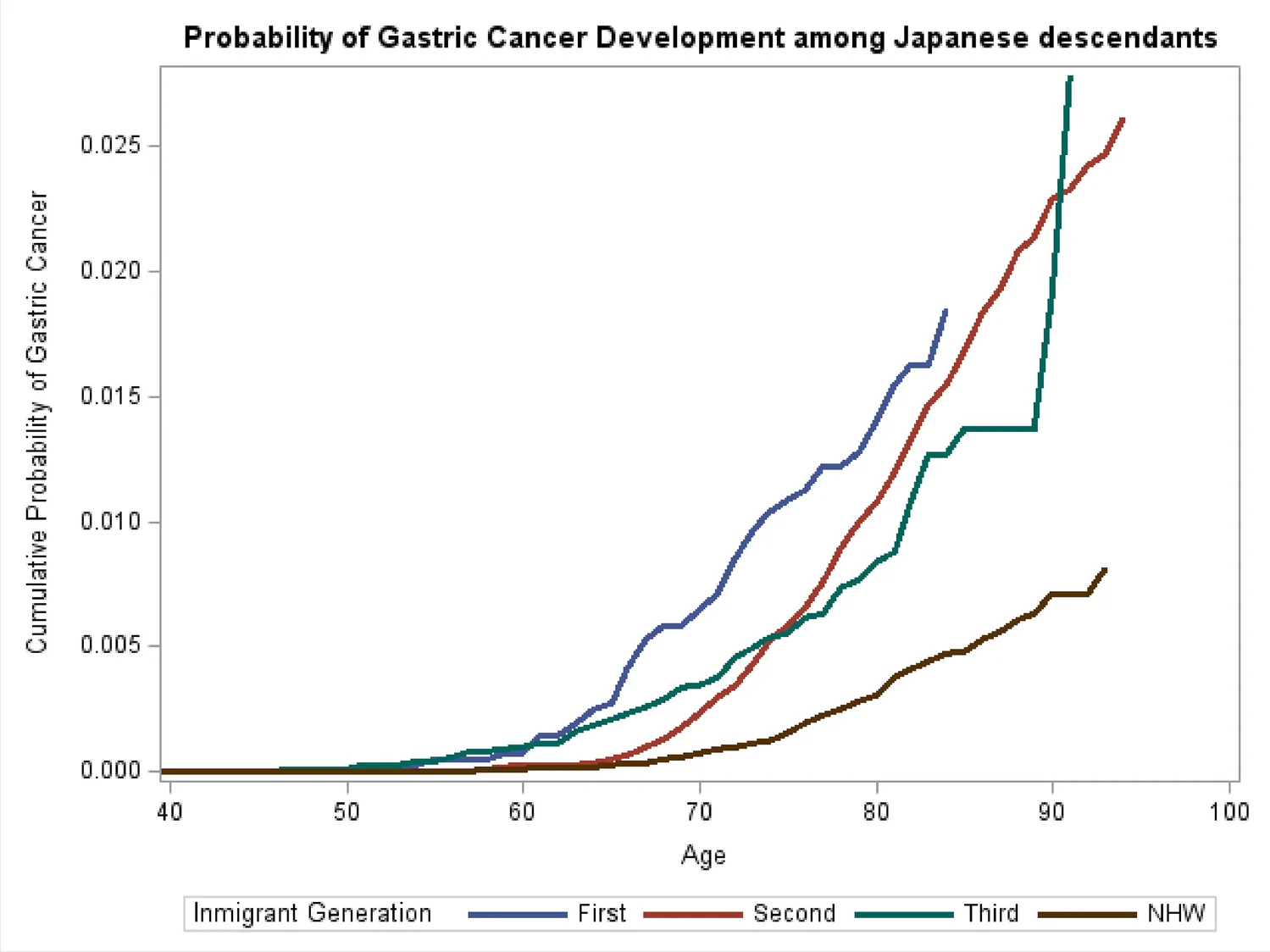
BACKGROUND: Racial and ethnic minorities in the United States experience disproportionately higher rates of gastric cancer (GC) compared to the general population. However, the impact of immigration history on these disparities remains unclear. We evaluated the association between immigration generation and GC risk among Japanese descendants. METHODS: We analyzed data from the prospective, population-based Multiethnic Cohort (MEC) Study, which enrolled residents of Hawaii and California between 1993 and 1996. Participants who self-identified as Japanese or non-Hispanic White (NHW) were included. Cox proportional hazard models were used to examine the association between immigration generation of Japanese descendants and the risk of GC overall and by anatomical subtype, adjusting for demographic, dietary, and lifestyle variables. RESULTS: Among 94,232 individuals (median age: 61 years; male 47.4%), 716 primary GC cases were identified. The risk of developing GC was higher among all three generations of Japanese descendants compared to NHWs. First generation had the highest risk (HR: 4.62, 95% CI 3.24-6.59), followed by the second generation (US-born, with both parents Japan-born; HR: 3.66, 95% CI 2.89-4.64; US-born, with one parent Japan-born, HR: 3.39, 95% CI 2.55-4.50), and the third generation (HR: 2.57, 95% CI 1.93-3.42). The association was more pronounced among non-cardia GC, with HRs of 5.89, 4.49, and 3.27 for the first, second, and third generations, respectively. CONCLUSIONS: GC risk declined across successive generations of Japanese descendants but remained significantly higher than in NHWs. Recognizing and monitoring these persistently high-risk populations may enable risk-stratified screening and inform mechanistic research into environmental, biological, and transgenerational drivers of GC susceptibility.
From the paper
- Participants
Among 94,232 participants included in the study, 716 gastric cancer cases were identified during a median follow-up of 20.2 years (1,669,991 person-years).
- Follow-up
Among 94,232 participants included in the study, 716 gastric cancer cases were identified during a median follow-up of 20.2 years (1,669,991 person-years).
- Result
Japan-born participants had a 4.62-fold higher hazard of developing gastric cancer compared to NHW (HR: 4.62, 95% CI 3.24–6.59).
Quoted word for word from the full text on PubMed Central.
The paper
Rutgers, The State University of New Jersey; Duke University
Cancer Causes & Control, 24 Sep 2026